A Black Agenda Radio commentary by executive editor Glen Ford
The African Union celebrated its 50th anniversary last week, marking the occasion with bombastic proclamations and a 50-year “renaissance” plan. However, Africa is, in some ways, less independent than it was a decade or two ago. “The United States effectively lords it over Africa to a degree unmatched by any single European power of the colonial period.”
The Irrelevance of the African Union at 50
A Black Agenda Radio commentary by executive editor Glen Ford
“The U.S. military grip on Africa ensures that the continent will not achieve any of Nkrumah’s pan-African objectives.”
The African Union marked its 50th anniversary, this week, at an executive council meeting in Addis Ababa, Ethiopia – the city where the AU’s predecessor, the Organization of African Unity, was born in 1963. Ghanaian President Kwame Nkrumah was the guiding intellect of pan-Africanism in those days. He envisioned a continent unified by a common market, currency and central bank, common citizenship, a common foreign policy and system of military defense – a kind of United States of Africa. A half century later, the United States effectively lords it over Africa to a degree unmatched by any single European power of the colonial period.
Africa is most unified in its abject military subservience to the U.S. and, secondarily, to France, which struts around Mali, Niger, the Central African Republic and other former colonies as if independence was a joke played on history. But, the big boss
The U.S. military grip on Africa ensures that the continent will not achieve any of Nkrumah’s pan-African objectives. It is the American trump card, that renders this week’s proclamations out of Ethiopia fatuous and empty. The African Union chairperson presented a draft proclamation of a continental agenda for the next 50 years – Agenda 2063
“The African Union’s opinion is irrelevant.”
The 50-year agenda celebrates social and economic development and continental integration. But Africa’s regional economic groupings have largely been converted into blocs for easy political manipulation by the Americans and their European junior imperial partners. In the Horn of Africa, IGAD, the Intergovernmental Authority on Development, has been entirely subordinated to the Americans and their war to subdue Somalia and threaten tiny, independent-minded Eritrea. The African Union’s so-called peace-keeping mission in Somalia, the AU’s biggest military project, is entirely financed, armed, trained and directed by the Europeans and Americans, most notably the CIA. On the other side of the continent, ECOWAS, the Economic Community of West African States, is thoroughly enmeshed in the French-American war machines that have invaded the region. In the Democratic Republic of Congo, the United Nations is putting together an offensive brigade sponsored by the United States and France, that will surely serve imperialism’s interests in the region.
The African Union’s opinion is irrelevant, just as it was irrelevant when the U.S. and its NATO allies decided on regime change in Libya, in 2011. Muammar Gaddafi, a former AU president and bankroller was overthrown and murdered, and the AU did nothing. And yet, it speaks of a 50-year plan for an African renaissance, and claims the pan-African vision guides its deliberations.
Nevertheless, I’m sure Kwame Nkrumah would agree that the AU has been quite useful – just not useful to Africans.
For Black Agenda Radio, I’m Glen Ford. On the web, go to BlackAgendaReport.com.
BAR executive editor Glen Ford can be contacted at Glen.Ford@BlackAgendaReport.com .

 “Conflicts over colonies constitute the major source of war in the modern world.”
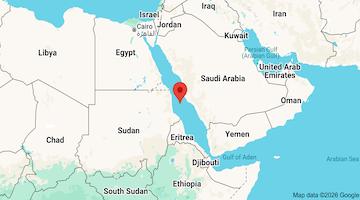 Saudi Arabia has formed a 14-state coalition to stop Ansar Allah, which has threatened to blockade its oil tankers in the Red Sea.
 “...when I talk about our political institutions, there is no reason for any American to continue to be victimized by what we still refer to as the Republican and Democratic parties…We don’t have to…
 In commemoration of the Fidel Castro centenary on August 13, 2026, we present remarks given by Djibo Sobukwe at The Symposium on Fidel Castro and the Cuban Revolution on January 21, 2017,…
 Former Black Panther Deputy Minister of Defense Byron Booth's journey from Compton to Cuba, Algiers to Lagos, reveals the global reach of Black radicalism in a 2016 interview.


