Mardis Gras 2007: Lessons From New Orleans
by BAR Managing Editor Bruce A. Dixon
This Tuesday, February 20 marks the second Mardi Gras in New Orleans since Katrina, and brings into sharp focus the several lessons for black America to be derived from post-Katrina New Orleans.
Katrina was,a preventable man-made disaster. Thousands, overwhelmingly poor and black, died because our federal government failed to maintain levees and farmed out its disaster planning to political cronies, while state and local officials did no better. Only one bureaucrat is known to have lost his job for failing to prepare for Katrina, and it appears none will ever face criminal charges.
The first lesson is that black lives have little value to those who run America.
Before the waters receded leading members of the city's investor class publicly gloated that an act of God had "cleaned out" portions of New Orleans, and that they looked forward to doing business in a smaller and a very different city. Pre Katrina New Orleans was a city of some 550,000 inhabitants, two-thirds of them black. Less than 20% of black New Orleans households were homeowners, and most were low-wage workers in the city's service and tourist-oriented economy.
17 months on, less than half of black New Orleans has been able to return. Former residents have pointedly been excluded from reconstruction planning and reconstruction jobs, and low wage outside labor has been imported on a massive scale. Wherewithal, public utilities and support have been selectively denied to homeowners and self-help groups in overwhelmingly black neighborhoods. Public schools have been closed and privatized, and school bus services all but ended. The only right former renters have is the right to travel hundreds of miles back to New Orleans at their own expense to vote on election day.
The second lesson therefore, of post-Katrina New Orleans is that America's shot-callers are just fine with the ethnic cleansing and dispersal of a black city of hundreds of thousands.
The third lesson of post-Katrina New Orleans is impotence of our black leadership class, who have been completely unable to reverse the dispossession and dispersal of black New Orleans.
A generation ago, some of these leaders had actual mass movements at their backs, thousands upon thousands ready to take to the streets and lay their bodies on the line for economic justice and social change. But in their wisdom, our leaders disbanded these formations, assuring us that all we had to do now was to come out and vote, and to support black businesses.
The fourth and most hopeful lesson is from the Mardis Gras Indians, black New Orleaneans whose holiday costumes recall those of Native Americans. In Florida and the Gulf Coast, blacks fleeing slavery joined and fought alongside the region's natives. Some "Indian" villages and tribes from Louisiana down through Florida were mostly or entirely black. After their eventual defeat, "Indians" including some with little or no discernible African ancestry claimed status as free blacks in order to be permitted to stay near the lands which were once theirs, the only Americans ever to voluntarily pass for black.
The Mardi Gras Indians of today celebrate pride in their past, hope for the future, and survival against all odds. They dance for Mardi Gras. But they fight all year.
For Black Agenda Radio, I'm Bruce Dixon
To hear or download the MP# of this this Black Agenda Radio commentary, clock the mic at right.
To comment on or discuss this article, visit its page on the Black Agenda Blog, http://www.blackagendareport.net

 Ajamu Baraka joins LSR to discuss BAP's June 13, 2025, statement, "The Middle East is On Fire Because Israeli and U.S. Imperialism Lit the Match". What is the current situation in the region? How…
 In this week’s segment, we hear about the liberation struggle in the southern African nation of Swaziland, where an imperialist-backed monarchy holds political prisoners and engages in other…
 Thandisizwe Chimurenga is a Los Angeles-based journalist and host of RootWork, which can also be seen on Black Liberation Media’s YouTube channel. She joins us to discuss the recent protests in…
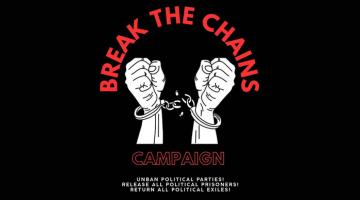 Our guests are Titus Vilakati of the Break the Chains Campaign, which calls for the release of political prisoners in the southern African nation of Swaziland and the end of human rights abuses…
 If Trump asks congress for approval to wage a war on Iran, he will probably get it.


