A Black Agenda Radio commentary by BAR executive editor Glen Ford
Europeans are pouring into northwest Africa in such volume, the huge U.S. airlift capacity may soon be necessary to keep the “Crusaders” supplied. African militaries are being assembled to do the white man’s bidding. The U.S. hopes to establish a Somalia-like operation on the near side of Africa – with Americans in overall charge.
Meeting and Greeting the Crusaders in Africa
A Black Agenda Radio commentary by BAR executive editor Glen Ford
“African officials were handing out orders and directives to other Africans, as if they were actually in charge of something.”
These days the so-called scramble for Africa runs through Mali, and in two directions. As the British, the Italians, the Germans, the Spanish, the Dutch, the Belgians and the Danish follow the French
If the Mali operation takes much longer – which it certainly will – the United States will assume much of the airlift duties, since no other nation in the world has the capacity to resupply a long war on the African continent. Cracking northern Africa wide open is a job for a superpower – which is fine with the Americans. Don Yamamoto, the deputy assistant secretary of state for African affairs, was hanging around the African Union meeting in Ethiopia, where African officials were handing out orders and directives to other Africans, as if they were actually in charge of something. Yamamoto predicted
Oh yes, said deputy secretary Yamamoto. He claims, “A lot of the rebel groups that are now fighting in the region were under Gaddafi’s troops.” Ah, so that’s how the U.S. will tell the story.
“The U.S. has much bigger plans for Africa.”
It’s true that many Tuareg nationalists seeking independence for their homeland in northern Mali worked with Gaddafi’s security forces, and emerged from Libya heavily armed. But, no sooner had the secular Tuareg rebellion begun than it was overwhelmed by Muslim fundamentalists – jihadists who were Gaddafi’s sworn enemies. The jihadists, many of them foreigners, could be run out of the cities of Mali and militarily contained with little effort. But, the Tuaregs live there, and always have. It is, therefore, necessary for the United States to claim that the entire Tuareg people – several million of them – are infested with jihadism, and that this will require a long-term Euro-American presence in Mali and the region.
The French are leading the charge into the desert in Mali, but the U.S. has much bigger plans for Africa. Deputy secretary Yamamoto told reporters that the U.S. would like to see the Mali operation evolve into an African-led affair, like the African Union mission in Somalia. However, although 17,000 Africans do the fighting in Somali, the operation is actually run by the U.S. military and the CIA, and paid for largely by the Americans.
AFRICOM is now assisting six of Mali’s regional neighbors – Niger, Chad, Nigeria, Senegal, Burkina Faso and Togo – with their transport and equipment needs for the fighting ahead. Those countries militaries will always want American guns and financing – which means AFRICOM will never leave. At least, that’s the plan.
For Black Agenda Radio, I’m Glen Ford. On the web, go to BlackAgendaReport.com.
BAR executive editor Glen Ford can be contacted at Glen.Ford@BlackAgendaReport.com .

 The late Nehanda Abiodun was an African American revolutionary who exemplified the movement to end national oppression and the criminalization of a people.
 Capitalist rule dictates that millions of Americans live in debt peonage. It was inevitable that Biden's student loan debt relief would be a farcical half measure.
 Dangerous and irrational U.S. foreign policy decisions are driven by fear of the end of white world supremacy and the determination to follow the principles of full spectrum dominance. Ajamu Baraka…
 The U.S. loss of unipolar power has created liberal angst which does little to foster understanding of the new multipolar world.
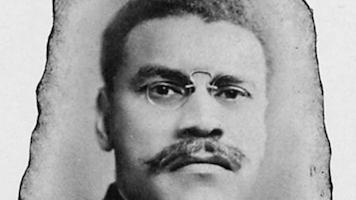 Dantès Bellegarde’s 1927 editorial on the US occupation of Haiti speaks to the present.



