A Black Agenda Radio commentary by BAR managing editor Bruce A. Dixon African slaves in the US, the Caribbean and Brazil ran away whenever they could. In favorable situations, escaped slaves called maroons were able to form villages and settlements and defend themselves against their former masters. The most successful maroon settlement was Brazil's Palmares, which held out for a hundred years ending in 1695
The Other Black History: The Maroons and Zumbi dos Palmares A Black Agenda Radio commentary by BAR managing editor Bruce A. Dixon Informed and aware citizens, especially black ones, are not what the US empire wants or needs. So the history most of us are taught in school and the media amounts to a truncated stub of active disinformation, often with more gaps and distortions than truth. Even black Americans know little about the slave trade or slavery in the rest of the Americas.
The transAtlantic slave trade was conducted more than 300 years with wind-powered ships sailing between Europe, Africa and the Americas. The shortest hop along the prevailing winds from Angola and West Africa was to Brazil, and that's where almost half the millions of Africans who survived the Middle Passage are thought to have landed. Slavery in Brazil and the Caribbean wasn't like slavery in North America. Africans in North America were cruelly treated, but were so expensive to import that masters had to ensure they survived and reproduced in captivity. But in the Caribbean and Brazil slaves were so cheap and plentiful masters worked entire populations to death every few years and imported new ones.
North America also had free whites in the back country, along with a dense network of roads, and by the 19th century, railroads. The troops that put down John Brown's rebellion in the 1850s were dispatched by rail and received orders by telegraph. In Jamaica, St. Kitts, Cuba, Suriname, Guadeloupe, Haiti, Trinidad. Spanish Florida and the vast interior of Brazil there were few free whites, even fewer roads and never any railroads at all, and thus greater opportunities for Africans who managed to run away. Maroons, as the runaways were called often eluded capture long enough to establish farms, villages and settlements. In Colombia, Spanish Florida , Brazil and elsewhere they made common cause with Native Americans. The most famous and long lived maroon settlement was the quilombo of Palmares in northeastern Brazil, which successfully repelled Dutch and Portuguese military expeditions for about a hundred years.
Eighty years along in 1678, the Portuguese governor offered to leave Palmares alone if they would relocate, and also apprehend and return future runaways, a deal often extended to troublesome maroon settlements. Some of the leaders of Palmares took the deal and those who followed them were soon re-enslaved. The faction that continued to resist was led by a young man named Zumbi.
Born free in Palmares in 1655, Zumbi was captured by the Portuguese at the age of 6. After learning Portuguese and Latin he escaped returning to Palmares at 15, and in a few years later was a respected warrior and leader. Zumbi led the fight against the Portuguese till 1693 when he was severely wounded, and survived another two years on the run until he was betrayed, captured and beheaded on November 20, 1695. His severed head was publicly displayed in Recife, to prove to slaves that he was mortal and really dead.
But the memories of Palmares and of Zumbi never died. They've been celebrated by Brazilians and Africans around the world ever since. November 20 is a now a national holiday in Brazil.
For Black Agenda Radio, I'm Bruce Dixon. Find us on the web at www.blackagendareport.com .
Bruce A. Dixon is managing editor at Black Agenda Report, and a state committee member of the Georgia Green Party. He lives and works in Marietta GA and can be reached via this site's contact page, or at bruce.dixon(at)blackagendareport.com.

 "As long as the virus continues to circulate anywhere, people will continue to die, trade and travel will continue to be disrupted, and the economic recovery will be further delayed."
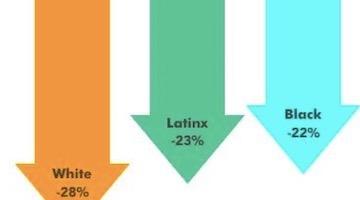 The pandemic forced many police departments, courts and jails to take steps that reformers had been demanding for decades.
 Expect “Lip Service” from Biden on Immigration Reform
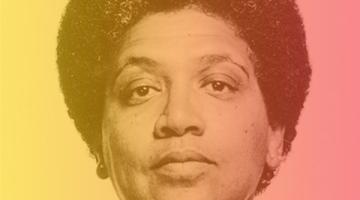 Black poet and feminist Audre Lorde showed her socialist and revolutionary colors in the wake of the US invasion of Grenada, her parent’s birthplace, in 1983, said Jack Turner, pro
 “If we want to have Black liberation, we have to abolish capitalism to do that,” said Kandista Mallett, an activist and columnist for Teen Vogue magazine who authored a recent colu


