A Black Agenda Radio commentary by Glen Ford
For more than 100 years, the United States has illegitimately occupied Cuban soil. “They turned one of Cuba’s most precious natural resources, Guantanamo Bay, into a curse on the lips of the world.”
Evacuate Guantanamo – It Belongs to Cuba
A Black Agenda Radio commentary by Glen Ford
“Washington’s illegal occupation of Guantanamo Bay is now 111 years old.”
As the world witnesses the latest chapter in Israel’s occupation and blockade of Palestinians, it is important to remember that the United States has also been engaged in many of the same violations of international law against one of its own neighbors – and for an even longer period of time. The U.S. embargo against Cuba is seven years older than the Israeli seizure of the West Bank and Gaza, in 1967, while Washington’s illegal occupation of Guantanamo Bay is now 111 years old, predating Israel’s 1948 formation out of Palestinian land by nearly half a century.
Guantanamo Bay was seized by the United States during the Second Cuban War of Independence from Spain, which the Americans prefer to call the Spanish American War. The United States intervened in that war in 1898, with the purpose of making Cuba into a U.S. colony, as it did to Puerto Rico and the Philippines. In 1901, the United States Senate passed the Platt Amendment under military occupation criminality and torture
Most Americans know Guantanamo’s recent, shameful notoriety, but few are aware that the U.S. presence there has always been a crime against the Cuban people – a crime that goes back more than twice as far as the 1960 embargo.
“In Latin America, it is the United States that has been a direct and constant threat to the sovereignty and dignity of its neighbors.”
But Cuba does not forget. When the United Nations voted 188 to 3, last week, to condemn draft agenda radio and TV aggressions
The Cubans say release of the Cuban Five
U.S. media pundits worry that Washington has lost its ability to act as a mediator in the Middle East, because it has for generations protected the expansionist, hyper-aggressive and thoroughly racist Israeli regime. And this is true. But in Latin America, it is the United States that has been a direct and constant threat to the sovereignty and dignity of its neighbors, through centuries of gunboat diplomacy, invasions, the colonization of Puerto Rico and the near-colonization of Cuba. The occupation of Guantanamo Bay is part of that imperial legacy – a game in which Israel is a relative – although extremely dangerous – upstart. For Black Agenda Radio, I’m Glen Ford. On the web, go to BlackAgendaReport.com.
BAR executive editor Glen Ford can be contacted at Glen.Ford@BlackAgendaReport.com .

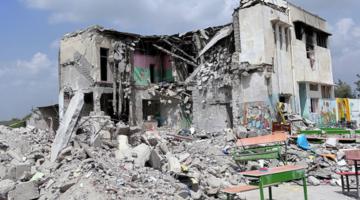 "Everything they touch turns to rubble" is the latest from BAR's Poet-in-Residence.
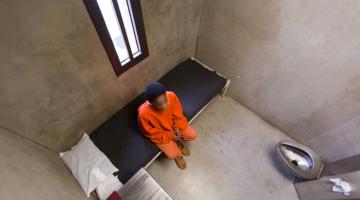 Tennessee's claim of being "tough on crime" means racialized policing and incarceration, and profit making off of marginalized people.
 While Washington DC's political leadership changes, Pan-African Community Action (PACA) is organizing to ensure that Black communities are empowered in decision making processes.
 The US has disqualified itself from hosting the World Cup through wars, genocide, and domestic repression.
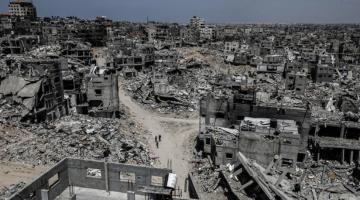 For years, Israel used the “Dahiya doctrine” in Gaza. Now it’s using the “Gaza doctrine” in Dahiya — and Tehran.


