In this week’s segment, we hear about the crisis in northwest Indiana, including the city of Gary, where some residents have gone more than two weeks without power after a storm. As in the rest of…
Our guest is Sam Husseini. He’s a veteran independent journalist and senior analyst at the Institute for Public Accuracy. He is now running for Congress in Maryland’s 4th district as a Green Party…
Akili Shakur is a revolutionary activist and the wife of political prisoner Shaka Shakur. She joins us from Gary, Indiana, where some residents have been without power for more than two weeks after…
Margaret Kimberley, BAR Executive Editor and Senior Columnist
, Dhoruba bin-Wahad
, Kelonji Changa
In this special broadcast, BAR Senior Columnist and Executive Editor Margaret Kimberley and Black Panther Veteran Dhoruba Bin Wahad offer an uncompromising, sharp critique of the anti-Iranian open…
Margaret Kimberley, BAR Executive Editor and Senior Columnist
If the Democratic Party prevails in the midterm elections, Hakeem Jeffries will become the Speaker of the House of Representatives. But his decision to meet with Jared Kushner was a textbook case of…

 In this week’s segment, we hear about the crisis in northwest Indiana, including the city of Gary, where some residents have gone more than two weeks without power after a storm. As in the rest of…
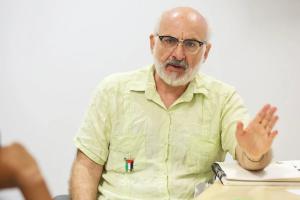 Our guest is Sam Husseini. He’s a veteran independent journalist and senior analyst at the Institute for Public Accuracy. He is now running for Congress in Maryland’s 4th district as a Green Party…
 Akili Shakur is a revolutionary activist and the wife of political prisoner Shaka Shakur. She joins us from Gary, Indiana, where some residents have been without power for more than two weeks after…
 In this special broadcast, BAR Senior Columnist and Executive Editor Margaret Kimberley and Black Panther Veteran Dhoruba Bin Wahad offer an uncompromising, sharp critique of the anti-Iranian open…
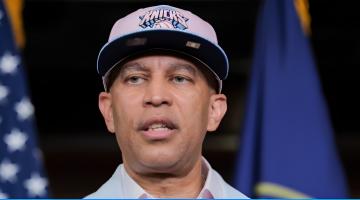 If the Democratic Party prevails in the midterm elections, Hakeem Jeffries will become the Speaker of the House of Representatives. But his decision to meet with Jared Kushner was a textbook case of…


