A Black Agenda Radio Commentary by BAR managing editor Bruce A. Dixon
The ongoing hunger strikers in Georgia's Jackson State prison have reportedly been joined by others in Augusta and Macon. But the 37 rounded up as alleged leaders of the December 2010 strike are still officially not named by the state are believed to have been on 24 hour lockdown the last 18 months, with many suffering brutal beatings and denied medical attention. Why has the state not revealed their identities? Why are there still thousands of children and illiterates in Georgia's prisons? Why do prisoners still work without wages, and why does Bank of America still extract monthly tolls from their accounts? Why has so little changed?
Hunger Strikes Reportedly Continue in Multiple Georgia Prisons, Prisoners Await A Movement Outside Prison Walls
A Black Agenda Radio Commentary by BAR managing editor Bruce A. Dixon
As we've told the story over the months in Black Agenda Report, in the wake of the peaceful December 2010 strike by black, brown and white inmates in several Georgia prisons, corrections officials first cut off heat and hot water to prisoners in the dead of winter. After meeting with citizens on the outside who publicly backed prisoner demands for decent food, medical care, educational opportunities, humane visiting policies, transparency in proceedings against inmates and wages for work, the state briefly allowed citizen access to Macon and Smith Prisons, before adopting a systematic and apparently statewide policy of rounding up and brutally assaulting those prisoners it imagined might have been leaders of the strike.
A small number of low-ranking corrections personnel have been fired, indicted or pled guilty to various offenses in the wave of beatings, but in an apparent endorsement of the beatings as state policy, Department of Corrections, local judges, prosecutors and state o fficials have refused to investigate most of them.
State authorities claim to have rounded up 37 from around the state and placed them in close confinement at its massive Jackson State Prison, where it murdered Troy Davis last year. Those 37, as far as anyone outside the prison administration knows, have been in solitary confinement ever since, sometimes for weeks without showers and months without being allowed visits. They have received little or no medical care for the vicious beatings they sustained eighteen months ago.
“The current wave of hunger strikes in Georgia's prisons must be un”derstood in the light of the failure so far of communities outside the walls to effectively organize in solidarity with those inside. “
When the prisoners went on strike in December 2010 they told us out here they'd done all that they could do. It was now in the hands, they declared, of those outside prison walls to build an effective movement and bring pressure to bear on the minions of Georgia's and the nation's prison state. Eighteen months later, any honest assessment of progress toward that goal must conclude that that is yet to happen.
The current wave of hunger strikes in Georgia's prisons must be understood in the light of the failure so far of communities outside the walls to effectively organize in solidarity with those inside. When you do all you can do, and you are singled out and brutalized, deprived of access to family, communications, medical care and even showers for months on end, you have nothing left to put on the table to trade for your dignity but life itself. For the hunger striking prisoners in Georgia, as for those in California's Pelican Bay a few months ago, who insist on their human rights and human dignity, these are matters of life itself. That's what they mean when they say they are “starving for change.”
They aren't starving till the warden or the governor or the president or Congress or state legislatures do this or that. They are starving till all of us, their extended families, their neighbors, along with the neighbors and families of past and following waves of prisoners, till all thos e suffering the collateral damage of the prison state find the will and the way to organize, to make their presence known, and to stand with them against the prison state. We can't continue to let them down. It's a matter of human dignity, and life itself. To find out what you can do, visit us on the web at www.endmassincarceration.org . Sign the petition and sign up. Someone will be in touch with you.
For Black Agenda Radio I'm Bruce Dixon. Find us on the web at www.blackagendareport.com .
Bruce A. Dixon is managing editor at Black Agenda Report and a co-chair of the Georgia Green Party. He can be reached at bruce.dixon(at)blackagendareport.com or through this web site's contact page .

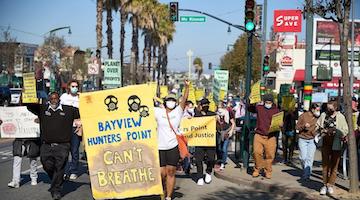 Kamala Harris’s vaunted “environmental justice unit” prosecuted only the most trivial violations in San Francisco’s toxic Bayview Hunters Point neighborhood.
 "Oz-low Piece Process v. Sugar Hill Play-date …" is the latest from BAR's Poet-in-Residence.
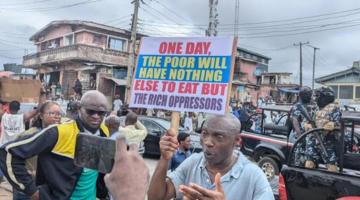 Waves of uprisings are spreading across the African continent and the masses are demanding freedom from imperialist powers and the comprador leaders that enable their ongoing exploitation. There are…
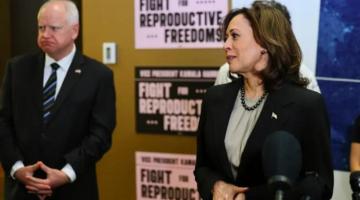 Immediately after Joe Biden announced that he would not seek re-election and instead endorsed Kamala Harris, she was anointed as the Democratic Party presidential nominee with little analysis of her…
 Israel's slaughter of media workers should ignite outrage and condemnation across the industry. But because they were Palestinian, the world looked away.


