A Black Agenda Radio commentary by Bruce A. Dixon
At the same time that the Grammy Awards honored Etta James and Whitney Houston, it did away with most of their award categories, 31 in all. Most of the stricken awards were for Latin jazz and other Latin music, four R&B categories, zydeco, Hawaiian and Native American music. A large group of artists protested outside the award ceremony last weekend, and pledge to continue fighting for the restoration of recognition to to their music, to our music. When we surrender this power to greedy corporations, we are complicit in cultural genocide.
The Grammy Awards, Corporate Greed and Cultural Genocide
A Black Agenda Radio commentary by BAR managing editor Bruce A. Dixon
“Most of the musical categories eliminated by the Grammies this year were Latin, black and nonwhite...”
For tens of thousands of years longer than humans have been reading and writing, since way, way before our ancestors began saving seeds and planting them, humans have made music. It's one of many things that make us human.
But so are racism, hypocrisy and in the current era, vampire capitalism. It's hard to see anything but hypocritical racism and greed in the decision of the National Academy of Recording Arts and Sciences – the body that gives out the Grammys --- in their elimination of more than thirty musical categories , including Latin jazz and 3 other Latin music categories, 4 R&B categories, zydeco and Native American music, one Gospel, one Rap and one World Music category.
The award ceremony led off with a prayer for Whitney Houston. But four of Houston's six Grammies are in categories that the Grammies no longer notice. The late Etta James was hailed as well, at the same time the categories for two of her Grammies were done away with. So the real message was that the next wave of Whitney Houstons won't be nearly as welcome. Most of the musical categories eliminated by the Grammies this year were Latin, black and nonwhite.
“Why do they only cut this music?” asked multiple Grammy award winner Carlos Santana, who protested outside the awards ceremony with many other musicians. “I think they're racist. You can't eliminate black gospel music or Hawaiian music or American Indian music or Latin jazz music because all this represents what the United States is, a social experiment.” Other award recipients who have publicly spoken and written demanding the organization to restore the stricken categories are Herbie Hancock, Eddie Palmieri, Paul Simon Bill Cosby, Esperanza Spalding, Bonnie Raitt, Stanley Clarke, David Amram, Pete Escovedo, Oscar Hernandez and Larry Harlow.
A number of artists filed suit against the National Academy of Recording Arts and Sciences, demanding the minutes of meetings at which the elimination of these awards were discussed. Although they were dues paying members of long standing who recruited and contributed labor to its outreach programs, the academy denied access to these records through the courts on the grounds that they were “a foreign corporation established in Delaware” and so not subject to the transparency laws applicable to domestic non-profits.
The truth is that elimination of these categories is a kind of cultural genocide , a fencing off and enclosure of artistic space where many kinds of great music will be less able to connect with their audiences. In an era when a tiny number of major recording companies monopolize access to radio airplay and most concert venues, one more award, more or less, doesn't mean much to Alicia Keys or Beyonce. But a Grammy, or even a Grammy nomination, for a struggling independent artist can be the difference between being able to make a living at her music, or having to give it up and do something else to survive.
You can find more information, and sign the petition to restore the stricken categories at www.grammywatch.org . That's www.grammywatch.org . The decisions of what music to study and play and listen and dance to are decisions that audiences and artists should make. They are much too important to be reserved for greedy and racist recording industry executives. Letting them make that decision for us IS cultural genocide.
For Black Agenda Radio, I'm Bruce Dixon. Find us on the web at www.blackagendareport.com .
Bruce A. Dixon is managing editor at Black Agenda Report, and based in Marietta GA, where he is a state committee member of the Georgia Green Party and a principal in a technology consulting firm. Contact him at bruce.dixon(at)blackagendareport.com.

 The government of Mali has accused France of numerous violations of its airspace and has requested that the United Nations Security Council investigate. French forces may have left Mali, but the…
 This article was written on the occasion of the sixth summit between the European Union and the African Union which was held in Brussels on 17 and 18 of February 2022. These meetings are…
 The history and significance of Black August, presidential elections and politics in Kenya, and reflections on the anniversary of the Sandinista Revolution.
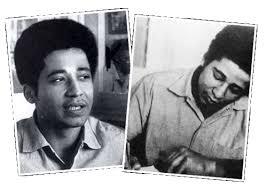 Kalonji Changa is co-founder of Black Power Media and founder of FTP Movement. He joins us from Atlanta to talk about Black August, which has been a fixture of the liberation movement for 43 years.
 Irene Asuwa joins us from Nairobi, Kenya. She is co-convener of Ecological Justice and supports outreach at Ukombozi Library. We discuss the recent presidential election in that country.


