A Black Agenda Radio commentary by Glen Ford
We all know that prisons are not for rehabilitation, and that the dynamic of mass Black incarceration has little to do with actual crime. Massive police stop-and-frisk campaigns in urban America are concerned with more than merely controlling Black and brown populations. They are “a regimented, calibrated mechanism for adding value to urban land by making city life untenable for young Black and brown men” and their families. Stop-and-frisk is a tool for Black removal.
Stop-and-Frisk As a Weapon of Gentrification
A Black Agenda Radio commentary by Glen Ford
“There is ample anecdotal evidence that the relentless pressures of stop-and-frisk have substantially contributed to the mass exile of Blacks from New York.”
The massive, industrial-strength stop-and-frisk policies of big cities like New York and Philadelphia must be viewed as part and parcel of urban gentrification – the systematic removal of Blacks from the cities. What began as a straightforward intake valve for the forty year-old national policy of mass Black incarceration, has evolved into a regimented, calibrated mechanism for adding value to urban land by making city life untenable for young Black and brown men. The constant threat of being snatched up by police for no reason within the individual’s control, on the basis of his profile and the policeman’s whim, forces thousands of young men and their parents to make a choice. They can exit to a less hostile police environment, or stay and risk that life-changing encounter with the criminal injustice system, from which they may never recover.
There is no way to tabulate the impact that stop-and-frisk has had on the Black exodus from New York City. Such decisions are made in the midst of whirlpools of stress in besieged Black neighborhoods. But there is ample anecdotal evidence that the relentless pressures of stop-and-frisk have substantially contributed to the mass exile of Blacks from New York.
“They can exit to a less hostile police environment, or stay and risk that life-changing encounter with the criminal injustice system, from which they may never recover.”
How could it be otherwise? The New Year is less than a week old, but already more than 6,000 three million since 2004 Community Service Society
Two women came to a meeting of Occupy Harlem
Back in the day, we called the police an army of occupation in the ghetto. Today, they are an army under orders to make it as difficult and dangerous as possible for Black males and their families to continue to occupy their old neighborhoods. There are other people whose presence would be much better for land and housing values. Stop-and-Frisk provides an incentive for a quick racial and economic transition: Harlem without the Harlemites.
For Black Agenda Radio, I'm Glen Ford. On the web, go to BlackAgendaReport.com.
BAR executive editor Glen Ford can be contacted at Glen.Ford@BlackAgendaReport.com .

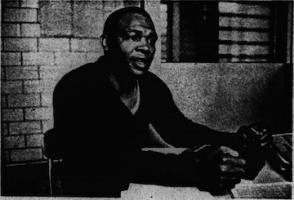 “I don't mean just in the struggles in these prisons. America is one whole concentration camp in and of itself.”
 "During the last week of July, I traveled to the front lines of Somalia’s unresolved border conflict with Somaliland, the Somali secessionist state now recognized by Israel but not by
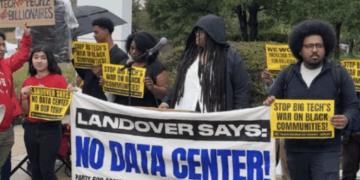 There is near unanimity of opinion against data centers in the U.S. But elitist and compromised environmental groups and the climate industry should not lead this fight.
 "What’s with a Pomade Man’s testosterone obsession?" is the latest from BAR's Poet-in-Residence
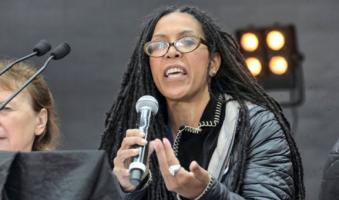 Johanna Fernandez left a powerful and revolutionary legacy through her scholarship and activism.


