A Black Agenda Radio commentary by editor and columnist Jared Ball
Clint Eastwood’s new movie is an attempt to sanitize J. Edgar Hoover’s dirty war to keep white men “atop the social pyramid.” It is also an apartheid film. “We get nothing of his concern over The Black Panther Party, or the surveillance and deportation of people like Claudia Jones and C.L.R. James, or culpability in the killings of say, Malcolm X and Fred Hampton (to name but a few).” It makes the case for a justifiable police state, in which “Hoover is cast positively as a much needed and tough organizer of law enforcement, a protege of Attorney General Palmer's raids against the violent radical terrorists of their day.”
J. Edgar and the Terrorism of Film
A Black Agenda Radio commentary by editor and columnist Jared Ball
“Hoover returns even in death to remind the liberal, the affluent, the White that their place atop the social pyramid is legitimate and must be protected by any means necessary.”
J. Edgar, the new film by Clint Eastwood, is a real horror film, it is an act of violence, an act of terrorism. The film's careful construction of FBI founding father J. Edgar Hoover as a flawed but justifiable hero rather than an individual villain performing the tasks of a villainous institution has hit theaters with the precision timing of a predator drone strike and with similar political design. As old antagonisms produce new and threatening responses, as new generations emerge taking their turn asking serious questions about the planet, equality, justice and self-determination, be they occupiers or decolonizers, Hoover returns even in death to remind the liberal, the affluent, the White that their place atop the social pyramid is legitimate and must be protected by any means necessary. And no matter what they say they love him for it.
And that is why so much of the discussion surrounding the film has focused on its award-worthy acting or Hoover's sex life. A willful ignorance allows such a political monstrosity to be admired. From the beginning Hoover is cast positively as a much needed and tough organizer of law enforcement, a protege of Attorney General Palmer's raids against the violent radical terrorists of their day. And true to the form and function of mainstream media those dissidents are given no context, description, or honest reflection. The Bolsheviks, anarchists and labor movement activists are barely mentioned and only at all to give Hoover legitimacy in his own desire to catalogue and monitor every citizen and then to deport, falsely imprison or assassinate those he deems threats to national security. And, of course, only their violence is real violence. Certainly the violence of capital exploitation and imperial wars are not called into question. No. Only the actions of enemies are questionable. What ultimately stands unchallenged is the righteous attempt, even if imperfectly executed, of the state and Hoover to bring order to police work and to a society destined by the divine to be supremely White and capitalist.
“The Bolsheviks, anarchists and labor movement activists are barely mentioned and only to give Hoover legitimacy.”
So for White radicals the film has only brief mention and dismissal. Black activists don't even appear. But why should they? The White radicals, like Emma Goldman, only briefly hit the screen to justify today's hostility to immigrants and so-called anti-terrorism campaigns. Goldman's on-screen deportation and the only passing reference to the assassinated anarchists Sacco and Vanzetti, who are never mentioned by name only as the "two Italians," serve only to convey legitimacy to Hoover in the past and the targeted killings, detentions and anti-immigration policies of the present. Deport those you cannot kill. That completed there is no need then to even reference, for instance, Hubert Henry Harrison or Marcus Garvey both of whom were early targets of Hoover and called by him, "race pimps" and "notorious Negro agitator(s)."
And because of an otherwise inexplicable need of this film to dwell on the mundane aspects of mundane aspects of Hoover's career the film allows itself to simply run out of time. So countless minutes spent on the Lindbergh baby kidnapping - without any discussion of Charles Lindbergh's beliefs in eugenics and Nazism - along with an intimate look at Hoover's personal life with his mother and his male companion assure that we get nothing of his concern over The Black Panther Party, or the surveillance and deportation of people like Claudia Jones and C.L.R. James, or culpability in the killings of say, Malcolm X and Fred Hampton (to name but a few). Dr. King only appears as pornographic background, his politics and assassination apparently irrelevant. And the word "counterintelligence" is mentioned in the film only once but not as Hoover's Counter Intelligence Program and certainly with no discussion of that program’s continued impact. So, therefore, no mention could then be made of Hoover's direct involvement in framing Black radicals for crimes they did not commit but for which some still suffer incarceration, right now, in 2011.
Particularly at a time of expanded police and military power and the deep charm of an imperial president this film reads as a violent assault against history meant to terrorize today's audiences by reinforcing either an irrational fear of the state or an equally irrational justification for what the state does out of self-preservation. It is no mere historical drama, it is a blatant warning for today. Immigrants and radicals are to be monitored, deported, killed or imprisoned and it is all for the greater good that is the United States.
For Black Agenda Radio, I'm Jared Ball. Online check us out at BlackAgendaReport.com.
Dr. Jared A. Ball is author of I Mix What I Like! A Mixtape Manifesto and is an associate professor of communication studies at Morgan State University. He can be reached via IMIXWHATILIKE.ORG.

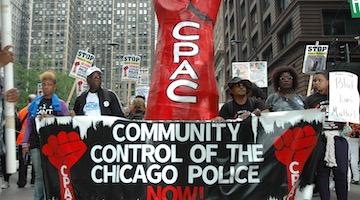 The 17 pro-community control of police candidates elected to the 50-member Chicago Board of Aldermen can also be expected to support “community control of the board of education” and “a progressive
 American money and American moral and political support has been really important in creating this backlash in Europe against feminism, LGBT rights and basic equality.
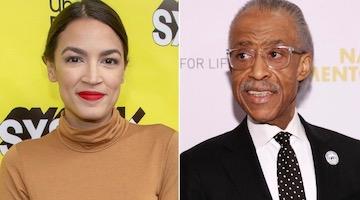 With support for “socialism” rising, the political fate of Al Sharpton and the rest of the Democratic party’s Black corporate minions is in doubt -- and they know it.
 I’m a Seoul Man, da-da-da—dat-da-da-da I’m a Seoul Man, da-da-da—dat-da-da-da I’m also a Pyongyang, Managua, Manilla, Teheran Man, too—As opposed to despot As I am to coup!
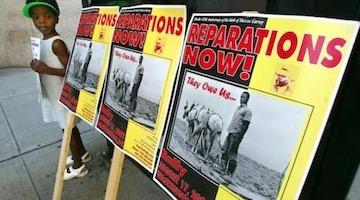 Reparations should not be a topic for national discussion until there is something akin to a consensus among black people about what to demand and how to do it.



