A Black Agenda Radio commentary by Glen Ford
Over the past 40 years, income inequality and housing segregation within the Black community has bee far more pronounced than in white America. A new study paints a picture of volatile Black neighborhoods pushed and pulled by income inequalities that have also wreaked vast changes on the larger American landscape, as “affluent people cluster in gentrified areas where lower income people cannot live, and poor people also become more concentrated.”
Massive Growth of Segregation by Income Among Blacks
A Black Agenda Radio commentary by Glen Ford
“Housing segregation among Blacks and Hispanics has, in fact, increased much more sharply than among whites since 1970.”
A new report
The New York Times did an article
“The biggest jump in Black income inequality occurred between 1970 and 1990.”
Until the 1970s, there was less income inequality among Blacks than among white families, but since then intra-Black inequality has grown four times as much. The biggest jump in Black income inequality occurred between 1970 and 1990. It was during this same period that discrimination against Blacks in housing declined, allowing those families that could afford to leave ghetto neighborhoods, to do so. What the study shows is a very volatile Black community, with neighborhoods undergoing much more economic change than their white counterparts.
In the 1990s, the trend towards greater income inequality among Blacks slowed. That’s probably because the 90s was the most generally prosperous decade for Blacks of all incomes, which tended to moderate the growth of high density poverty in lower-income Black neighborhoods.
Then, something strange happened. When the first decade of the 21st century came along, economic data showed little reason to expect increased income segregation among Blacks. Nevertheless, a rapid increase did occur, despite a bad economy for African Americans. The authors believe the increase was due to more lenient mortgage lending practices, the spread of sub-prime lending targeting Black and Latino neighborhoods. This, of course, was the bubble that is still bursting, which has led to the most catastrophic loss of Black wealth in history.
This story, of heightened African American mobility and volatile Black neighborhoods over the past 40 years, has no interest to the New York Times , even when they are handed a study that is chock-a-block with the facts.
For Black Agenda Radio, I'm Glen Ford. On the web, to to www.BlackAgendaReport.com .
BAR executive editor Glen Ford can be contacted at Glen.Ford@BlackAgendaReport.com .

 Unable to keep up with China economically, the United States is militarily encircling its rival and “creating the conditions of a New Cold War,” said Danny Haiphong, contribut
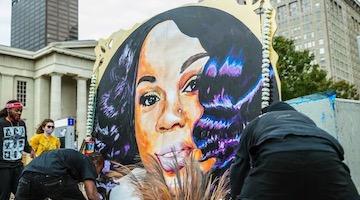 In an essay titled “Breonna’s Deathbed,” political prisoner Mumia Abu Jamal asks if the Louisville cops that killed Breonna Taylor would still be free if they had shot to
 Anti-Blackness is the common denominator underlying Black people’s high rates of death from poverty, disease and police violence on both continents of the western hemisphere, said Jame
 For the 12th consecutive year, the Black Is Back Coalition for Social Justice, Peace and Reparations will march on the White House, November 7, this time under the themes “Black Power Matters,
 The incoherence of the Biden-Trump debate will be repeated every election cycle until Blacks and progressives break with the corporate duopoly.



