A Black Agenda Radio commentary by Glen Ford
Mumia Abu Jamal’s days on Death Row may be nearing an end, with the U.S. Supreme Court’s ruling that his sentence – but not conviction – is unconstitutional. Without a new trail, which is not on the horizon, Mumia faces life with no possibility of parole. Long time supporter Pam Africa does not consider the ruling “a victory,” and “remembers that some opponents of the death penalty abandoned the movement to free Mumia when his death sentence was first revoked.”
High Court Allows Mumia to Breathe, But He is Still Condemned to Social Death
A Black Agenda Radio commentary by Glen Ford
“The ruling allows the Philadelphia district attorney to once again seek the death penalty in a new sentencing hearing.”
The United States Supreme Court has ruled that the death penalty imposed on Mumia Abu Jamal, the world’s most famous political prisoner, is unconstitutional
Mumia was “understandably very, very happy” to hear the news, early Tuesday morning, according to his attorneys at the NAACP Legal Defense and Education Fund, which has been representing him since early this year. The LDF says it will continue representing Mumia until there are “absolutely no further avenues appeal” available to him. He has been on death row for 29 continuous years, despite the fact that a federal district judge ordered a new sentencing hearing back in 2001.
“There is no victory, today,” said Pam Africa, of the International Concerned Family and Friends of Mumia Abu-Jamal. The Supreme Court, she says, is only “giving an illusion of fairness,” and has itself behaved criminally in Mumia’s case. Back in 1999, the High Court refused to review
“Life in prison without the possibility of parole is still a death sentence.”
“We are not winning,” said Pam Africa. “We’ve got to step up the pressure” on the whole rotten criminal justice system. She remembers that some opponents of the death penalty abandoned the movement to free Mumia when his death sentence was first revoked. That's why “there has got to be a new movement in support of these brothers and sisters who are spending their lives in prison for crimes they didn’t commit. Life in prison without the possibility of parole,” says Pam Africa, “is still a death sentence.”
She is, of course, correct. The U.S. prison system is an abomination to the planet specifically because it is rooted in the American system of Black chattel slavery, which reduced human beings to a social death. The U.S. penal system seeks to reproduce those slave conditions in modern times, and to entrap as many Black bodies in its web as possible, through a national policy of mass Black incarceration – now extended wholesale to Latinos. Such a system cannot be reformed; it must be eradicated and abolished, root and branch.
The hunger strikers at California’s Pelican Bay prison and tens of thousands like them throughout the U.S. Prison Gulag have been marked for annihilation, in all the ways that matter for human beings. This is not an issue for reformist tinkering, but a fundamental question of human rights. Human rights goals cannot be effectively pursued within the context of institutions that are designed to destroy humanity.
For Black Agenda Radio, I'm Glen Ford. On the web, go to BlackAgendaReport.com.
BAR executive editor Glen Ford can be contacted at Glen.Ford@BlackAgendaReport.com .

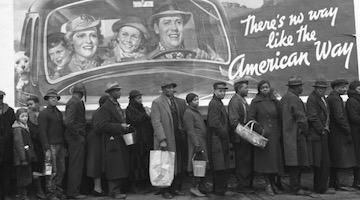 Without self-determination, socialism becomes an economistic demand that fails to account for imperial rule.
 There can be no workers’ rights without peace and social justice. “War and militarism are class issues.”
 On any given day, 80,000 people are locked in solitary confinement in US prisons and jails.
 This week we discuss the rising popularity of socialism in the US, Bernie Sanders’ energy policy, and the electoral obstacles to electing a new Congress.
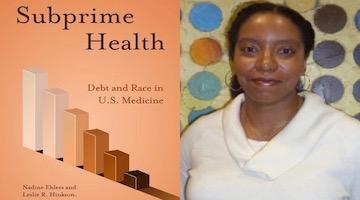 Race-based medicine in the US has solidified health inequality and is bound up with indebtedness.


