Institutional racism is "the mechanism by which the present and future are shaped by racist practices of the past." New Orleans African Americans seeking to rebuild their lives found that government pays more to replace white people's homes, than Blacks. Obama, take note.
Katrina Suit is Institutional Racism Lesson For Obama
A Black Agenda Radio commentary by Glen Ford
"Past evils become present injustices."
Barack Obama pretends not to know the meaning of institutional racism, the kind of racism that is so deeply rooted in the history and practice of a nation that it reproduces racially-weighted results from one generation to the next. Institutional racism has nothing to do with using racial slurs, or other individual acts of hatred. Institutional racism is by far the most pervasive and destructive form of racism, the mechanism by which the present and future are shaped by racist practices of the past. Institutional racism is why the past, isn't really past.
Barack Obama's domain will soon include the U.S. Department of Housing and Urban Development (HUD). HUD was recently sued by the NAACP Legal Defense and Educational Fund and a coalition of civil rights and fair housing groups on behalf of more than 20,000 African-American homeowners from New Orleans. Theirs is a classic case of institutional racism. HUD and the Louisiana Recovery Authority collaborated in administering the $10 billion Road Home program, designed to allow homeowners to rebuild after Hurricanes Katrina and Rita. Payments were based on either the cost of repairing or replacing the property, or the value of the property before the hurricane hit. And there lies the problem. Because of the legacy and ongoing reality of housing segregation, homes in Black areas are valued at less than identical structures in similar white areas. The 20,000 Black New Orleans plaintiffs charge that the federal and state governments have incorporated the race-based disparity in housing values into government policy. Plus, they say the compensation is woefully insufficient to replace what was lost to Katrina.
"Because of the legacy and ongoing reality of housing segregation, homes in Black areas are valued at less than identical structures in similar white areas."
Whites, whose homes are valued higher than Blacks, even when the houses are virtually identical, wind up being rewarded for housing segregation, while Blacks are penalized - again.
It is important to understand that the plaintiffs are not charging that anyone connected with the Road Home program intentionally put Black homeowners at a relative disadvantage to whites. And they claim they do not have to prove malicious intent in order to win their suit - only that the calculations of home values caused a racially disparate result.
The New Orleans case goes to the heart of institutional racism, through which the past manifests itself in the present in clear and tangible ways. In this instance, the legacy of devalued Black neighborhoods (and devalued Black lives) is allowed to reproduce racial injustice in the present by shortchanging Black homeowners and making it less possible for them to rebuild their lives in New Orleans. Past evils become present injustices, the impact of which will affect the fortunes of future generations.
George Bush's Department of Housing and Urban Development, under a Black secretary, has done great damage to Black New Orleans, including destruction of most of the city's public housing stock. If the Louisiana Road Home program case is still active after January 20, Barack Obama will have to decide if his Justice Department will defend a classic example of government complicity in institutionally racist practices. Correcting the racial wrong, in this case, will cost about a billion dollars. Let's see what Obama thinks racial justice is worth - or if he can even recognize institutional racism when it stares him in the face.
For Black Agenda Radio, I'm Glen Ford.
BAR executive editor Glen Ford can be contacted at Glen.Ford@BlackAgendaReport.com.

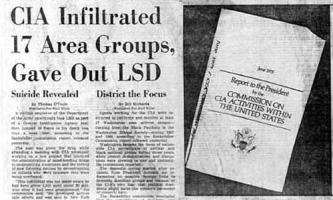 The CIA's Operation Paperclip brought Nazi scientists to the U.S. and MKULTRA mind control experimentation was one of its projects. Black prison inmates were targeted for these unethical procedures.
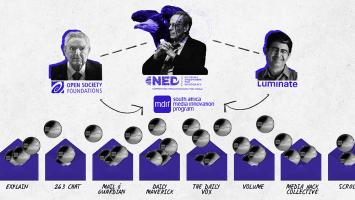 The CIA has played a role in controlling South African media from the days of apartheid to the present.
 After withdrawing from the Forces for Freedom and Change (FFC), the Sudanese Communist Party has continued to call for democratic civilian rule.
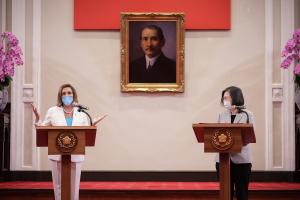
 National and international crises exemplified in Nancy Pelosi's visit to Taiwan. The struggle to secure reparations for African people continues.
 Dr. Anthony Monteiro is a Duboisian scholar and founder of the Saturday Free School for Philosophy and Black Liberation. He joins us from Philadelphia to analyze the crises in U.S. domestic and…


