A Black Agenda Radio commentary by Glen Ford
Click the flash player below to listen to or the mic to download an mp3 copy of this BA Radio commentary.
Small white towns are not typically welcoming to the prospect of large numbers of Black residents – unless they are locked up in cages. The town folks will fight tooth and nail for the privilege of hosting job-creating prisons, and to exercise the inmate's voting rights, as well. “Prison towns and prison-dependent counties are no more eager to relinquish their claim to be 'home' to their incarcerated residents than the slave master was to part with his human property.”
The Stolen Count: Prison Inmates and the Census
A Black Agenda Radio commentary by Glen Ford
“The Census problem with prison inmates, is where to assign their official residency.”
People of West Indian descent are being urged to check their ethnicity as “other” on the U.S. Census form, presumably so they’ll be counted separately from the African American community. The Leadership Conference on Civil Rights urges great care be taken to get an accurate count in the Gulf States, where population movements have still not settled, four years after Katrina. And every ten years there is controversy on how to best avoid undercounting Blacks, Latinos and undocumented aliens. There is one group, however, that is easy to find and enumerate, since they line up for the count at least once every day: the 1.3 million inmates of state and federal prisons. (At any given time, another million people are in local jails, but that’s another matter.)
The problem with state and federal prison inmates isn’t about getting the numbers right, but where to assign their residency. And although the question of who gets to count an inmate as a resident may not mean much to the incarcerated individual, it is a matter of great importance to his home community, possibly hundreds of miles away.
“Denizens of small 'prison towns get to vote on the inmates’ behalf.”
The 40-year national policy of mass Black incarceration has robbed urban communities, not just of men and women, but of federal and state monies that are distributed based on population. When a young man from, say, the Bedford-Stuyvesant section of Brooklyn gets sent upstate to Attica prison, his share of Bed-Stuy’s funding for schools and other public services goes upstate with him, to benefit the town where the prison guards live. Those denizens of small “prison towns” also get to vote on the inmates’ behalf. As an article in the publication “Progressive States” explains, these mostly white, small town people whose livelihoods are dependent on a steady flow of prisoners doing as much time as possible, are not likely to vote in the interests of the inmates or their families in the inner cities. The closest analogy would be to the days when Blacks could not vote in most of the South, but were counted for purposes of allocating seats in state legislatures and the Congress. White folks were allowed to vote, both on their own behalf and, in effect, to cast Black people’s ballots, too. Put another way, simply by showing up on the U.S. Census in a southern state, Black people were forced to vote against themselves and for the white politicians that oppressed them. Prison inmates face much the same situation.
New York City residents, for example, make up 66 percent of state prison inmates, but 94 percent of them are incarcerated upstate in overwhelmingly white counties. This caged population has so skewed the allocation of state senate seats, if the inmates were not counted Republican strength in the legislature would be significantly weakened. In eight upstate New York counties, more than half the “official” Black population actually lives in prison.
Prison towns and prison-dependent counties are no more eager to relinquish their claim to be “home” to their incarcerated residents than the slave master was to part with his human property. But states can begin listing prisoners by their addresses before incarceration, or at least exclude inmates for purposes of drawing up legislative districts. That won’t bring any inmate freedom, but it will help the folks back home.

 Despite portraying Donald Trump as representing everything they oppose, when Democratic President Joe Biden took over the White House he left Trump’s measures against Cuba and China intact, virtual
 Class conflicts between Africa-born and Haiti-born Blacks and mulattos shaped Haitian political battle lines before and after the 1804 revolution and to this day, said Haitian American author and a
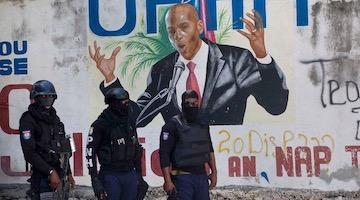 The United States playing any role in Haiti’s future is akin to the fox being left in charge of the henhouse.
 There is a lesson to be learned from the differences in recent U.S. and Chinese historical celebrations.
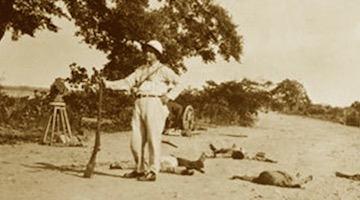 Published in 1920, Self-Determining Haiti remains a remarkable example of investigative journalism and advocacy and a damning testament to the perils and pitfalls of US military


