A Black Agenda Radio commentary by Glen Ford
The historical African American desire for peace clashes with the warlike policies of the first Black president. Something's got to give – and in the end the Black anti-war tradition will make itself dramatically felt. Let's start the process with the Black Is Back rally in Washington, November 7.
Black US Public Wants Peace, But Black US President Wages War
A Black Agenda Radio commentary by Glen Ford
“The Black American image has been tarnished among peace-loving peoples of the planet.”
When the Black is Back Coalition for Social Justice, Peace and Reparations rallies this weekend in Washington DC, it will be expressing the sentiments that have historically made African Americans the most anti-war ethnic group in the United States. Black Americans have been most consistently opposed to U.S. military adventures abroad ever since the major polls began tracking Black opinion. Black opposition to the Iraq war registered most strongly in February, 2003, when the U.S. invasion was only a little over a month away. While majorities of white men and more than a third of white women told pollsters they would favor an invasion even if it killed thousands of innocent Iraqi civilians, only seven percent of African Americans agreed. Hispanics also opposed the invasion back in 2003, although not nearly so strongly as Blacks.
More than 40 years ago, Martin Luther King, Jr., Malcolm X, and Muhammad Ali opposed the Vietnam War and remained icons in Black America because they reflected the views of large segments of their communities, including majorities of Blacks serving in the military.
The outside world had long recognized that African Americans were historically and politically different than their white fellow citizens. In a dramatic example, Iranian students freed their Black captives, along with females, when they seized the American embassy in 1979.
In succeeding decades, Black warmongers gained high profile positions in U.S. government, most notably Colin Powell and Condoleezza Rice. General Powell, as chairman of the Joint Chiefs of Staff, was the televised face of the first Gulf War. As Secretary of State in 2003, Powell disgraced himself at the United Nations, the Black face of a lying government justifying the coming invasion of Iraq. Condoleezza Rice, while George Bush’s national security advisor, raised the specter of an Iraqi “mushroom cloud” to stampede the nation into war. When Rice succeeded Powell as Secretary of State, she dutifully cited Cuba, Burma, North Korea, Iran, Belarus and Zimbabwe as “outposts of tyranny” in the world, and therefore justifiable targets of the United States.
“Black America is caught in an historical contradiction.”
The Black American image has been tarnished among peace-loving peoples of the planet. Yet African Americans remain largely true to their traditional anti-war politics, despite having given overwhelming support to a Black president who has introduced the largest military budget in history, claimed the wars in Afghanistan and Pakistan as his own, further militarized the continent of Africa, and expanded U.S. bases and subversion in Latin America.
Black America is caught in an historical contradiction: It is emotionally invested in the first Black president, even as Barack Obama pursues warlike policies historically opposed by African Americans. It's time to break the spell. The Black is Back Coalition for Social Justice, Peace and Reparations begins the process on Saturday, November 7, at Washington DC's Malcolm X Park. It's about time. Hispanics are now slightly more opposed than Blacks to President Obama's troop escalations in Afghanistan, possibly because Latinos now suffer more casualties than Blacks, but more likely because African Americans find it painful to face the fact that the first Black president is a warmonger.
For Black Agenda Radio, I'm Glen Ford. On the web, go to http://www.blackisbackcoalition.org/.
BAR executive editor Glen Ford can be contacted at Glen.Ford@BlackAgendaReport.com.
The Black is Back Coalition for Social Justice, Peace and Reparations can be contacted through their web site:

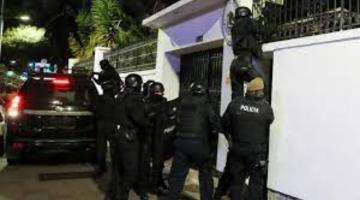 Camila Escalante joins to discuss Ecuador’s intrusion into Mexico’s embassy in Quito and the arrest of Ecuador’s former Vice President who had been given asylum there.
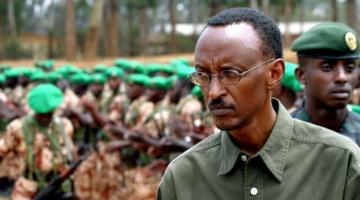 We revisit a discussion with Ann Garrison and the late Glen Ford about U.S. and human rights industrial complex support for Kagame in 2017.
 In the second part of a two-part interview, we speak with Raymond Nat Turner about his work and an upcoming performance with his group, Upsurge New York City, on April 13.
 The recent 2024 United National Antiwar Coalition conference brought together an international group of activists from member organizations who mobilize against imperialism, racism, and neo-…
 The 1805 Constitution of Hayti presents a far-reaching and radical vision for the nation – and demonstrates why Haiti must constantly fight for its sovereignty.


