A Black Agenda Radio commentary by Glen Ford
Words hold meaning, but sometimes they mean different things in different cultures. A new study shows the difference in the understood meanings of commonly used words is big enough to adversely affect the SAT scores of Black students. It turns out that Blacks do better than whites on the hard questions involving big words – but not enough to even the odds.
New Study Shows Racial Bias in SATs
A Black Agenda Radio commentary by Glen Ford
“Black students did worse than whites on easier questions with more common words.”
Black students that take the verbal SAT do better than whites at answering hard questions, involving longer and less commonly used words. White students do better on easier questions that use common words. That may sound counter-intuitive, but it’s the conclusion of a new study, which tends to confirm research performed in 2003, that showed at least some parts of the SAT are biased against African Americans. The study could become the basis for legal action to outlaw SATs as racially discriminatory.
The latest study was conducted for the University of California system, and replicates most of the results of the 2003 study. Researchers concluded that Black students did worse than whites on easier questions with more common words because some of those words have different connotations in Black and white cultural settings. For example, simple words like “bad,” “tight” and “slick” carry different meanings in colloquial Black speech than in white usage. The SATs test the “white” meanings, putting Blacks at a disadvantage for the easy questions. In the smaller number of hard questions involving words that are not normally used in everyday, household speech, Blacks score higher than whites, because these learned words don’t have multiple or culture-based meanings. Apparently, Blacks did better at learning the uncommon vocabulary than whites. However, whites do so much better than Blacks on the easier questions, white overall SAT scores are much higher.
“Blacks did better at learning the uncommon vocabulary than whites.”
The research measured the performance of Black and white students who were matched “by proficiency” – that is, based on their educational backgrounds and skills, the Blacks and whites should do about the same on the SATs. There was no indication that the test was biased against Latinos. But one of the researchers for the first, 2003 study found that some of the Black students would have scored about 100 points higher on the SAT if there had been more hard questions on the test.
Critics of the SAT and other “high stakes” tests have called the new research a “bombshell” that should move more institutions to drop SATs entirely. The College Board is virtually a creature of high stakes tests. The Board withheld data from the racial bias researchers for two years, and continues to claim the studies produced “inconsistent findings.” The Board blames racial discrepancies in testing on “educational inequities” in the United States, but claims the tests are fair.
The truth is, there is both vast “educational inequity” in the U.S. and built-in cultural/racial biases in the tests, themselves. High stakes testing is embedded in the institutionally racist walls that were massively erected in the wake of nominal integration of education, in order to preserve white privilege. But the stakes have gotten even higher. Standardized testing is now used as a weapon to set public education up for failure, as an institution, so that it can be privatized and remain racially exclusive. It is a new means to an old end.
For Black Agenda Radio, I'm Glen Ford. On the web, go to www.BlackAgendaReport.com.
BAR executive editor Glen Ford can be contacted at Glen.Ford@BlackAgendaReport.com.

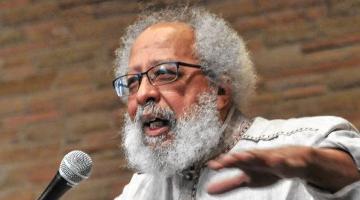 The late John H. Bracey, Jr. argued that Black Studies should be wedded to African liberation, not to the corporate-bureaucratic structure of the university.
 The U.S. has declared China to be an adversary, but its economic prowess cannot be eclipsed by a nation that is addicted to provocation and war making.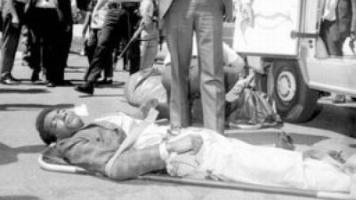
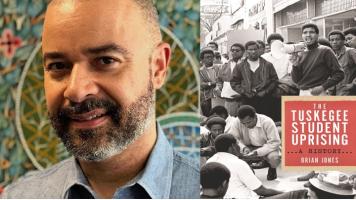 This week’s featured author is Brian Jones. Jones is Director of The New York Public Library’s Center for Educators and Schools. His book is The Tuskegee Student Uprising: A History.
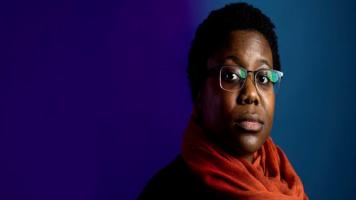 This week’s featured scholar is Moya Bailey. Bailey is an associate professor in the Department of Communication Studies at Northwestern University. Her article is “The Ethics of Pace.”


