A Black Agenda Radio commentary by Glen Ford
One should not overstretch the similarities between Black South Africa and Black America. But both communities have been in denial about their nominal leaders. "After all these years of believing that labor - Black labor - was on the inside of power in South Africa, the unionists of COSATU are forced to a different realization." The same realization looms for African Americans.
In Some Ways, ANC's South Africa Like Obama's USA
A Black Agenda Radio commentary by Glen Ford
"All we have done is to change the skin color of the driver."
In the words of Zwelinzima Vavi, the president of the Congress of South African Trade Unions, COSATU, "All we have done is to change the skin color of the driver, but in terms of economic policy the direction remains the same as the one the apartheid regime was traveling, which was inspired by Margaret Thatcher." Thatcher was, of course, the right-wing British Prime Minister who had a political love affair with U.S. President Ronald Reagan. Their policies, with minor alternations, remain in place in the United States and Britain, today. And, according to union leader Zwelinzima Vavi, the same is true in South Africa, despite 16 years of nominal Black rule.
On the face of it, COSATU is in a much better position to influence South African government policy than unions in the United States. The struggle to overthrow apartheid was led by a triumvirate of the ANC - the African National Congress - COSATU and the South African Communist Party. With the Left comprising two legs of the stool, and the ruling ANC Party enjoying overwhelming majorities, one would think that the Left would be in an unchallenged position to transform South African society. Yet, again quoting trade union leader Vavi, "This road we have travelled has not only reproduced but deepened inequalities and unemployment.... Various measures indicate that income inequality has widened."
In the United States, income inequalities have been widening for the past 30 years. Republicans have held national power for 20 of those 30 years, but unions exercised virtually no strategic influence in the eight years of Democrat Bill Clinton's reign, when corporate free trade became law and Wall Street was liberated from the rule of law through deregulation. President Obama did not lift a finger for labor's number one priority: a bill that would have made it easier to replenish depleted union ranks. Instead, he bailed out Wall Street to the tune of $12 to 14 trillion.
"Real power in supposedly Black-ruled South Africa is rooted in the 'discredited Washington consensus.'"
Similarly, in South Africa, the Black government this summer deployed its full powers to blunt a nationwide strike of public sector workers struggling against growing inequalities. After all these years of believing that labor - Black labor - was on the inside of power in South Africa, the unionists of COSATU are forced to a different realization. The real power in supposedly Black-ruled South Africa is rooted in what Mr. Vavi calls the "discredited Washington consensus that is based on the supremacy of the markets and the limited role of the state" - the same equation of power that exists under Barack Obama's regime.
Of course, South Africa's Black government was chosen by a huge Black majority of the electorate, while the government in Washington merely has a Black chief executive elected mainly by white voters. But the connecting link is the longtime refusal among Blacks, in the face of the evidence, to admit that the Black person or persons in charge are not on their side. It has taken some very smart, sophisticated people in South Africa 16 years to figure that out. It will take a little longer than two years for Black folks to get wise to Barack Obama. But time is ticking on both sides of the Atlantic.
For Black Agenda Radio, I'm Glen Ford. On the web, go to www.BlackAgendaReport.com.
BAR executive editor Glen Ford can be contacted at Glen.Ford@BlackAgendaReport.com.

 The U.S.-led arms trade and the Great Race to the Bottom are interconnected phenomena that cannot be fought separately.
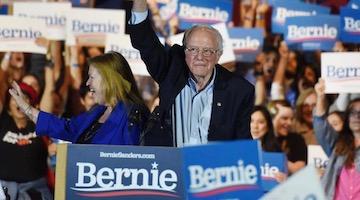 If Bernie Sanders keeps going along with the Russiagate propaganda, he will find himself “Trumped” by the War Party and unable to enact his agenda.
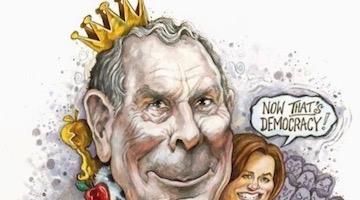 Massa Mikul say, “Gib me de blak congressmen an’ mayors— Negroz who unerstan— ‘cause dey is all multimillionaires…” He say, “Big Negroz don’ feel lak dey's takin’ too big ob a risk
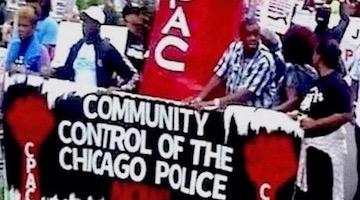 This policy paper makes the case for reviving the Black Panther Party program for community control of the police.
 Is big media really concerned for Kobe’s family, friends and community, or with Bryant’s corporate value as a black celebrity, an apolitical athlete and a commodity?


