A Black Agenda Radio commentary by BAR editor and columnist Jared A. Ball
White Left resistance to effective, comradely collaboration with Black Leftists “makes impossible the ‘revolution of social values’ called for by Dr. King.” Whites control far more resources on the Left, especially in media. However, “the general absence of Black intelligence in White media, specifically that which is defined as White Left or Progressive media, inhibits broad social movement building.”
Black Radical Thought Will Save Us All
A Black Agenda Radio commentary by BAR editor and columnist Jared A. Ball
“Without sustained and serious inclusion of Black knowledge into segments of the White Left there is simply no hope for either or any other community.”
It doesn’t happen enough but when it does we should revel in the example and perhaps even build from it. The “it” to which I refer is the acceptance of Black intelligence into predominantly White spaces. And regardless of what some may think of interracial exchange the simple fact is that without sustained and serious inclusion of Black knowledge into segments of the White Left there is simply no hope for either or any other community. The general absence of Black intelligence in White media, specifically that which is defined as White Left or Progressive media, inhibits broad social movement building. It prevents those engaged in Black struggle from receiving the necessary support they deserve from White potential allies with greater resources and makes impossible the “revolution of social values” called for by Dr. King from occurring within the dominant White society; a revolution of values without which no greater form of Black American liberation can emerge. We may not like it but without significant changes from within White America the already bleak condition of the Black struggle can only worsen.
So recently when one of the White Left mainstays in my own media diet, Media Matters with Bob McChesney, had one of those rare moments where Black intelligence was welcomed and almost gave a sense of what is possible. His guest was Dr. Sundiata Cha-Jua, noted scholar of history and African American Studies at the University of Illinois and current president of the legendary National Council of Black Studies. In an exceptional display of knowledge and principle Cha-Jua demonstrated the hopes and fears represented in just this kind of interaction. The hope is found for Progressives in some measure of inclusion of the analysis of Black America, the fear is represented, as explained by Cha-Jua, in the absence of press coverage of the interracial solidarity shown among those participants in the recent Georgia prison strike.
“To prevent further rebellion, Black radicalism had to be given no coverage at all.”
McChesney is a leading White progressive scholar in media studies and within the media reform movement whose position can be seen as metaphorically representing the larger White Left. He writes eloquently of the need for change, albeit largely in a media reform context, and hosts a show which broadly speaking consists of left-of-center academic and activist thought. But with few exceptions does his show ever invite Blackness that goes beyond his use of Thelonious Monk as theme music. Cha-Jua was more than adequate as representing metaphorically the Black radical tradition whose inclusion in the broader White Left dialogue is usually kept to a minimum.
In less than one hour Cha-Jua was able to brilliantly outline some key gaps in perspective that continue to inhibit progress. He gave a brief but powerful overview of U.S. history, which he rightly said is woefully unknown to most in the country. This included the post-Civil War development of racial and national identity and the permanent inscription of Black as sub-human and perpetual slave. He described the famed 1967 Kerner Commission report in which media and press coverage – or the lack thereof – instigated much of the Black rebelliousness of the 1960s. But Cha-Jua also noted the need emanating from that report that to prevent further rebellion, Black radicalism had to be given no coverage at all. Hence the dilemma still faced by Black progressive movement building and broader national movement building, as well as, the continued complicity in this played by members of the White Progressive media world today.
Perhaps most indicative of my point about the damaging disconnect still prevalent between progressive elements within Black and White America was the brief exchange the two had regarding the Tea Party. Cha-Jua’s use of George Jackson’s prescient analysis of fascism from 1971 caused a defensive attempt by McChesney to redefine that language into a safer “right-wing populist movement.” This required a Black radical assertion that just like the current attack on institutional Black radical thought in the form of Black Studies the community itself has to assure its right to, as Cha-Jua said, not “censor our thought in order to conform to the mainstream.” Lynching was, he said, “terrorism” just as segregation was “apartheid.” And Black Studies and Black radical thought are disciplines with their own theories and modes of interpretation which, I am suggesting, must be allowed to inform key segments of the White Left as much as the Black community if any real and sustained movement is to be developed.
For Black Agenda Radio, I’m Jared Ball. Online go to www.BlackAgendaReport.com.
Jared A. Ball can be reached via email at freemixradio@gmail.com.

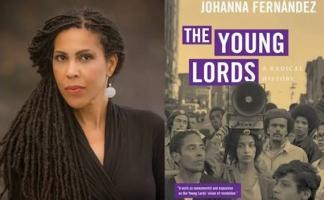 Johanna Fernandez touched many lives through her scholarship, activism, and belief that people themselves can change history and be "the ones we've been waiting for."
 "Unlike the Zionist claim that 'Israel has a right to exist,' my assertion is rooted in international law. Of course, given Israel’s propensity for violating such laws, it’s no surprise they’re still…
 The recent report by the U.S. fascist state attacking Cuba and its allies serves as a glaring call for urgent and strategic unity among the broadest sectors of the U.S. left, and all people of…
 Nicaraguan President Daniel Ortega stated that when the country's next elections take place, none who promoted a violent anti-government insurrection in 2018 will be allowed to stand for office.…
 "Israel and Washington use Ceuta and Melilla to attack Spain for naming the genocide in Gaza. The enclaves are colonial relics. But the powers now raising the issue have no concern for African or…


