Without control over some form of mass media, without the ability to speak with and to hear its own voice, no community can long exist. Commercial media in the hands of for-profit broadcasters can only build markets, not communities. This year, the FCC will accept license applications for hundreds or thousands of new local low-power FM radio stations in cities and towns across the U.S. It's an unparalelled chance, and the last chance for local organizers for peace and justice to grab the mics.
2011 Is The Year To Grab The Mic
A Black Agenda Radio commentary by BA managing editor Bruce A. Dixon
“Without control over some kind of mass media, without the ability to speak with and to hear its own voices, communities simply do not exist. “
It's time to grab the mic. This year, 2011 is the time, perhaps the past time that community and nonprofit groups, labor unions, sororities, musicians, promoters and would-be newsmakers will have, to grab their own places on the FM radio dial in cities and towns across the U.S., thanks to the Community Low-Power Radio Act.
Passed and signed into law after more than a decade of stubborn community organizing and persistent lobbying, the Community Low Power Radio Act allows the FCC to grant broadcast licenses to not for profit organizations on the third adjacent, and in some cases the second adjacent spot on the radio dial between full power commercial radio stations.
These new low power FM radio stations will broadcast at about a hundred watts, giving them roughly a 7 mile broadcast radius – a circle 14 miles across. In small and medium cities, that's a significant audience. In major metropolitan areas it can be a vast audience. The licensing window is expected to open late this year, so the time to begin researching and preparing your license application is now.
How important is this? Without control over some kind of mass media, without the ability to speak with and to hear its own voices, communities simply do not exist.
Musicians and producers cannot break into commercial radio playlists without big sponsorships or million dollar bribes. Not for profit low low power radio will enable musicians, clubs and producers to be heard in the areas where they actually live and work. Not for profit low power radio sets deejays and emcees free to play the music they and their audiences like instead of what some national broadcaster or sponsor demands. And most of all, not for profit low power radio empowers local newsmakers, local forces for peace and justice to produce their own programming and speak to their own neighbors. Low power radio lets your neighbors lift up and share their own concerns over those of corporate-endorsed experts and celebrities.
What will happen if responsible, organized local forces don't take advantage of this low power opening? The last time a licensing window opened up, a handful ruthless and backward-looking right wing evangelical broadcasters applied for thousands of licenses across the country in order to place “repeaters” or “translators” to pull the same programming down to thousands of locations nationwide.
“For more information, contact the Prometheus Radio Project online at prometheusradio.net. Prometheus will be monitoring the rulemaking process as it unfolds...”
In the next few weeks, the FCC will begin a rule making process to sketch out the guidelines under which license applications will be considered. The rule making process is not likely to last more than six months, and at its end, there will be a 30 period in which license applications will be accepted. Then the window will close, perhaps forever. If you want to be heard, if you want your community to hear its own voice on the FM radio dial, this will be your last chance.
For more information, contact the Prometheus Radio Project online at prometheusradio.net. Prometheus will be monitoring the rulemaking process as it unfolds, and can guide your local organization in the completion of a successful broadcast license application. Visit the low power FM radio page at BlackAgendaReport.com, where we will print updates every two weeks on the rulemaking and applications process, with guides, tips and resources for how your local nonprofit organization can grab the mic.
Without control over some mass media, communities do not exist. Let's grab that mic.
For Black Agenda Radio, I'm Bruce Dixon. Find us at www.blackagendareport.com and at blackagendareport.com/lowpowerfmradio.
Bruce A. Dixon is managing editor at Black Agenda Report, and can be reached at bruce,dixon(at)blackagendareport.com

 The desire for US citizenship was never the sole consideration of African and African-descended people.
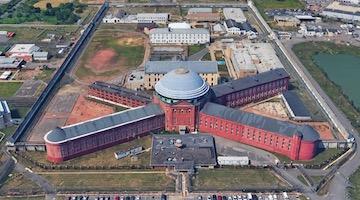 In 1990, Lawrence Bell was 14, orphaned and living in an abandoned house when three Camden cops pressured him to sign a confession of murder.
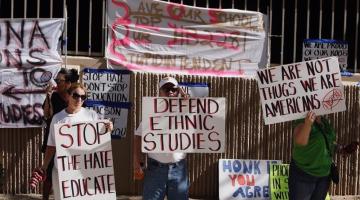 The US university is marked by the dominance of intellectual white liberalism in tension and complicity with conservative nationalism and neoliberalism.
 Alabama Communists helped lay the foundation for the organized civil rights movement that emerged in the late 1940s and early ’50s.
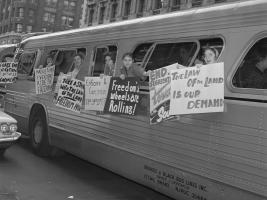 Prison and police abolition were key to the thinking of many midcentury civil rights activists.


