A Black Agenda Radio commentary by BAR managing editor Bruce A. Dixon
There are more than 40 federal offenses for which the death penalty can be applied to human beings, most of them connected to homicide of one kind or another. But countless homicides committed by the artificial persons we call corporations go unpunished every day. Apparently “personal responsibility” applies only to humans who are not operating behind the legal shield of corporate personhood.
Time For A Corporate Death Penalty
by BAR managing editor Bruce A. Dixon
Over the last hundred or so years, corporations have gained many of the rights previously accorded only to human beings. Corporations have the right to buy and sell anything or anyone that can be bought or sold. Corporations have claimed the right to lie in their advertising and PR as "free speech," along with the right to help us mere humans choose our judges and elected officials with unlimited amounts of cash, including anonymous cash. Corporations have been awarded the right to patent genetic sequences of diseases and to monopolize their cures, as well as patent rights to living plants and animals not of their invention. A whole type of new anti-pollution regulation called "cap and trade" actually enshrines a corporate right to pollute and establishes exchanges upon which speculators can bid, trade and capture rents for those alleged rights. And unlike a working person, who has no right to next month's let alone next year's wages, legal scholars working for corporations have devised and popularized something they call the "regulatory takings" doctrine, under which corporations may claim and recover from the government rights to profits they might have made in years to come. And let's not even talk about trillions in corporate welfare for banks, military contractors, Wal-Mart and others.\
While many argue that corporations have too many rights as it is, this might be a good time to extend them at least one more right we humans have kept for ourselves until now; the right to be put to death for serious crimes. Right now federal statutes alone offer individuals more than 40 different ways to earn the death penalty, including kidnapping, treason, aircraft hijacking, espionage and many varieties of murder, conspiracy, threatening murder and some drug crimes. Individual states offer the death penalty for a host of similar offenses.
Putting bad corporate actors down the way we do rabid dogs and serial killers is not a new or even a radical idea. Corporations are created by the charters of individual states, so states DO have the power to revoke them. Early in this country's history, corporate charters used to limit a company's existence to a set number of years, to confine their operations to manufacturing a certain item, building a specific road or canal and prohibit them from changing ownership, dumping or concealing their assets or engaging in other kinds of business. These are legal powers that our governments have not used in a long, long time, but which it's high time to reclaim.
Homicidal profit-seeking on the part of corporations has become an everyday fact of modern life. Whether it's employers cutting health and safety corners, marketers pushing unsafe drugs, food and products of all kinds, or the deadly industrial fouling of the planet's air, soil, oceans and climate we are living in the midst of a corporate crime wave of murderous and epic proportions. If we value human life, it only makes sense to treat corporate serial killers like, well, corporate serial killers, to confiscate their ill-gotten assets, to revoke their corporate charters and sentence the artificial personae of corporate malefactors to death. If corporations are legal persons, it's time to enforce some personal responsibility upon them with a corporate death penalty.
After we accomplish that, it will be time to think about extending a little of that personal responsibility to the actual humans who operate behind the legal shield of the corporations. But right now, as the saying goes, a corporation can't even get arrested in this country, which, come to think of it is still another right we humans ought to bestow upon them.
For Black Agenda Radio, I'm Bruce Dixon. Find us on the web at www.blackagendareport.com.

 Jaylani Husseini joins us to discuss the Abandon Biden campaign, the results of the Michigan primary uncommitted campaign, and Israeli war crimes in Gaza
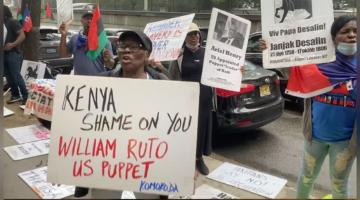 Dahoud Andre joins us to discuss the latest indictments in the 2021 assassination of president Jovenel Moise, the 2004 coup against Aristide, and the latest US plan for the occupation of Haiti.…
 Aaron Bushnell was desperate for the world to know what was happening to the people of Gaza. So much so that he died by his own hand, publicly, and in a painful way. But Palestinians are dying…
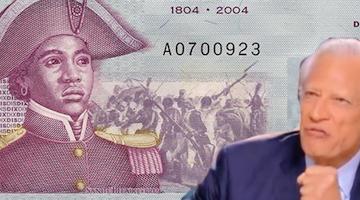 Remembering France’s odious participation in the 2004 coup d’etat in Haiti.
 Jemima Pierre’s presentation at a forum to commemorate the US-France-Canada-sponsored 2004 coup d’état in Haiti. The forum was hosted by the Center for Caribbean Studies at the University of Toronto…


