N.J. historic preservation officials insult the legacy of Martin Luther King Jr. -- Martin Luther King Jr. in 1948
New Jersey was the site of a young Dr King’s very first formal protest and lawsuit, but the state refuses to recognize the events.
“King plotted that first protest at a house in Camden.”
A significant “first” usually merits the designation of historic.
For example, the first formal protest against racial discrimination by civil rights icon Dr. Martin Luther King Jr. in June 1950 — an action that produced King’s first lawsuit against discrimination — is a significant “first” that fits the definition of historic.
However, the Historic Preservation Office in New Jersey recently declared that Dr. King’s first protest and his first lawsuit — both of which occurred in Maple Shade, New Jersey, not Montgomery, Alabama — were not historic.
The HPO based this declaration on the startling assertion that King’s first formal protest and first lawsuit hold “minimal” historic importance.
This declaration contradicts statements from King that the Maple Shade protest accelerated his commitment to social change activism. One of King’s references to that protest occurred in Philadelphia during a 1961 press conference.
This HPO declaration is even more baffling from a New Jersey history perspective because it completely dismisses the support King obtained hours after his 1950 protest from two noted New Jersey civil rights leaders: the then-state NAACP president and that NAACP’s lawyer. Both of those leaders have their own respective historic “firsts” in New Jersey.
That NAACP president had lobbied for passage of the civil rights law the NAACP’s lawyer utilized for King’s lawsuit. That New Jersey civil rights law was the first such statewide civil rights enforcement measure approved anywhere in the United States.
“The state completely dismisses the support King obtained hours after his 1950 protest from two noted New Jersey civil rights leaders:”
The HPO made that declaration as part of the agency’s rejection of an applicationto list the Camden house where King plotted that first protest on the state’s Register of Historic Places. The HPO asserted that since King did not officially “live” in that house, the property has no historic importance. Residents of that house said King both plotted that protest there and stayed there often. The HPO rejected this confirmation of historic import.
The HPO’s process for rejection of that registry listing application, filed in March 2015, is fraught with irregularities.
- The HPO rejection took 1,782-days, far longer than its normal 90-day or less approval/rejection time frame.
- According to the HPO, its review included a first-ever study to determine the validity of the registry listing application, an action never ordered for any of the other 51,000-plus items on New Jersey’s Historic Registry inclusive of nearly 100 registry listings in the city of Camden.
The HPO’s dismissal of the New Jersey roots of Dr. King’s activism is abhorrent, particularly when numerous sites and the impacts of King’s activism are respectfully recognized from Alabama through Philadelphia to London, England and beyond.
A Pennsylvania historic marker, bust and mural at 40th Street and Lancaster Avenue in West Philadelphia commemorating a rally where Martin Luther King Jr. spoke, and drew more than 10,000 people. (Courtesy of Linn Washington Jr.)
Adding insult to injury, the HPO announced its rejection of New Jersey’s share of Dr. King’s vibrant legacy on the eve of Black History Month 2020.
The HPO’s rejection arguably continues the indignities the prompted King’s protest inside a café in Maple Shade nearly 70-years ago.
Linn Washington Jr. has been researching and writing about Martin Luther King Jr.’s Maple Shade protest since 1985. Washington is a professor of journalism at Temple University.
This article previously appeared on the web site of WHYY radio, Philadelphia.
COMMENTS?
Please join the conversation on Black Agenda Report's Facebook page at http://facebook.com/blackagendareport
Or, you can comment by emailing us at comments@blackagendareport.com




 Joshua Reaves-Charmelus spoke with Ben Passmore to discuss the “Freedom 250” UFC event, its meaning, and the broader problem of right-wing fighting culture.
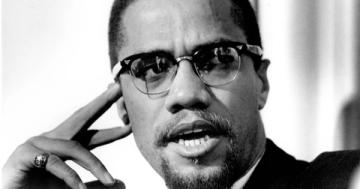 Malcolm X explained it well. Every Black person in this country is a prisoner, sometimes literally behind bars, and sometimes on the outside of jail, but a prisoner, nonetheless.
 The United States announced that Kenya, with the permission of a comprador government, would serve as an Ebola quarantine hub for Americans, ignoring the will of the Kenyan people and treating the…
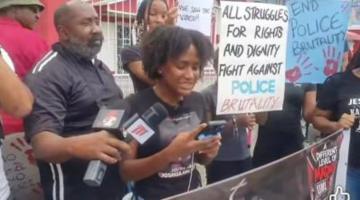 A protest leader in Trinidad was arrested during Labour Day celebrations for the crime of demanding justice for a paralyzed shooting victim. The government's willingness to silence dissent at home…
 Washington's economic war has left Cuba with few good options. The recently announced reforms require a very thorough analysis.


