The Missing Black History At Some Civil War Memorials
A Black Agenda Radio Commentary by BAR managing editor Bruce A. Dixon
In Georgia where I live these days every small and medium sized town has a Confederate monument. There’s one right outside the Decatur subway stop on the MARTA est-west line. The state even has special laws on the books to prevent anybody from defacing, removing, concealing or destroying Confederate monuments on public property, though the law explicitly does permit re-interpreting these abominations. So it would be perfectly legal to put new corrective plaques or interactive kiosks next to them explaining who these people really were and what kind of people erected monuments on public property to slaveholders decades after the war.
I was born and raised in Chicago. Civil War monuments are rare in the north. I was in my thirties before somebody showed me what I believe is the only Civil War memorial in Chicago, at the site of Camp Douglas near 32nd and Cottage Grove on the south side. The phallic looking monument is dedicated to the four or five thousand Confederate prisoners of war who perished there of disease, starvation and malign neglect. There were about a dozen more hellholes like Camp Douglas, in New York, Virginia, North Carolina and other places on both sides. The worst was Andersonville, in Sumter County GA where 13,000 died. Andersonville’s commandant was tried and hanged at war’s end, one of very few Confederates to see the inside of a cell, let alone the hangman’s noose.
I do suppose those four or five thousand Confederate soldiers who died in Chicago deserve a memorial. Certainly they deserve it a lot more than the slaveholding southern generals and politicians they were dumb enough to fight for. For ordinary white people, white supremacy is always stupid like that. The Confederate army was a draftee army, but any white man who owned 20 or more slaves was exempt from the draft. For them it was a rich man’s war, but a poor man’s fight.
Though I haven’t been to the site of Chicago’s Camp Douglas monument since the 1980s I’m willing to bet the memorial exhibit says nothing about the reason those four or five thousand white boys in Chicago and fifty thousand more white boys in the other camps north and south died.
They died because by 1863 the federal armies began fielding regiments of black troops. By war’s end there were more than 200,000 black soldiers in the Union Army, most of them former slaves. The Confederates refused to treat captured black soldiers as prisoners of war. Captured black soldiers were murdered on the spot, or sold into slavery. White officers and noncoms leading black troops were supposed to be tried and summarily executed for leading slave insurrection, a capital offense, so they also took pains not to be captured alive.
The federal government demanded that captured black soldiers be treated as prisoners of war. The Confederates refused. The north stopped exchanging prisoners, and the numbers of captured prisoners of war mounted up into the hundreds of thousands. The South could barely feed its civilians and soldiers, let alone its prisoners, and the north simply would not. The 56,000 Civil War prisoners who perished at Andersonville, at Elmira, at Camp Douglas and elsewhere died because the South preferred to murder captured black soldiers or sell them into slavery.
Unlike the slaveholding generals, the dead POWs deserve some kind of memorials. I haven’t been to Camp Douglas in 35 years and I’ve never visited Elmira NY or Andersonville. But I’ll bet next month’s mortgage payment – yours or mine, whichever is greater, that none of the plaques or exhibits at those places say why those white boys had to die. They died because the south would not treat black soldiers as prisoners of war.
Maybe someday soon some of us will march to some of those places and put up an interactive kiosk, dedicate an extra plaque that tells the missing history of why those boys had to die.
For Black Agenda Radio I’m Bruce Dixon. Find us on the web at www.blackagendareport.com.
Bruce A. Dixon is managing editor at Black Agenda Report, and serves on the state committee of the GA Green Party. He lives and works near Marietta GA and can be reached via email at bruce.dixon(at)blackagendareport.com. He is learning to answer his Twitter account @brucedixon too.

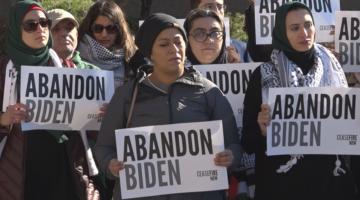 Jaylani Husseini joins us to discuss the Abandon Biden campaign, the results of the Michigan primary uncommitted campaign, and Israeli war crimes in Gaza
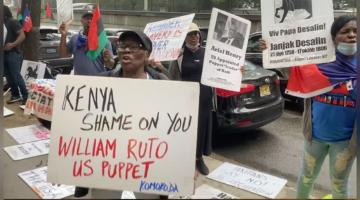 Dahoud Andre joins us to discuss the latest indictments in the 2021 assassination of president Jovenel Moise, the 2004 coup against Aristide, and the latest US plan for the occupation of Haiti.…
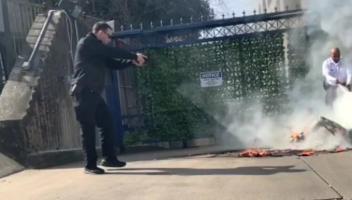 Aaron Bushnell was desperate for the world to know what was happening to the people of Gaza. So much so that he died by his own hand, publicly, and in a painful way. But Palestinians are dying…
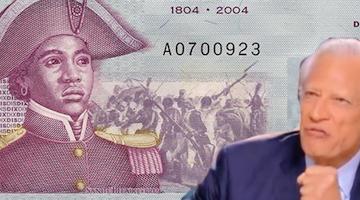 Remembering France’s odious participation in the 2004 coup d’etat in Haiti.
 Jemima Pierre’s presentation at a forum to commemorate the US-France-Canada-sponsored 2004 coup d’état in Haiti. The forum was hosted by the Center for Caribbean Studies at the University of Toronto…


