A Black Agenda Radio commentary by executive editor Glen Ford Voter suppression plays an important role in keeping Black turnout below that of whites, but does not explain why overall U.S. voter participation is far below most developed countries on the planet. The reason is simple: the rich control both political parties and, as a result, “the U.S. offers the narrowest spectrum of electoral choices in the industrial world.” Voting has relatively little impact on how the country is run.
U.S. Voter Turnout is Low Because There’s Little to Vote For A Black Agenda Radio commentary by executive editor Glen Ford “White Americans also vote in numbers far below almost all of the rest of the developed world.”
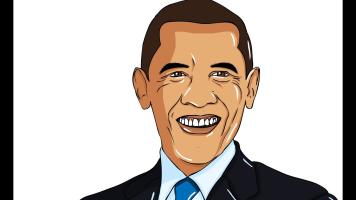
President Obama wants you to believe that the political map of the United States would be transformed – “completely changed,” he says – if citizens were required by law to vote. Obama told a town hall meeting
But, why does the United States have the lowest voter turnout th on the global Happiness rd on the Satisfaction with Life white Americans also vote in numbers far below almost all of the rest of the developed world.
Americans don’t vote because both major political parties are answerable to the same people: the moneyed classes, the power structures that determine the issues that will be on the political agenda long before the party primaries begin. This is called the hegemony of the bourgeoisie, the rule of the rich.
The corporations and bankers choose the menu; the only option citizens have is whether to select from the pre-packaged list of candidates, or stay home. Almost two out of three
Blacks Corralled by Democrats The Democrats want to keep their lock on the Black vote, but they have no interest in Black people voting their own political agenda, for the simple reason that Blacks are the most left-wing constituency in the country and must, therefore, be kept in check by the Democratic Party machinery. It is the Democrats who have for decades sought to break up concentrations of Black voters, spreading them out across a number of districts. This gives the Democratic Party a better chance to win seats in more districts, but it means that only those Black candidates that can appeal to a substantial segment of white voters can win election. The Black political conversation is left in a state of arrested development. Ultimately, even the Black political landscape turns into a desert, and rational Black people choose not to vote.
There is much more to politics than voting. The Sixties was the most productive decade in Black American history, but the victories came mainly from the street. The vote can be put to good use, but not when it’s cast for a Republican or a Democrat. Which is why so few votes are cast on Election Day in the United States.
For Black Agenda Radio, I’m Glen Ford. On the web, go to BlackAgendaReport.com.

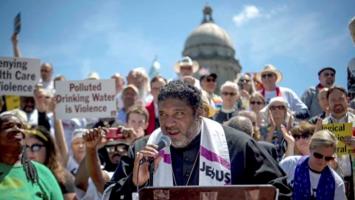 It is disheartening to hear movement leaders say they are inspired by Martin Luther King while also supporting the U.S. proxy war against Russia. Like all wars it endangers the lives of…
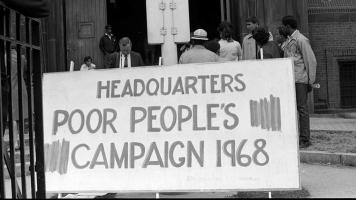 The demands for justice at home and abroad must not be sacrificed on the altar of what is called pragmatism. The false choices presented by liberalism can undermine the movement altogether.
 A May Day 1928 essay by Black communist Williana “Liana” Jones Burroughs – aka Mary Adams – recounts the history of African revolt in the Americas.
 Elon Musk's purchase of the Twitter platform was a hotly debated topic. But neither Musk nor any other individual is the root of the world's problems. Liberalism which pretends to…
 …
…


