The violence of slave-owning women especially could go unchecked, particularly when the victims were black children.
“White women were more likely to inherit enslaved people than land.”
They Were Her Property: White Women as Slave Owners in the American South
Stephanie E. Jones-Rogers
Yale University Press
ISBN: 9780300218664
She knew, but she didn’t participate — not fully. She participated, but she didn’t know — not everything. She was a bystander. She was an anomaly.
The full role of white women in slavery has long been one of the “slave trade’s best-kept secrets.” “They Were Her Property,” a taut and cogent corrective, by Stephanie E. Jones-Rogers, who teaches at the University of California, Berkeley, examines how historians have misunderstood and misrepresented white women as reluctant actors. The scholarship of the 1970s and ’80s, in particular, did much to minimize their involvement, depicting them as masters in name only and even, grotesquely, as natural allies to enslaved people — both suffered beneath the boot of Southern patriarchy, the argument goes.
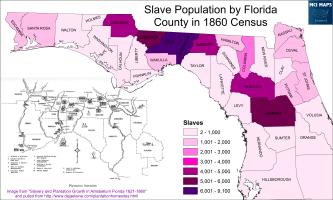
Jones-Rogers puts the matter plainly. White slave-owning women were ubiquitous. Not only did they profit from, and passionately defend, slavery, but the institution “was their freedom.” White women were more likely to inherit enslaved people than land. Their wealth brought them suitors and gave them bargaining power in their marriages. If their husbands proved unsatisfactory slave owners in their eyes, the women might petition for the right to manage their “property” themselves, which they did, with imaginative sadism.
How have so many historians gotten it so wrong?
According to Jones-Rogers, they have not been listening to the right people. “They Were Her Property” draws on the customary sources — letters and other documents from slave-owning families and the like — but radically centers the testimonies of formerly enslaved people in interviews conducted by the Federal Writers’ Project, part of the Works Progress Administration.
“The full role of white women in slavery has long been one of the “slave trade’s best-kept secrets.”
From these stories, Jones-Rogers brings an unseen world to life: of white women’s instruction in domination, a process of grooming that began in infancy. W.P.A. interviewees recount threats, abuse and whippings administered by white children. “It didn’t matter whether the child was large or small,” one woman said. “They always beat you ’til the blood ran down.”
“They Were Her Property” joins a tide of recent books — among them, Sven Beckert’s “Empire of Cotton,” Edward Baptist’s “The Half Has Never Been Told,” Walter Johnson’s “River of Dark Dreams” and Caitlin Rosenthal’s “Accounting for Slavery” — that examine how slavery laid the foundation of American capitalism, including the invention of financial instruments, such as bonds that used enslaved people as collateral. Jones-Rogers writes, “If we examine women’s economic investments in slavery, rather than simply their ideological and sentimental connections to the system, we can uncover hitherto hidden relationships among gender, slavery and capitalism.”
Previously invisible sectors of the market are illuminated, many created and controlled by white women. Historians long asserted, for instance, that Southern women used wet nurses only “as a last resort,” but the testimonies of formerly enslaved people — and advertisements from the 18th and 19th centuries — tell a different story. The practice appears to have been widespread. One woman recalled that her enslaved mother always gave birth at the same time as her mistress, so she would be available to nurse the white baby. “These recollections make it clear that enslaved women were giving birth on a routine basis. But what often remains unexplored is what led to these constant conceptions,” Jones-Rogers writes. Some were “undoubtedly the result of sexual assault.”
“If we examine women’s economic investments in slavery, we can uncover hitherto hidden relationships among gender, slavery and capitalism.”
In horrifying, meticulous detail, this book illustrates the centrality of violence to capitalism. Baptist argued the same point in “The Half Has Never Been Told.” It was sheer brutality that dramatically increased the cotton yield between 1800 and 1860, he wrote. No new technology or innovation surfaced in those years, but constant beatings, sexual abuse and waterboarding had become common practices. In that era, “white people inflicted torture far more often than in almost any human society that ever existed.”
Jones-Rogers reveals how the violence of slave-owning women especially could go unchecked, particularly when the victims were black children. She gives the example of Henrietta King. As an 8- or 9-year-old, King was accused of stealing candy. Her mistress wedged King’s head under a rocking chair. For about an hour, she rocked back and forth on King’s head while her young daughter whipped her. King’s face was mutilated. For the rest of her life she was unable to eat solid food.
King lived, though. There are, somehow, even more painful stories in this book. Many of Jones-Rogers’s findings give credence to the historian Thavolia Glymph’s claim that enslaved people faced significantly more physical violence from their mistresses than their masters.
Jones-Rogers is a crisp and focused writer. She trains her gaze on the history and rarely considers slavery’s reverberations. They are felt on every page, however. It is impossible to read her on “maternal violence” — the abuse of black mothers and babies during slavery — without thinking of black maternal mortality rates today. This scrupulous history makes a vital contribution to our understanding of our past and present.
Parul Sehgal is a book critic at The New York Times. She was previously a columnist and senior editor at the Book Review. Her work has also appeared in the Atlantic, Slate, Bookforum and The New Yorker, and she was awarded the Nona Balakian Award from the National Book Critics Circle for her criticism.
This article previously appeared in The New York Times and Portside.
COMMENTS?
Please join the conversation on Black Agenda Report's Facebook page at http://facebook.com/blackagendareport
Or, you can comment by emailing us at comments@blackagendareport.com




 If democrats were smart, Donald Trump would be a disgraced former president, forgotten by all but his most ardent admirers. But they aren't smart and they may have given him a political resurrection.
 Vincent Harding’s reflections on the expansion of Black Studies in the 1960s offers an ominous warning on the hiring of Black faculty and administrators today.
 Paul Rusesabagina is free after being kidnapped and taken to Rwanda in 2020. The US claims credit for pressuring Rwanda to release him, hoping to distract the world from its decades of support for…
 The U.S. attempt to diminish China's economic success is a bipartisan project, and a unanimous congressional vote to strip China of developing nation status is just the latest act in the…
 Whoppers of Boss Tweet…


