A Black Agenda Radio commentary by executive editor Glen Ford The International Criminal Court has a worldwide jurisdiction, but only indicts Africans. Yet, it has taken 14 years for African nations -- first Burundi, and now South Africa -- to begin quitting this African Jim Crow Court, “a tool of the United States and the former colonial powers.” Other African nations are expected to begin the process of exiting the ICC before the next African Union Summit, in January.
An African Stampede Out of the International Criminal Court? A Black Agenda Radio commentary by executive editor Glen Ford “Of the six cases that are currently, or soon to be, on the docket of the ICC, all involve indictments against Africans.”
After 14 years, the neocolonial judicial farce of an International Criminal Court may be unraveling. South Africa has joined Burundi in serving notice that it is starting the process of withdrawing from the ICC . The decision by President Jacob Zuma’s government has caused panic in the West, which fears it might touch off a mass withdrawal of Africans from the ICC at the African Union Summit meeting, in January. There were similar fears of a mass African walk-out when the ICC indicted Kenyan President Uhuru Kenyatta for crimes against humanity, in 2012. The International Criminal Court dropped those charges two years later.
From its very inception, in 2002, the ICC has been a court for Africans only, a tool of the United States and the former colonial powers. Of the six cases that are currently, or soon to be, on the docket of the ICC, all involve indictments against Africans. It is as if the only high-placed criminal politicians in the world live in Africa.
South Africa says it is saying goodbye to the ICC because the court interferes with its national sovereignty. For example, South Africa styles itself as a peace-maker on the continent, and reserves the right to host talks between feuding parties, even if one of them has been charged with crimes by the ICC. Such was the case when Sudanese president Omar al-Bashir visited South Africa , last year.
In Rwanda, the International Criminal Court has acted as a prosecutorial service Paul Kagame, the Tutsi dictator. Despite abundant evidence that Hutus were also massacred during the Rwandan civil war, and that Kagame’s forces deliberately provoked the bloodbath, the ICC prosecuted only Hutus and opponents of the Kagame regime.
“Washington is not even a member of the ICC -- and never will be, since the U.S. is unwilling to be judged by any global authority.”
This year, the ICC seemed to be getting ready to indict the current Hutu president of Burundi, Pierre Nkurunziza, who has been targeted for regime change by Rwanda and its super-power protector, the United States. That’s when Nkurunziza decided to get out of the ICC.
The U.S. is the most hypocritical player of all, when it comes to the International Criminal Court. Washington is not even a member of the ICC -- and never will be, since the U.S. is unwilling to be judged by any global authority. The U.S. voted against creation of the court when the issue came up for a vote at the United Nations, in 1998. Yet, Washington uses the ICC as a threat against African leaders that resist U.S. domination – like Burundi’s President Nkurunziza.
South African President Jacob Zuma can count on his African National Congress legislative majority to support a withdrawal from the ICC. It’s a welcome move on Zuma’s part, but it doesn’t make up for South Africa’s vote, five years ago in the UN Security Council, for a “no-fly zone” over Libya. That shameful surrender to U.S. pressure resulted in the overthrow and death Muammar Gadaffi, a great friend and material supporter of the South African liberation movement. Let’s hope that Zuma is now signaling that he will pursue a foreign policy that is more independent of the United States.
For Black Agenda Radio, I’m Glen Ford. On the web, go to BlackAgendaReport.com.

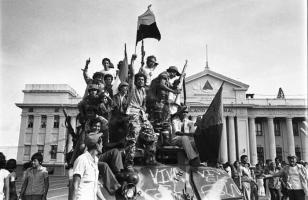 In a recent webinar hosted by the United National Antiwar Coalition (UNAC), Margaret Kimberley discussed what she witnessed during the commemoration events for the 43rd anniversary of the Sandinista…
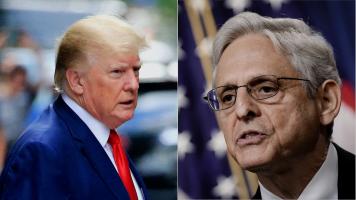 Why would Black people laud the FBI or criticize protection against self-incrimination? The FBI search of Donald Trump's home has reawakened Trump Derangement Syndrome.
 To commemorate Black August and in memory of the forty-two men massacred during the September 13, 1971 Attica Prison uprising we reproduce below an essay and petition from The Black Panther…
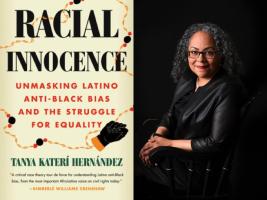 This week’s featured author is Tanya Katerí Hernández. Hernández is the Archibald R. Murray Professor of Law at Fordham University School of Law. Her book is Racial Innocence: Unmasking Latino Anti-…


