The attack on Mali was a coordinated international destabilization campaign, but as is usually the case, any coverage from the Western press hides the full story.
In the early morning hours of April 25, 2026, a very sophisticated and coordinated attack was made against the Republic of Mali. Armed groups simultaneously struck in Kidal and Gao to the north-east, Mopti and Sévaré in the center of the country, and critically, Bamako, and Kati in the center-west of the country. Bamako is the national capital and Kati is a garrison town 9 miles north-west of Bamako, the largest town of the Koulikoro region.
These were not random targets. Reportedly The 1st Military Region and 13th Combined Arms Regiment are based in Gao; the 3rd Military Region is based in Kati; and the 6th Military Region is based in Sévaré. The FAMa (Forces Armées Maliennes,) or Malian armed forces, are sub-divided into six military regions thus, on one day, a full half of the Malian armed forces main bases were under attack alongside the capital and the residences of the Transitional Government. In Kati, the Minister of Defense, Sadio Camara was killed at his home along with his wife and two of his grandchildren by a suicide bomber.
The Western press seems dedicated to obfuscating the international nature of these attacks. They have focused instead on the supposedly surprising collaboration between Jama’at Nusrat al-Islam wal-Muslimin (JNIM) and the Azawad Liberation Front (FLA) who have both claimed attribution. For shorthand, the former is a Salafi movement composed primarily of Tuareg, Fulani, and Algerian elements, formed in 2017, that promptly pled allegiance to Al-Qaeda. Their primary goal is to replace the Malian state with a more conservative Islamist regime. In contrast the latter, also a combination of prior formations, is dedicated to the project of carving out an independent Tuareg state in the north of the country. Allegedly the FLA now controls Kidal, and Mopti is claimed jointly by the FLA, and JNIM. If true, both of these would be grave infringements on the territorial integrity of Mali.
Even if official collaboration between JNIM and the FLA is novel, it is not surprising. In the north these groups have been recruiting from the same towns and villages for years. They have also been informally in communication and coordination with each other for more than a decade if one takes into account antecedent formations. Additionally, FLA and JNIM both consider the government in Bamako to be an enemy. Most importantly, however, is that they share some particular interests and sponsorship.
Beyond shared animosity towards the established government of Mali, at a strategic level both the FLA and JNIM stand to benefit if ties between Bamako and Moscow can be weakened. Africa Corps, the successor to PMC Wagner in Mali, has been the most significant international military force supporting the FAMa, maintaining positions in the north of the country and fortifying the defense of the Transitional Government in and around the capital. Challenging the Mali-Russia relationship then appears to have been a secondary operational goal of the attacks. Curiously, it appears that instead of a frontal assault on Africa Corps, the rebel forces chose to play the long game through information warfare. By arranging to broadcast the Russians’ ordered retreat from Kidal, JNIM and the FLA likely banked on three results. First, they could portray themselves as being humane in the midst of a vicious attack, a legitimacy ploy. Secondly, the image of the Russians retreating could put pressure on Moscow by attempting to erode Russian domestic support for the deployment. Finally, and perhaps most significantly, the images of the retreating Russians were likely calculated to have a demoralizing effect on Malians, especially those of the region. The ultimate success of this information operation remains to be seen, but it is noteworthy that the retreat has received heavy coverage in Western news outlets with France leading the charge.
Speaking of France, early reports have stated that several foreign soldiers were among the terrorists killed by the Malian armed forces on Saturday, including French fighters. The government of Mali and other independent observers have long maintained that France has at least partially sponsored asymmetric rebel elements in the country. Additionally, even if one questions French involvement, it is difficult to imagine planning and preparations for such a layered, sophisticated, strike could have completely escaped the notice of the former colonial power’s intelligence services. Further, the timing of the attack is quite suspicious.
On March 27, a verdict was handed down in the Paramount and Embraer trial where several officials, including the Prime Minister of the (French supported) former government of Ibrahim Boubacar Keita, were convicted of corruption offenses in relation to a public contract for the supply of armored vehicles awarded to the South African company Paramount LTD. A life sentence was requested for former Prime Minister Boubou Cissé.
On April 7th, in Brussels, Belgium, a new alliance of Malian, Burkinabe and Nigerien opposition politicians was launched under the cheeky name, Alliance of Democrats of the Sahel. Their acronym is ADS, a symmetrical sobriquet for AES, or the Alliance des États du Sahel (Alliance of Sahel States,) the confederation between Mali, Burkina Faso, and Niger. It beggars belief that this or similar formations (e.g., the National Endowment for Democracy, a known CIA front,) were not on the mind of Burkinabe President Ibrahim Traore when he made his now infamous comment on April 2nd, that “People need to forget about the issue of democracy. We have to tell the truth: democracy isn’t for us.”
On April 14th, the Mauritanian President, Mohamed Ould Cheikh Ghazouani (a French and Saudi comprador,) turned up in France for an official state visit where enhanced security cooperation in the Sahel was discussed. The subsequent week saw a spate of increasingly virulent propaganda against the Transitional Government specifically, and the AES more generally.
Finally, on April 23rd, less than 48 hours before the attacks, the National Transitional Council of Mali (CNT) ratified the additional protocols of the AES, previously adopted on December 25, 2025, relating to the coordination of diplomacy, defense and security, development projects, and confederal sessions of parliament. In other words, the attacks came directly on the heels of the legislative deepening and strengthening of the AES. For France, this fortification of the AES may have been the sine qua non trigger for an attempted coup d’état. For the US, the weakening of the Malian/Russian security architecture is also a perennial goal, if for no other reason than to give the Russian Federation a political black eye. Critically, the assassinated Minister of Defense, Sadio Camara, was the main liaison between Mali and Russia.
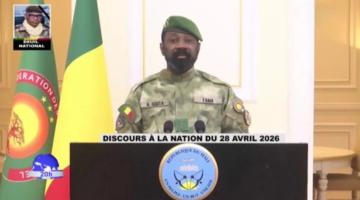
On April 28th, Malian President of the Transition, and current President of the Confederation of Sahel States, Assimi Goïta made his first public appearance and remarks subsequent to the attacks. He underlined the international nature of the strikes stating, “These attacks are not isolated. They are part of a vast plan of destabilization conceived and executed by terrorist armed groups and external and internal sponsors who provide them with funding and logistical resources.” He reassured the people of Mali that “[t]he operations will continue until the complete neutralization of the groups involved, and the sustainable re-establishment of security on the entire national territory.” President Goïta also reaffirmed the strategic relationship between Mali and Russia, with Russian Ambassador Igor Gromyko present to provide a visual image of solidarity.
In the last few days there have been several Malian military operations conducted as well as arrests of alleged internal conspirators to the events of April 25. Additionally, there has been a flurry of media activity with wildly conflicting claims. Major news outlets like Al Jazeera, MSN, Reuters etc., have heavily focused on the “fall” of Kidal or Tessalit, whereas videos circulating around social media platforms claim that either or both have been re-taken by the FAMa. Also, allegedly a joint force for the AES/CES (Alliance of Sahel States or Confederation of Sahel States) has been bolstered to 15,000 troops commanded by Burkinabè Brigadier-General Daouda Traoré and is actively engaged in the fight in Mali. Many accounts on either side are difficult to confirm in this political environment of endemic confirmation bias. What is clear is that the full fallout from the attacks of April 25 will likely only be coherent in the moyenne durée, and for the moment we ought to heed the words of President Goïta: “In this time misinformation can become a weapon in the service of terrorists. Mali needs lucidity, not panic.” With as much lucidity as can be mustered, we will continue to share reports and analysis from these frontlines of our collective African liberation struggle.
Jeremy Miller is a freelance journalist, part of the POOR Magazine family, and a member of the Black Alliance for Peace Africa Team. He can be reached at djasik87.9@gmail.com.

 Cuba's president, Miguel Diaz-Canel Bermudez, posted this statement in response to the State Department report on his X/Twitter account.
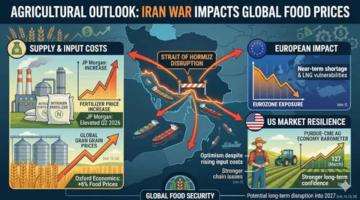 Faced with the blockade of vital oil routes, the extreme dependence of modern agriculture on fossil fuels foreshadows not only high prices but also a food shortage capable of generating global social…
 Free trade deals, water contracts, and military training programs are quietly binding one Latin American government after another to Tel Aviv.
 Recent killings at the hands of federal agents have fueled protests across the US, including a nationwide day of action on July 18.
 The human rights groups’ suit came as the Trump administration vowed to destroy the International Criminal Court entirely.


