A boy walks past a mural in Caracas, Venezuela, condemning US imperialism. (Photo by Mario Tama/Getty Images)
The official rationale for a new U.S. military operation against Venezuela is narcotics, but the true objective remains regime change. This escalating conflict demands a robust anti-imperialist response and new efforts at international solidarity between U.S. workers and those in Venezuela and throughout the region.
As the United States officially announces Operation Southern Spear, it is imperative for anti-imperialists to agitate against the coming war of regime change in Venezuela, which remains the raison d’etre for this new ‘drug war’ operation. In the last months, many pieces have been written which highlight the lack of narcotics trafficking at scale in Venezuela, and the decades long siege against the Bolivarian revolution; this essay will then place the Bolivarian revolution in the context of a new Pan-Americanism, labor internationalism, and anti-imperialism. How should US labor unions act against the war? How can we build a Pan-Americanism which builds bridges instead of burning them? These questions will be answered in order to contribute to the anti-imperialist camp’s understanding of the current crisis.
It is not enough that labor unions should make statements against the war within the current, corrupt business unionism model, although these statements can be powerful within a critical mass of other institutions taking such a stand. We should agitate within our labor unions for the expansion of relationships with our sister unions within Venezuela, Cuba, Nicaragua, Mexico, and throughout Latin America and the Caribbean. From there, we should organize solidarity trips which have the aim of educating the American working class on the various victories achieved by the Bolivarian revolution as well as the issues they face today due to American maximalist sanctions and kinetic warfare. By severing our union coffers from the corrupt two party system, our unions can have the independence to make these relationships possible, and to build bonds of solidarity alongside expertise sharing and technological cooperation for mutual advancement.
Ideologically, it is challenging to imagine a scenario where anti-imperialist educational programs bring people into agreement regarding the political line of the Bolivarian revolution, nor should our programs have that aim, given the different conditions for our own revolutionaries and masses within the United States. The aim of anti-imperialist education on Venezuela should highlight the importance of solidarity with the peoples of Latin America while keeping the central messaging clear: no war with Venezuela. Like many of the proxy wars waged by our current imperialist ruling class, a war with Venezuela will only bring suffering to the peoples of Caracas, Maracaibo, Merida, and elsewhere but also will bring immiseration onto the American people. The only benefactors are large weapons manufacturers and oil companies who covet the contracts to tap Venezuela’s oil wealth. We must not let the media turn Maduro into another Saddam Hussein or Muammar Al Gaddafi–who were labeled tinpot dictators who pose threats to American ‘values’. We must confront the media manipulation and resist the manufacturing of consent for a reckless military adventure by showing how this will be another proxy war, just like Iraq or Libya. We mustn’t shy away from having deep and serious discussions within our organizations about this or that problem in Venezuela, but we must always have a united face in public, which loudly proclaims and agitates against war with Venezuela.
Part of an anti-imperialist educational program on Venezuela should include an understanding of the current militias being mobilized and the phenomenon which Anouar Abdel Malek called “the army in the nation”. Abdel Malek described how popular, socialist and patriotic militaries and militias of the Global South have oftentimes taken the fore in social change because of the relations of domination and exploitation imposed upon them by the imperialist and colonial powers. In the US it is typical to think of the military’s proximity to state power and its proximity to the de-development of our communities through plucking vulnerable, working class black and brown boys and girls and sending them off to fight for American accumulation on a world scale. The military should always be viewed through the lens of class, precisely because the army is made up of the nation. Again, in the United States it is a replica of our stratified and unjust class system. But is this the case in Venezuela? How has the Bolivarian state been able to mobilize so many people into these militias for the protection of their country from invasion?
In an interview with Red Spark, militia member Armando Urgelles describes the militias as driven by an anti-colonial legacy. From indigenous resistance to colonialism, to the liberation from Spain by Simon Bolivar’s armies, to Hugo Chavez’s rise to power, this popular resistance has shaped the region’s relationship to colonial powers. With constitutional provisions for regional self defense formations and social organization, Urgelles argues:
This gives the militia a revolutionary patriotic ideological formation and keeps our morale high. We understand that we must rise up and continue to advance on our historical roots of our indigenous resistance leaders, the Liberator Simon Bolivar, General Fransisco de Miranda and Zamorana.
Venezuela, in part because of its deepened and deepening relations with China, Iran, Russia, and Cuba, will face asymmetrical warfare in the case of a US invasion, and they are preparing for this. The militia system decentralizes the warfare and allows the masses and the military to seamlessly cohere into a patriotic defense force which uses the varied landscape–with which they are intimately familiar–to fend off imperialist designs. So, what of the future? How do we build relations between our organizations and those of Latin America and the Caribbean? A new Pan-Americanism is the answer.
What prevents Pan-Americanism from including North Americans is our current ruling class’s exploitative regime. This has been the case since the advent of the Monroe Doctrine. As Simon Bolivar noted: “The United States seems destined by providence to plague the Americas with miseries in the name of freedom”. This regime divides us from the peoples of Central and South America and the Caribbean through unequal exchange, white supremacist ideology, and a fortress mentality with militarized borders—what Alex Aviña calls the American Maginot Line. By this, he means that the militarized border between North Americans and the Others to our south serves as part of the system of labor discipline and accumulation of wealth for weapons manufacturers and other monopoly industries. So how do we undo this system?
A new Pan-Americanism in this context begins by agitating against a war in Venezuela, an end to the blockade on Cuba, and the opening of people-to-people relations through our unions and other worker organizations. As Lenin called for a hundred years ago, in the United States we must take a position of revolutionary defeatism–the defeat of our government in an imperialist war. In the future, a new Pan-Americanism, shorn of its Yankee hegemony, looks like equal exchange with the governments and peoples of Central and South America through regional integration. It looks like massive infrastructure projects to facilitate this equal exchange such as high speed rail projects spanning the continents. The end of NAFTA and other so-called free trade agreements is another key to bringing together the peoples of the Americas. As Chavez and Fidel Castro called for, likeJosé Marti before them: we must fight for the construction of Our America.
Hanna Eid is a Palestinian American writer, researcher, and Union electrical worker. His writing concerns mainly imperialism and anti-imperialism in west Asia and west Africa.

 A People(s)-Centered Human Rights framework rejects the liberal abstraction that makes a false symmetry between Iranian authoritarianism and U.S. imperialism, which obscures the fact that one is a…
 “In the period since 1969, one can detect the same old close ties between right-wing U.S. academics, think tanks, foundations, and the U.S. Government…”
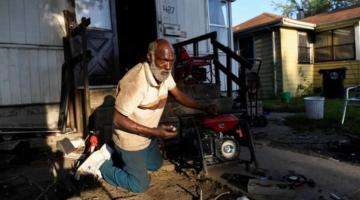 White supremacy works through institutions, and FEMA's formula for allocating disaster relief shows us how the state decides which neighborhoods are prioritized and which are left to suffer. Those in…
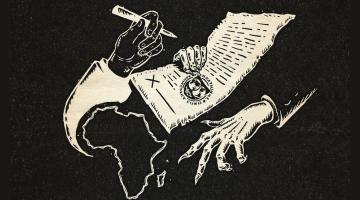 The IMF and World Bank are not subjects the corporate media cover in any real sense. Instead, their role is treated as unquestionably immutable and beneficial.
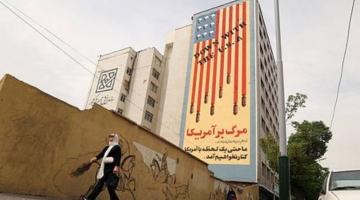 The Anti-Imperialist Scholars Collective (AISC) wrote this response to the open letter To Iran's political prisoners, 'trapped between two blades of a scissors' which appeared in The…


