“So we started to preach the doctrine of self-organization. And we made it very clear what we were after — the genuine multiracial and democratic power of the working people.”
Eusi Kwayana, a giant of Guyanese politics who always stood with the Guyanese people, passed away on Saturday, 10 October 2026, at the age of 101. As the Kaiteur News writes, the death of Kwayana “marks the end of an extraordinary chapter in Guyana’s political, educational and intellectual history.” They continue: “His life spanned colonial rule, the struggle for self-government, independence and the turbulent decades that shaped the modern Guyanese state. Few individuals have witnessed so much of the country’s evolution while contributing so significantly to the debates that defined it.”
In the days since his death, tributes to Kwayana have been published across the Caribbean, all attesting to not only the longevity of his political life, but to the morality and righteousness of that life.
To mark Kwayana’s passing and to honor his life-long commitment to Black and working-class struggle, we reprint a 1986 interview he gave to Intercontinental Press titled, “Elections and economic crisis in Guyana.” The interview contains a short biographical introduction to a figure known as the Sage of Buxton, while providing a useful accounting of his views on power and popular politics in Guyana.
This interview is significant for its timing, published in the aftermath of the US invasion of Grenada and its destruction of the recent Grenada Revolution. The “Reagan Doctrine” and the invasion of Grenada shocked activists in the region. As Kwayana recounted, “we began to think, in terms of the Reagan doctrine, that any violent revolution would be put down. And we said it is the work of revolutionaries to take things like that into account. We are a small country.” The Caribbean region has not recovered from the murder of Maurice Bishop and the crushing of the New Jewel Movement. If anything, the groveling neocolonial comprador class in Guyana – within the context of an US empire that, under Donald Trump’s so-called “Donroe Doctrine,” is even more brutish, even if it is in terminal decline, US empire — makes revolution seem even further away.
Nevertheless, Kwayana’s interview should be read for understanding this current moment. It should be read alongside other, more recent interviews with Kwayana in Against the Current and Offshoot Journal.
“Elections and economic crisis in Guyana: Interview with Working People's Alliance leader Eusi Kwayana” is reprinted below.
Elections and economic crisis in Guyana: Interview with Working People's Alliance leader Eusi Kwayana
[In the period of British colonial rule, Kwayana (then called Sydney King) was a central leader of the People's Progressive Party (PPP), the main anticolonial organization, headed by Cheddi Jagan. Kwayana was detained by the colonial authorities for several months as a result of his political activities. In 1957 he broke with the PPP and briefly joined the People's National Congress (PNC), headed by Forbes Bumham. Kwayana broke with the PNC as well in 1961.
[In 1964 Burnham became prime minister after the U.S. and British authorities succeeded in toppling a governmental administration headed by Jagan's PPP. This was followed two years later by the granting of formal independence to Guyana. Although Bumham's PNC regime proclaimed itself to be "socialist" and established diplomatic relations with Cuba, the Soviet Union, China, and a number of other workers' states, it followed repressive policies toward Guyana's working people.
[In 1974 a new opposition group was formed, the Working People's Alliance (WPA). Besides Kwayana, its leading figures included Walter Rodney, an internationally known writer and political activist who was assassinated in June 1980, presumably by supporters of the Burnham regime. Though WPA members and leaders were often victimized by police repression, the WPA emerged as one of the most active left-wing organizations in the country.
[Following Bumham's death in August 1985, the new PNC government of Desmond Hoyte held general elections in December of that year. Those elections were marked by widespread electoral fraud. The PNC took 42 seats in the National Assembly. The PPP got eight seats (down from its previous 10) and the right-wing United Force retained its two seats.
The WPA won its first parliamentary seat, and nominated Kwayana, the chairman of the party's Central Committee, to fill it.
[The following is an interview with Eusi Kwayana, obtained by Emest Harsch and Malik Miah in New York City on June 16.]
Question. The overthrow of the revolutionary government of Grenada and the U.S. invasion had repercussions throughout the Caribbean. The WPA's assessment of those events seems to have led to a rethinking about its own political orientation. In the WPA documents we reprinted in IP [See the See the Oct. 15, 1984 Intercontinental Press], one of the criticisms of the People's Revolutionary Government of Grenada was that it did not commit itself to seeking a "constitutional" government, that it failed to hold "free and fair elections." This criticism seems to have been linked to a greater stress by the WPA on the question of participating in electoral activities in Guyana itself. Could you comment on this interconnection?
Kwayana. Grenada gave us a lot of hope, while it lasted, that small islands — among which we include Guyana, so to speak — can carry out an effective revolution and survive.
Quite apart from those criticisms that you mentioned, and which I'll come to later, there was the fact of Reaganism in the Caribbean. Other American governments prior to that, in our times, had put a lot of pressure on revolutions. But this invasion was something quite unheard of.
We had a lot of debate about this inside our party. We have never closed the door to any kind of revolution. We felt that the development of the movement would decide what kind of revolution [there would be]. In fact, Walter Rodney electrified the country by calling for the removal of the PNC, saying that the dictatorship must go, by any means necessary. He was the first person to do so in such a direct way.
However, we began to think, in terms of the Reagan doctrine, that any violent revolution would be put down. And we said it is the work of revolutionaries to take things like that into account. We are a small country.
Grenada having been obliterated, we had to rethink our entire perspective.
For us, the democratic road and participation in elections were not new. In 1979 we had gone through an entire process of consultation with the PPP, the VLD — the Vanguard for Liberation and Democracy, which was the moderate party in those days — and some trade unions and churches. We called for free and fair elections. At the end of 1979, we all signed a document on this.
We also felt very strongly that part of the attack on the dictatorship had to involve various interest groups. These included the national capitalist class. They never responded, because they preferred to make deals with individuals in the government.
So we started to preach the doctrine of self-organization. And we made it very clear what we were after — the genuine multiracial and democratic power of the working people. We made it clear that this power of the working people was to be a democratic power. The working people, well-organized and educated, have nothing to fear from democracy. That is our understanding of the Caribbean, and Guyana, particularly since it is the poor who predominate in this society.
Along similar lines, we discussed the question of Grenada. We had written to Brother [Maurice] Bishop, pointing out that it was a mistake not to maintain the electoral principle.
We had a theoretical discussion on that question. Our position was that these participatory bodies [in Grenada] were all right, but no revolutionary has to abandon the electoral principle.
We did not make this discussion public at the time, because obviously if we had made it public it would have been part of the attack on Grenada. We made it public only after the U.S. invasion. So people began to suggest that our position had changed. Yet it was not an afterthought, as far as I was concerned.
But you are right, Grenada did change our emphasis in relation to elections. We decided that we now had to engage in a full-scale campaign for free and fair elections. It would increase the pressure on the dictatorship for one thing.
The PPP had in its own way been carrying out such a campaign for a number of years. But we could carry it out in a different way, because our interests are not the same. The PPP is very well connected to certain international bodies. We are in touch with some of them [Ed. note: The PPP has close ties with the Soviet, East European, Cuban, and other Communist parties, while the WPA is a consultative party of the Socialist International]. But our campaign is mainly a campaign among the people.
Q. How do you assess your participation in the December 1985 election?
Kwayana. We are glad we took part in the campaign, because no one in Guyana can now pretend that the WPA is a marginal force. The regime was very worried. They didn't think we could mount a campaign. We had up to nine political meetings in one night, in various areas. And we were able to elaborate a program suitable to Guyana's present needs. So far as establishing the party among the people, it contributed heavily to that.
After the elections, of course, there was some disappointment among people. People began to resign themselves to another five years of waiting. Some people thought we would win, others that the PPP would be the leading force. These were the two parties that could have won the elections. Leaks from within the regime indicated that we did remarkably well. We believe we could have won free and fair elections, and if we didn't win that we would have done very well. We were prepared to enter a government of national unity on the basis of a free and fair election.
Q. What did you mean by a government of national unity?
Kwayana. A union of all parties including the PNC. We said in documents that if the PNC conceded a free and fair election we would regard it as a new kind of party, that something had happened within it for it to take that kind of step. We were for including parties according to their political support in the country, because the great need is reconstruction.
But the road they have gone on now is a road in which they are opening up the doors of the country, the floodgates, we should say, inviting all and sundry to invest. They are contracting with a lot of lumpen-capital, as we call it, off-shore banking, casinos, and all of that. They have no development program. A lot of the things that are happening now are things that Burnham initiated in his time.
The whole question of moving towards the United States, I don't think is purely Hoyte's
decision. I saw signs of that for a long time. Negotiations with the IMF were going on. Hoyte is probably more openly enthusiastic about this relationship.
Q. How do you see your democratic demands, in the programmatic sense? You call for free elections. Do you seek to mobilize people with those demands? You mentioned that many people have illusions, that they feel they have to wait five more years for elections. How do you educate people about the need to change the country in a more fundamental way?
Kwayana. One target we have now is the local government elections. The Patriotic Coalition for Democracy has written to Hoyte asking him to open negotiations on a local government electoral system, how it should function.
Q.The Patriotic Coalition for Democracy— that was formed right after the elections?
Kwayana. It was formed one month after. All the opposition parties are in the PCD, except the United Force. We did invite them, but they didn't respond. So it includes us, the PPP, the People's Democratic Movement, the Democratic Labour Movement, and the National Democratic Front. There are also some trade unions, like the NAACIE [National Association of Agricultural, Commercial, and Industrial Employees]. It's probably the best-organized union in Guyana, the one that is most accountable to its members.
So, we hope local government elections will be held. We are at present training people for local government in the various villages. We are conducting classes in local government, so that we can find councillors from among the people to contest the seats. Workers, farmers, housewives — these are the sort of people who should be encouraged.
We are also having community meetings as much as we can afford it, especially in the bauxite-mining belt. These meetings are having a very interesting effect in opening up the consciousness about the way things really are.
One thing we have to fight against is the notion of "Give Hoyte a chance." The American government is also saying that. In Guyana, this notion is coming from the investing class, the merchants and the small manufacturers. They feel that Hoyte is going to bring in a lot of American money and their businesses will boom.
Our position in parliament is to represent the masses, the working people. And this is what we have been doing, people say effectively. We were able to present a document showing how many days' labor it took in 1975 to buy an old stove, to buy an LP record, to buy a toilet bowl, things that take you just slightly above bare poverty. And then we showed in 1985 how many days' labor it took. That was a telling document.
Hoyte says he's going to create a climate for investors, a new package of taxation measures, and so on. We respond that that is all very well, but who are going to tum the wheels of these industries, where is the climate for the working people?
We are defending the trade unions and we are defending the TUC [Trades Union Congress] against the government.
In terms of the rush of foreign capital — the people are very much aware that the country needs technical and capital resources from abroad if it is to do anything toward recovery.
What we are doing is dealing with the conditions of this participation.
For example, we always raise the national element in all this. There was a measure for petroleum companies and individuals to come in and extract petroleum. We introduced an amendment that if an individual prospector finds oil, he should at once form a company, and that there should be no discrimination against Guyanese shareholders, because capital accumulation will have to take place. The government rejected all these amendments. They bring in off-shore banking. We moved an amendment saying that these banks should create a facility with the Bank of Guyana through which foreign exchange should be lent to domestic manufacturers. The government rejected it. So this is the way we show up the contradictions.
Q. Over the past few years there have been some labor actions and also protests by farmers. Could you describe the impact of the economic situation on working people and how they're responding to that?
Kwayana. The impact on working people is very severe. Their living standards are going down. They have to spend long hours every day in search of essential commodities.
And water is now among those essential commodities. Most of the water systems in the country, which had been financed by the U.S. Agency for Intemational Development, have collapsed. They no longer function. What you see in Guyana is long troops of women and children, walking as much as one or two miles to get water for domestic purposes.
All this has meant that when working people gather at a political meeting they are really doing something very big. Because the household work can keep them engaged until late at night, doing all this drudgery.
The formal protests are few and far between. There are reasons for that. The village councils are not elected, are not accountable to the people. In the old days the farmers would flock to the village council and get some redress.
In agriculture throughout the country, the trenches are not properly cleaned. Weeds grow very fast in the tropics. So all the drainage and irrigation trenches tend to become clogged up with weeds, and the crops are destroyed. And these nonelected village councils have no consciousness about cleaning the trenches.
Most farmers keep some kind of livestock. Among the Afro-Guyanese it is mainly pigs, and cattle mainly among the Indo-Guyanese. But pasturage is not well organized. So people are dependent on livestock feeds. These things are now hoarded by the ruling class. One of the leaders of the PNC — the retired prime minister, Dr. [Ptolemy] Reid — is hogging the supplies of livestock feed. He distributes the bulk of it. So farmers have to pay him two, three times the regular price to get it. This is hindering the development of livestock.
Q. How severe is the repression now?
Kwayana. The machinery for protest in Guyana is not very available. There is a lack of freedom of association. The police are present almost everywhere. There is not wholesale harassment against the WPA at present; it is more selective. We have had reports of activists on sugar estates being called into the police station, being picked up, and so on. Teachers have been victimized.
There are no buildings in which people can meet freely. All the school buildings and all the public buildings are at the disposal of the state. If farmers want to gather, they have to gather almost stealthily. Strictly according to the law, you need to notify the police to have a gathering, even though you are not using a loudspeaker. If you want to use a loudspeaker, you must apply for permission.
Last March, a meeting called by the PCD was billed as a church service. The people speaking at that service were genuine persons. But they sent police to that service to note what was being said. And some people kept away because of that; they felt their names would be sent in for attending that service. There is nothing that the Hoyte government has done to lift the level of political freedom enjoyed in Guyana. They have not opened up the radio. They have not opened up the press.
So our work is not easy by any means. The means of political struggle are very few. No press release of the Working People's Alliance gets on the radio, though during the election campaign we got some radio time.
So there are marches in Mackenzie or in Demerara, but they are the only people who know about it. It reaches the other end of the country only when someone travels around.
Q. How is the WPA itself doing?
Kwayana. The party is organized in different regions. Throughout the country we have an expanding membership at present. We are organizing heavily among the working people, and there is a lot of interest. These are mainly workers and peasants, the rural poor and the urban poor. This is an indication that the people have not lost faith, because at this time, after the so-called defeat [in the elections], they want to come in and play a more active role.
“Elections and economic crisis in Guyana: Interview with Working People's Alliance leader Eusi Kwayana,” Intercontinental Press, July 28, 1986.

 The 1976 bombing of Cubana Flight 455 was part of a six-decade U.S.-orchestrated campaign of destabilization against Cuba, which has now escalated into a genocidal siege aimed at starving the Cuban…
 While Trump pardons the actual drug lord, he keeps a kidnapped Venezuelan president, Nicolas Maduro, and his wife, First Combatant Celia Flores, in a mold-infested Brooklyn jail on charges involving…
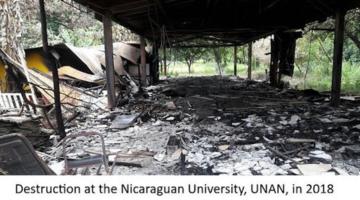 Jeffrey Isaac Jarquin was deported from the U.S. by ICE and upon arrival in Managua was sent to prison by Nicaraguan authorities. Corporate media has decried the detention of a “torture victim” and “…
 In this week’s segment, we discuss student protests by Black and brown youth in France against austerity measures and race-based inequality in the education system. But we begin with a discussion of…
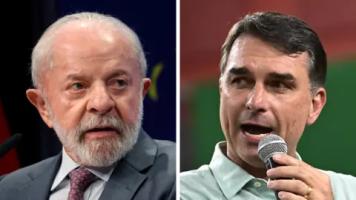 Brazil's incumbent president Lula da Silva finished second behind Flavio Bolsonaro in the first round of the presidential election. Because neither man received at least 51% of the vote, a run-off…


