Red Scares are a recurring feature of the U.S. political tradition aimed at criminalizing anticapitalist politics through accusations of foreign infiltration and conspiracy. The NSPM-7 and the report on Cuba represent a new red scare era.
Originally published in North-South Project for People(s)-Centered Human Rights.
Red Scares are central to the “countersubversive political tradition” in which United States governance is rooted. This tradition extends back to the set of repressive laws known as the Alien and Sedition Acts of the 1790s, which became a frequent point of comparison for subsequent antiradical legislation like the Alien Registration Act of 1940 (Smith Act) and the Internal Security Act of 1950 (McCarran Act). Referencing the intense period of anticommunism following World War II, the Black Communist Claude Lightfoot argued, “The nation had not experienced a period like this since the days of the Alien and Sedition Laws.” Similarly, as he was being interrogated before the House Committee on Un-American Activities (HUAC) for his communist affiliations, Paul Robeson chided, “You are like the Alien Sedition Act, and Jefferson could be sitting here, and Frederick Douglass could be sitting here and Eugene Debs could be here.” In naming Jefferson, Douglass, and Debs, Robeson illuminated how the countersubversive political tradition targeted not only communists, but any dissidents that could be construed as such. Through the countersubversive political tradition, the U.S. state produces and perpetuates a fear of “alien ideologies” and the “foreign influences” purportedly aimed at upending the ideals and organization of the republic. Historically, this hostility has been linked to the idea of internal racial, ethnic, and religious enemies who were allied with, sympathetic to, or could be easily duped by hostile external forces.1
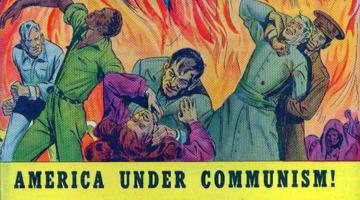
Red Scares, which became almost exclusively articulated through anticommunism after the Bolshevik Revolution of 1917, encompass “the criminalization and condemnation of anticapitalist ideas, politics, and/or practices through discourses of radical takeover, infiltration, and disruption of the American way of life to maintain a society dominated by a capitalist elite and organized along race and class lines.” Red Scares have been most prominently articulated through the specter of the communist/Bolshevist and the fellow-traveler, though all types of radicals, including anarchists, socialist, communists, labor militants, and Black liberationists become interchangeable as “Reds” against who the U.S. government justifies waging “unflinching” war. These concentrated periods of political repression foment an atmosphere of fear, hatred, and obsession about radical organizing by construing it as dangerous to the nation and driven by conspirators and agitators. As such, ordinary speech and action otherwise protected by the constitution are transformed into criminal activity and/or enemy machinations. For example, social and economic reforms are mischaracterized as a slippery slope to communist takeover. Leftwing organization, discipline, and international solidarity are misconstrued as foreign-controlled conspiracy. Any form of politics other than liberal capitalist democracy is accused of being authoritarian. A rejection of Christianity is considered immoral and un-American godlessness. In a general sense, counterhegemonic ideas, writings, organizing, and protest are treated as criminal conspiracy and domestic terrorism.2
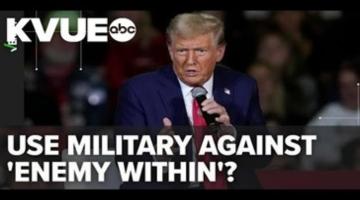
The recent publication of two government documents, the “National Security Presidential Memorandum 7: Countering Domestic Terrorism and Organized Political Violence” (NSPM-7), issued on September 25, 2025, and “Cuba: The Capital of 21st Century Communism” (Cuba report), released on July 20, 2026, attest to our current Red Scare moment. The NSPM-7 uses anti-fascist organizing and “Antifa” as the jumping-off point to characterize as domestic terrorists those who oppose racism, the abrogation of the rights of undocumented, queer, and trans folks, the unleashing of state agencies to indiscriminately brutalize civilians, and the transformation of the United States into a Christian nationalist kleptocracy. Such beliefs are construed as the “violent conduct” of “domestic terrorists,” connected through the “common threads” of “anti-Americanism, anticapitalism, and anti-Christianity,” who are waging “violent assault against democratic institutions, constitutional rights, and fundamental American liberties.” The National Joint Terrorism Task Force is thus empowered by NSPM-7 to “coordinate and supervise a comprehensive national strategy to investigate, prosecute, and disrupt entities and individuals engaged in acts of political violence and intimidation,” with a particular focus on institutional and individual funders, organization members, and employees. This framework was applied in the prosecution of the “Prairieland 9” and the federal indictment of the “Michigan 8” earlier this year.
The Cuba report builds on the antiradicalism of NSPM-7. It paints a long history of Cuba anti-American action; ties Cuba to U.S. “enemies from without,” not least Iran, Venezuela, Russia, and China; and presents the Cuban government as the puppet master of past and present “enemies from within.” The latter includes Black Power and Third World activism, Antifa and anti-ICE militancy, and the student encampments and George Floyd uprisings. Additionally, the report links the external and internal threats together to intensify the claims that Cuba is undermining U.S. national security. This anti-Cuba screed aims to legitimate the genocidal oil blockade and a possible ground invasion, while discrediting internal movements and organizations by claiming they are foreign inspired (e.g., the Venceremos Brigade), fellow-traveler organizations (e.g., Black Alliance for Peace), or catalysts to spread extremism into legitimate politics (e.g., Democratic Socialists of America). Moreover, by linking organizations, individuals, and movements to Cuba, the State Department seeks to criminalize constitutionally protected forms of radical fightback and to construe higher education as a hotbed of radical subversion.
The current attack on radicals and progressives, spanning both the Biden and Trump regimes, is the latest upsurge in a long history of Red Scare repression. While the period between 1919-1920 is considered the “first Red Scare,” between 1873-1903, several Red Scares targeted labor and anarchists. They were spurred by frequent economic depression and uncertainty, worker militancy and strikes, and elite fear about the Paris Commune and its aftereffects. At this time, “communism” became a catchall term for sundry unsavory and “dangerous” elements. This was also the period in which the fear of communist revolution and foreign radicals crystallized.3 In 1901, for example, after the assassination of President William McKiney by an accused anarchist, there was widespread “passage of federal and state laws that for the first time since the Alien and Sedition laws penalized persons solely on the basis of opinions, affiliations and advocacy, rather than on the commission of what would normally be considered a crime.”4
A host of state-level anti-syndicalist, anti-Anarchist, and antiradical laws became codified in the Espionage Act of 1917 and the Sedition Act of 1918, passed during World War I. It was under the former that hundreds of Wobblies (members of the Industrial Workers of the World) were convicted, effectively neutralizing the organization.5 Between 1919-1923, “innumerable repressive statutes, regulations and ordinances which deal[t] more harshly than the federal government with political dissent and democratic rights” cropped up after the failure to pass national anti- syndicalism. One reason a federal bill did not come into fruition was because some senators feared they would give the US government jurisdiction over the crime of lynching. State-level laws variously sought to guard against the overthrow by force, violence, injury to person or property, or general strike, of the government; disloyalty or belief in anarchy or other dangerous political doctrines; defiance of the law in relation to the disruption of organized government; inciting people to disorder or breaches of law; and the display of any symbol that supported or promoted Bolshevism, anarchy, or radical socialism. State-level antiradical campaigns immediately following World War I were buttressed by widespread sentiment that the labor unrest resulting from postwar economic conditions was in fact caused by Bolshevik agitation. This misconception helped to hasten the shift from Germans to communists, Bolsheviks, and the Soviet Union as the paramount enemies of the United States.6
The 1919-1920 Red Scare, which coincided with the “Red Summer” pogroms against Black people, was characterized by the “Palmer raids” and mass deportations of primarily Eastern European anarchists and communists. In 1920, more than 10,000 workers across seventy cities, most of whom were trade unionists, were arrested and thrown in federal prison based on orders from Attorney General Mitchell Palmer and J. Edgar Hoover. The purpose of the raids was to round up as many “aliens” for deportation based on their political beliefs. While the overwhelming majority were freed because they were citizens or acquitted of wrongdoing, they were beaten up, maimed, denied due process, and otherwise brutalized. This Red Scare also helped to weaken labor, strengthen big business through pushing the open shop, and frightened people against militant action.7
Less commonly acknowledged is the Red Scare of 1939-1940 in response to a number of international developments, most significantly the Molotov- Ribbentrop Pact between the Soviet Union and Germany. Nativist and anti-labor in scope, this period of repression ostensibly targeted fascists, Nazis, and communists, but in reality, it largely targeted the latter. A few months before the December 1941 attack on Pearl Harbor, Attorney General Francis Biddle used stipulations of the Act to Prevent Pernicious Political Activities (the Hatch Act) passed in 1939, to create a list outlining which organizations were deemed subversive enough to warrant the detainment and possible deportation of aliens affiliated with them. Nearly in tandem, the Department of Justice secretly drafted a list detailing groups thought to include predominately “alien radicals” that could be construed as anarchistic, subversive, or seditious. The list would determine who would be eligible for trial by the Alien Enemy Hearings Board. Taken together, these lists were virtually all-encompassing, with the DOJ’s list targeting the general civilian population while Biddle’s list was used to evaluate federal employees.8 This period also saw the passage of the Smith Act and the Anti-Propaganda Act (Voorhis Act) in 1940, as well as the establishment of HUAC as a special investigative committee, and later, a permanent committee.
The era of McCarthyism, formally spanning 1951-1954 with the election and subsequent downfall of Wisconsin Senator Joseph R. McCarthy, but functionally periodized as 1947-1957, is probably the most well-known Red Scare. This period is bookended by the passage of the Taft-Hartley Act and the creation of the Loyalty Security Act under Executive Order 9835 in 1947 and the 1957 Watts v. United States and Yates v. United States Supreme Court cases that overturned convictions of those who refused to answer questions before HUAC and of CPUSA leaders prosecuted under the Smith Act, respectively. The era in between was one of anticommunist hysteria, witch hunts, fear, and abrogation of civil rights and liberties. As one scholar explains, “properly used, the term McCarthyism means accusing people without evidence, exposing and causing them harm without regard for the law or for common decency.”9 Both parties and all three branches of the federal government, as well as state and local governments, participated in the full court assault on all forms of militancy that could be construed as communist, from labor militancy to civil rights insurgencies. During this period, top leaders in the CPUSA were indicted, prosecuted, jailed, deported, and/or forced underground and Hollywood was investigated for supposed communist infiltration. Some of the most repressive legislation of the century, including the Internal Security Act of 1950 (McCarran Act), the Immigration and Nationality Act of 1952 (McCarran-Walter Act), and the Communist Control Act (1954), was passed. As well, the Subversive Activities Control Board (SACB) and Senate Internal Security Subcommittee (SISS) were established. Through anticommunist lawfare, big business intimidation, vigilante violence, and widespread fearmongering, countless lives were ruined, jobs were lost, organizations were destroyed, families were fragmented, and movements were hampered.10
The explosion of the Counterintelligence Program (COINTELPRO) in the 1960s is undoubtedly the most notorious epoch of repression. The program was a means for the FBI to address “the threats from militants of the ‘New Left’ as it had those from the Communists in the 1950s.” It employed “traditional investigative techniques and counterintelligence” to “counteract domestic terrorism and conduct investigations of individuals and organizations who threatened terroristic violence.” These “techniques and counterintelligence” included illegal wiretapping, bugging, break-ins, frame-ups, and informant infiltration, harassment, and disruption campaigns.11 All-in-all, the FBI launched at least 2,218 individual COINTELPRO actions against groups and individuals—primarily radicals, and a disproportionate number Black—between 1957 and 1971.12 Though it is an outgrowth of the efforts of the FBI to decimate the CPUSA, COINTELPRO is not commonly understood as a Red Scare offensive that was given new life through the assault on Black and Third World liberation. J. Edgar Hoover claimed, “communists and subversives and extremists strive ceaselessly to precipitate racial trouble and to take advantage of racial discord in this country.” It was they who “aggravated and exploited” race rebellions that exploded across the United States.13
It should be emphasized here that, especially in the second half of the 20th century, Third World countries and peoples were as much a target of Red Scares as communists. As Abdulrahman Babu argued,
Although American imperialism was supposedly fighting communism throughout this period you’d find that American presidents—every American President—had to have a Third-World leader as a villain. They never fought the Russians. Truman had Kim Il Sung, the North Korean leader, as the villain and he mobilized American forces and international forces to fight this villain. Eisenhower had Mao Tse Tung as the villain, not the Russians but Mao Tse Tung. Kennedy had Castro as the villain, not the Russians but Castro. Then came Johnson—he had Ho Chi Minh as the villain, not the Russians but Ho Chi Minh as the villain. Then came Nixon. His villain was Sihanouk of Cambodia. He had to destroy that country in order to prove Sihanouk was his villain. Then came Carter. He chose Khomeini as villain. He was followed by Reagan, and he chose Ghaddafi as his villain. And now we have Bush with Saddam Hussein as his villain.
This is not accidental, explained Babu, but rather the result of the fact that the “United States contains a large population from Third World countries in its own borders, more than any other country in the Western World.” And, there is a reciprocal relationship between the poor treatment of racialized/colonized peoples in the US and the negative foreign policy toward the Global South that is concealed through anticommunist discourse.14 Thus, U.S. government officials linked the “communist” threat abroad—especially in the Third World—to the latest dimension of the communist threat at home: Black political violence in the form of guerilla tactics, clashes with authority, and ferocious challenges to racial and economic hierarchy. By 1972, nearly 500 local “Red Squads” understood themselves as the most effective political force in blocking “radicalism, student demonstrations, and black power” and were gathering “political intelligence” about these dissident groups a.15 Thus, the discourse of close links between “foreign communists and domestic dissidents” continued to animate the rollback of civil liberties.16
The Red Scare of the 1960s and 1970s construed urban and student rebellions, militant Black organizations, struggles against the Vietnam War and draft, and international solidarity as a menace to the prevailing order. The result was “a calculated campaign by high-ranking officials in the executive branch and by Congress to intimidate and repress dissident activity.”17 For example, for a brief period in 1968, in the midst of urban insurrections that engulfed the nation after the April 4 assassination of Dr. Martin Luther King, Jr., the notorious SACB was revived through a bicameral bill that “gave the SACB the power to simply list by fiat groups found to be communist-action or communist-front organizations.” As well, HUAC issued a report urging the construction of concentration camps authorized by the McCarran Act to temporarily imprison warring guerillas— i.e., radical and Black groups that were “seriously considering the possibility of instituting armed insurrection” and “planning ‘guerilla-type operations against the government.’”18 Moreover, in the 1970 hearings on “Assaults on Law Enforcement Officers” conducted by the SISS, there were several references to the rebellions being “Communist inspired,” the Black Panther Party and other radical Black organizations being “Uncle Toms” to white Communists, Communist agitators infiltrating racial disturbances, and the identification of Black urban rebels with “the third world type communist effort.” Authorities directly linked these imagined communist machinations to ostensible Black plots to foment revolution in the United States. Even those who testified that Black rebellions were not “solely” a matter of communism and who suggested racial unrest might stem from issues other than “communistic motivation, inspiration, guidance, control” or manipulation, nonetheless took pains not to “minimize the extent to which Communists would like to bring about the downfall of” the United States.19
The current Red Scare reality is a continuation of these earlier periods of anticommunist repression. For example, the Cuba report constructs the Soviet Union as the primary enemy of the “Old Left” that was largely destroyed by McCarthyism, and Cuba as the “New Left” foe whose influence takes off during the 1960s and continues through to today. It reads, “Whereas the old Soviet left had been built around the party, labor unions, and Marxist theories of economic class struggle, the New Left was animated by Black Power, radical feminism, Third World liberation, and—above all else—the radical rejection of Western culture, history and identity in all its forms.”20 Targeting the “New Left” allows the state department to conflate communism, race and gender radicalism, and anticolonial struggles as indistinguishable enemies. Likewise, referencing McCarthyism’s defeat of the “Old Left” legitimates the use of similar repression to crush current insurgencies attributed to their “New Left” predecessor. While Red Scares are extraordinarily disruptive, destructive, and dangerous, it is equally important to acknowledge their inability to completely crush militant fightback and organized action. The people who are steadfast in their struggle for people(s)-centered human rights, the end of capitalist imperialism and (neo-)colonialism, and an ecologically sustainable future cannot be totally defeated. Red Scare repression and its catastrophic effects on communities, organizations, and individuals must be taken seriously, but should not sow doubt about the power and future victory of the people. In the final analysis, it is the masses organized against capitalist imperialism that will deal the deathblow to the Epstein class heirs of J. Edgar Hoover and Joseph McCarthy.
Charisse Burden-Stelly is an Associate Professor of African American Studies and a member of the Anti-Imperialist Scholars Collective.
- Charisse Burden-Stelly, Black Scare/Red Scare: Theorizing Capitalist Racism in the United States (Chicago: University of Chicago Press, 2023), 206.
- Ibid., 5-6.
- Goldstein, 23-60
- Ibid., 63.
- Burden-Stelly, 193.
- Ibid., 139-141.
- Richard O. Boyer and Herbert Morais, Labor’s Untold Story (New York: Cameron Associates, 1955), 212-215.
8 Burden-Stelly, 167.
- Robbie Lieberman, Ed., History in Dispute: The Red Scare After 1945 (Gale: Farmington Hills, 2005), xviii.
- Ibid., xviii-xx.
- Michael Newton, The FBI Encyclopedia (Jefferson, NC: McFarland & Company, Inc., 2003), 68.
- Ibid., 72.
- Robert Justin Goldstein, Political Repression in Modern America: From 1870-1976 (Urbana: University of Illinois Press, 2016 [2001]), 438.
- Abdulrahman Babu, “Speech at the International Conference on Malcolm X: Radical Tradition and a Legacy of Struggle, November 1-4, 1990,” in The Future that Works: Selected Writings of AM Babu eds. Salma Babu and Amrit Wilson (Trenton: Africa World Press, 2002), 85.
- Robert Justin Goldstein, Political Repression in Modern America: From 1870-1976 (Urbana: University of Illinois Press, 2016 [2001]), 504-509.
- Ibid., 436-437.
- Ibid., 432-435, 435.
- Ibid., 441.
- Subcommittee to Investigate the Administration of the Internal Security Act and Other Security Laws, Assaults on Law Enforcement Officers, Part 4 (Washington: US Government Printing Office, 1970).
- “Cuba: The Capital of 21st Century Communism,” 14.



 The demand to call out alleged crimes in Iran or Cuba while those countries face annihilation from the U.S. and Israel is a refusal to see those people as human beings worthy of protection.
 For several years, three landlocked West African states have undergone political transformations designed to turn the page on French neo-colonialism.
 The U.S. is considering drone strikes and sanctions against the Alliance of Sahel States under the guise of counterterrorism, but the real objective is to regain neo-colonial control over African…
 Western pro-Palestinian activism isolates Palestine from its regional allies, depoliticizing its struggle and reinforcing colonial divisions.
 The United Nations has adopted a resolution calling for the use of map projections that more accurately portray the size and proportions of the world’s continents, particularly correcting the long-…


