Jamaica’s upcoming election has become a litmus test for Caribbean sovereignty as the U.S. and China compete for dominance. Washington’s threats to seize the Panama Canal and Marco Rubio’s heavy-handed diplomacy expose the island’s precarious position. Jamaica now faces a choice - resist becoming a pawn of the U.S. or surrender to its imperialist interests.
Originally published in WiredJA.
MONTEGO BAY, March 27, 2025 - Jamaica stands at a critical geopolitical crossroads, caught in the crushing vise of an intensifying hegemonic struggle between the United States and China.
The upcoming general election will inevitably be shaped by how the People's National Party (PNP) and Jamaica Labour Party (JLP) navigate this treacherous international landscape, with the escalating tensions surrounding the Panama Canal casting long shadows over the nation's future.
The United States has ratcheted up its diplomatic pressure, signaling increasingly aggressive intentions toward reasserting regional control. Donald Trump's provocative declarations about potentially reclaiming the Panama Canal through military force represent a jarring departure from decades of diplomatic precedent.
This thinly veiled threat directly impacts Jamaica's strategic positioning, given the island's crucial location along Caribbean trade routes. Trump's approach resurrects the interventionist spirit of the Monroe Doctrine, characterized by bellicose rhetoric and unilateral actions toward Latin American countries.
His threats to seize the Panama Canal, impose punitive tariffs on Colombia, and annex Greenland echo the doctrine's dark legacy of US dominance over what it considers its "backyard."
Though not a direct parallel, Trump's policy signals a decisive shift toward a more assertive and unilateral American foreign policy in the region—a warning shot across the bow to other powers contemplating involvement in the hemisphere.
The current saber-rattling eerily mirrors historical moments of diplomatic complexity, such as the challenges faced during Michael Manley's administration in the 1970s.
Then, as now, Jamaica found itself precariously balanced between competing superpowers, desperately negotiating delicate international relationships while struggling to maintain its national sovereignty as Cold War tensions played out in full view across its shores.
US Secretary of State Marco Rubio's recent visit to Jamaica has ignited a firestorm of controversy, exposing the intricate web of alliances and interests that shape the Caribbean's geopolitical landscape.
While the visit's true purpose remains obscured behind diplomatic niceties, one fact stands crystal clear: Jamaica's strategic importance has once again transformed the island into a pawn on the global chessboard of power and influence.
The controversy surrounding the US characterization of Cuban medical practitioners in Jamaica as victims of "human trafficking" has sparked justified outrage across the region.
Barbadian Prime Minister Mia Mottley has led the charge, condemning the American claim as not merely baseless but deliberately misleading. As Washington hastily backtracks on this transparently false assertion, it becomes increasingly evident that Rubio's visit served merely as a convenient smokescreen for more ominous objectives.
"Security cooperation," including combating transnational crime and gang violence, has become a threadbare pretext for expanding American military presence throughout the region.
Jamaica's agreement to work alongside US forces on policing efforts in Haiti raises profound concerns about the island nation's eroding sovereignty and independence.
In a significant and suspiciously timed diplomatic maneuver, the Jamaican government has announced the appointment of Major General (Retired) Antony Anderson, former Commissioner of Police, as the country's new Ambassador to the United States and Permanent Representative-designate to the Organization of American States.
Prime Minister Andrew Holness made this announcement with uncharacteristic haste following the abrupt resignation of Ambassador Audrey Marks, who has since been appointed to the Senate.
The elevation of military figures like Anderson to key diplomatic posts only fuels speculation about Jamaica's increasingly compromised role in advancing America's regional agenda.
This troubling development carries eerie echoes of Jamaica's darkest diplomatic chapter. The 1983 US invasion of Grenada, facilitated by Jamaica's then-Prime Minister Edward Seaga, stands as a stark reminder of the devastating consequences that follow blind allegiance to foreign powers.
Seaga's decision to support the American invasion stemmed from his ardent anti-communist stance and eagerness to align Jamaica with Washington during the Cold War's final decade.
However, this calculated move exacted a steep price, fundamentally compromising Jamaica's sovereignty and regional standing.
In the early 1980s, Grenada's socialist government under Maurice Bishop had begun aligning itself with Cuba and the Soviet Union, raising alarms in Washington, which viewed the tiny island as a potential communist foothold.
Seaga, a staunch anti-communist ally of the Reagan administration, played a pivotal role in facilitating Operation Urgent Fury, providing crucial logistical support and intelligence to American forces.
Four decades later, whispers of a similar scenario echo through Kingston's corridors of power. There are mounting concerns that Prime Minister Holness may be pressured to reprise Seaga's role, this time regarding potential American intervention in Panama.
The Holness administration's political vulnerability, particularly in an election year, may create irresistible pressure to support the Trump administration's aggressive agenda in Central America and the Caribbean.
As Jamaica navigates these treacherous waters, it must heed history's harsh lessons. The nation must proceed with extraordinary caution, ensuring its actions align with its stated values and longstanding commitments to regional cooperation and stability. Jamaica's sovereignty hangs precipitously in the balance.
Will the island nation summon the courage to assert its independence, or will it once again become entangled in the complex web of superpower machinations that have historically defined the Caribbean's geopolitical reality?
One certainty remains: the eyes of the entire region are fixed upon Jamaica, watching with bated breath to see which path it chooses—dignified independence or continued subservience to imperial ambitions disguised as partnership.

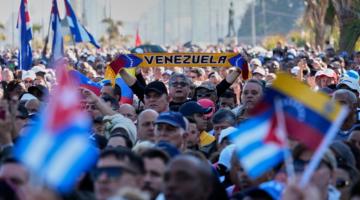
 The assault on Venezuela's sovereignty represents a broader imperial strategy to discipline any nation that defies U.S. hegemony.
 SNAP recipients were willing to sacrifice to protect health care benefits for themselves and others and they are furious that the Democrats' chose collusion with the Trump administration rather than…
 The so-called 'peace plan' resolution passed by the UN Security Council is nothing more than a newly branded occupation and the Palestinian people are rejecting it.
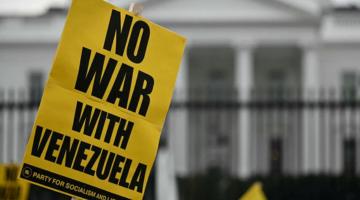 While the White House plots further intervention, nationwide mobilizations are sending a powerful message of solidarity to Venezuela.
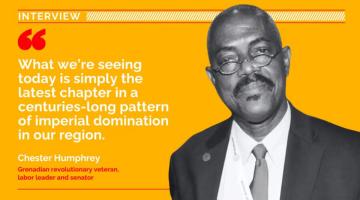 A veteran Grenadian revolutionary explains the situation of Venezuela today, condemns the US build-up, and offers his advice and solidarity.


