Remembering Haitian resistance “Caco” fighter Charlemagne Peralte, demonized by the U.S. occupation forces as a “bandit,” the same label given to Nicaraguan freedom fighter, Augusto Sandino.
In his classic 1939 study A History of Pan-African Revolt, CLR James wrote: “The docile Negro is a myth…The only place where Negroes did not revolt is in the pages of capitalist historians…. It is not strange that the Negroes revolted. It would have been strange if they had not.” We can perhaps add to James truism by saying that if Africans in revolt actually do appear in the the writings of the west, they will invariably be portrayed as “bandits,” “brigands,” “thugs,” or “gangsters:” selfish and reactionary characters whose rebellion against the malevolence of white imperial rule will be cast as as illogical and anti-patriotic.
Such was the case with the rebels who fought the US Marines during the first US occupation of Haiti (1915-1934). They were called “Cacos,” a name said to derive from a local bird of prey whose flight patterns and movements were mirrored by the rebels themselves. During the early years of the occupation, the cacos, largely groups of peasant guerillas, maintained a militant resistance to the US at a time when much of the Haitian bourgeoisie had given up on Haitian sovereignty and acquiesced to US power over the republic.
The most famous caco leader was Charlemagne Peralte. Peralte was dubbed by the US as the "supreme bandit of Haiti." He led a fierce struggle against the occupation until he was betrayed by a fellow Haitian and was ambushed and assassinated by two white US marines in Black face – Henry Hanneken and William R. Button. Both Hanneken and Button were awarded the USMC medal of honor. And the murder of Peralte is celebrated in Marine lore and mythology. Peralte, meanwhile, became a martyr and symbol of Haitian resistance, aided in part by the circulation by the Marines of a photograph of his corpse where he appears crucified.
Militant resistance to the US occupation dropped in the early 1920s. But by the fall of 1929, strikes and protests against the US spread to every part of Haiti. Peralte’s history was revived. In October, 1929, Jean Lamonthe, the secretary general of the Union Patrotique d’Haiti, wrote an editorial on Peralte that was circulated through Cyril Briggs’ Crusader News Service and published in Baltimore’s African-American owned Afro-American newspaper. The editorial was titled “Haiti had its Sandino.” Lamonthe revisits the US counterinsurgency against the Haitian peasant revolt and retells the history of Peralte. Arguing against the US racist claim that Peralte was a “bandit,” Lamothe instead compares him to the Nicaragua peasant leader and hero, Augusto “César” Sandino – also cast as a bandit by the US.
We reprint Lamonthe’s editorial on Charlemagne Peralte below. In doing so, we hope to make two further points. First, we want to demonstrate how consistently the US and the white west have demonized Haitian resistance to imperialism, and how even the terms of Haitian disparagement remain consistent: “bandits,” “gangs,” and “thugs.” Second, we want to remind readers that in the not-so-distant past the African American press used to be more internationalist and explicitly anti-imperialist.
Haiti Had its Sandino
Jean Lamonthe
It is very highly probable that, while many people in the United States know of the heroic struggles of [Augustus] Sandino and the Nicaragua patriots, very few of the astonishing exploits of Charlemagne Prelate, the Haitian leader and patriot who, until he was surprised in his camp by a United States marine, disguised as a native, and murdered in cold blood, was one of the greatest fighters for Haitian liberty against United States Imperialism.
Charlemagne was slandered as a bandit by the marine tool of American imperialism in the Caribbean, but if Charlemagne was a bandit for resisting foreign rule so was George Washington whom Americans revere as “the father of his country,” its liberator from the oppression of British Imperialism. Charlemagne was a Caco, a Spanish word meaning “bad,” but translated “bandit” for American consumption in order to mislead the American people as to the real character of this Haitian patriot and fighter. The “Cacos” were simply black peasants who suffering from the cruelty and barbarity of the American occupation had taken the [unclear ] against the puppet Haitian government, headed by the servile tool of American capitalists interest, Louis Borno. Charlemagne joined the ranks of these patriots and soon became one of the most successful leaders against the forces of the puppet government and the United States marines who were the real power behind the throne.
THIRTY-FOUR YEARS OLD
Born at Hinch October 7, 1885, Charlemagne and won many honors and was the military governor of the district of Leogane. Returning to his native town he was immediately put in jail, shortly thereafter being sent to the chain gang in Cape Haiti. The townspeople became indignant at his treatment by the U.S. Occupation, and managed his escape.
Charlemagne then joined the revolutionaries and soon became a terror to the United States marines. He several times led groups of revolutionaries in successful attacks against the marines, once capturing a United States tank and bringing down two airplanes during a major engagement with the oppressors of Haiti. The marines then seized his aged mother as hostage, cruelly ill-treating her, but Charlemagne stifled his love for his mother and fought all the fiercer for Haitian liberation.
PAID $6000
His tactics perplexed the U.S. marines, and a prize was put on his head, “dead or alive.” To a relative, Jean Conze, the sum of six thousand dollars was promised for the betrayal of Charlemagne. This traitor consequently joined the ranks of the revolutionaries and informed the United States marines of the whereabouts of Charlemagne. A strong detachment was sent against him, but such was the terror inspired by his exploits that they dared not attack him, but resorted to strategy instead.
SLAYER PROMOTED
On the stormy night of October 31, 1919, two members of marines, Hanneken, promoted to a captaincy for his part in the outrage, and Button, blackened their faces with a number of gendarmes disguised as citizens, and led by the traitor Conze, they penetrated the outposts of the [unclear ] Terror of the Marines and entered Charlemagne’s camp. Approaching Charlemagne who was sleeping at the time, Captain Hanneken opened fire at close range, thus cowardly assassinating the Negro leader whom they had never been able to beat in battle.
Jean Lamonthe, “Haiti had its Sandino,” Afro-American, 26 October 1929.

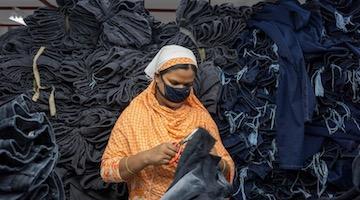 When the Covid-19 pandemic cut into corporate profits, the fashion industry simply stole billions from some of the world’s most exploited workers.
 "As long as the virus continues to circulate anywhere, people will continue to die, trade and travel will continue to be disrupted, and the economic recovery will be further delayed."
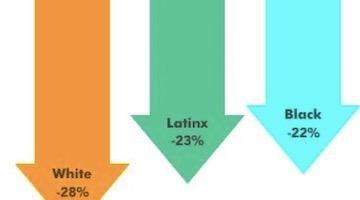 The pandemic forced many police departments, courts and jails to take steps that reformers had been demanding for decades.
 Expect “Lip Service” from Biden on Immigration Reform
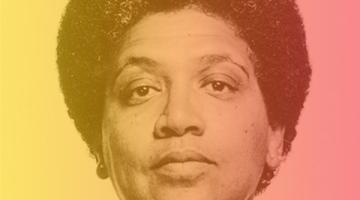 Black poet and feminist Audre Lorde showed her socialist and revolutionary colors in the wake of the US invasion of Grenada, her parent’s birthplace, in 1983, said Jack Turner, pro



