Roberto Clemente was one of the all-time great baseball players and one of the best in a long line of Afro-Latinos. He also acted in solidarity with people around the world, which ironically led to his untimely death.
During the first week of April in 1968, the United States was consumed with urban rebellions in response to the assassination of Dr. Martin Luther King Jr. and baseball was not immune. The genesis for protest did not come from super-stars Hank Aaron, Willie Mays or even Bob Gibson who was King’s favorite player. It was the Puerto Rican born Pittsburgh Pirates super star Roberto Clemente who insisted that he would not play until after King's funeral. Clemente was the undisputed leader of a Pirate team that had 10 Black players, more than any other team in baseball. So many supported his stance, that the sentiment began to spread throughout the league. As a result, the baseball commissioner unilaterally delayed opening day from April 8th until April 10th which was the day after King’s funeral.
This degree of professional athlete solidarity to withholding their labor for a cause beyond the realm of collective bargaining, would not happen again until NBA players refused to play briefly during the 2020 playoffs in the wake of the police shooting of Jacob Blake in Wisconsin. Then Barack Obama “intervened” in a classic case of the Black mis-leadership class undermining what could have been a truly revolutionary action. Within 48 hours, the action was over with no meaningful progress on police terrorism.
December 31, 2022 was the 50th anniversary of the tragic death of Clemente who died in a plane crash at sea while trying to deliver relief supplies to Nicaragua after a devastating earthquake occurred a week earlier.
Clemente’s baseball accomplishments were many and included the following:
- Three thousand career hits
- Four National League batting titles
- 1966 National League Most Valuable Player
- Twelve Golden Gloves (which go to the best defensive player at his position)
- A 15-time National League all star
- 1971 World Series Most Valuable Player
- Inductee into the Baseball Hall of Fame
Clemente was the best of a number of African-Latino players of that era including his compatriot and Hall of Famer Orlando Cepeda. From Panama came Hall of Famer Rod Carew. From Venezuela came all-star Davy Concepcion. From the Dominican Republic came Hall of Famer Juan Marichal, the best pitcher of the group and all-stars the Alou brothers, Felipe, Matty, and Jesus and César Cedeño.
Despite the embargo, the most impressive list of African Latino players came from Cuba and included Hall of Famers Tony Perez, Tony Oliva, Minnie Minoso and all-stars Luis Tiant, Mike Cuellar, and Bert Campaneris. The number of Latino players of African descent has continued to this day in baseball. The case can be made that Clemente is still the best of such players. As Latin American sports icons go, only Brazil’s Pele loomed larger than Clemente.
To limit Clemente’s greatness to baseball would be insulting. He was a humanitarian in the best sense of the word. The backdrop of his fatal relief mission was shaped by US foreign policy.
In the wake of the earthquake, then President Richard Nixon’s primary concern was not the well being of the people but fear that the country would “fall to the Communists.” That thinking led to sending National Guardsman rather than any humanitarian aid. As a point of comparison, Cuba sent doctors to the devastated country.
Much of the country’s internal aid had been hijacked by either the military or profiteers. The US backed Nicaraguan leader Anastasio Somoza issued orders to shoot and kill anyone trying to secure needs. It was into this vacuum that Clemente concluded that his mission was imperative. Despite being warned that his plane was overloaded, he insisted on continuing his journey.
There is a direct line between the United States imperialistic actions of Nixon through Somoza and the eventual rise of the revolutionary resistance of Nicaragua in the form of the Sandanistas who came to power in 1979.
The reverence which Latin born baseball players have for Clemente can be summed up by the fact that they have a tacit understanding among themselves that none are to take Clemente’s number 21. Major League Baseball gives an award in his honor every year and has also named September 15th as Roberto Clemente day on which any player may wear number 21. There is a larger movement to retire his number league wide.
According to Clemente’s biographer David Maraniss, at least forty public schools, two hospitals and more than two hundred parks/ballfields are named after him. They range from his homeland of Puerto Rico to Pittsburgh and as far away as Germany.
Clemente always manifested what African-Latino solidarity should look like. There have been many indications of this solidarity over the years. Fred Hampton of the Black Panther Party organized with the Latino Young Lords. Internationally, South Africa’s struggle against Apartheid was aided by Fidel Castro’s Cuba which was widely acknowledged by Nelson Mandela upon his release from prison. The late President Hugo Chavez acknowledged his own African ancestry and the Black population in Venezuela. Specifically in 2005, he established May as Afro-Descendent month. In 2011, another law was established against racial discrimination. Most importantly, Black Venezuelans were the disproportionate benefactors of the Chavez anti-poverty efforts. He also extended aid to Haiti in recognition of that country’s revolutionary influence on Simon Bolivar. This solidarity was not helped by the recently recorded racist comments of Latino Los Angeles city council members about Black people nor the attitudes of some Black folks toward the Latino undocumented. But these attitudes should not be viewed as representative of either group as a whole.
The hope of revolutionary fraternity outweighs the challenges. One such example was the election of Gustavo Petro and Francia Marquez as president and vice president of Colombia. Marquez is the first Afro-Colombian to be elected to national office in the country’s history. Its Black population of 11 million people is the second highest in Latin America. Solidarity is a necessity and not a choice. It is in the best revolutionary tradition and a most fitting tribute to Clemente’s legacy.
Gus Griffin is a DC area based independent sportswriter, a member of the Black Alliance for Peace Africa team and the Ujima People’s Progress Party.

 From the moment the first colonizers arrived in the Caribbean, the West has treated the region as a treasure chest for resource extraction and labor exploitation.
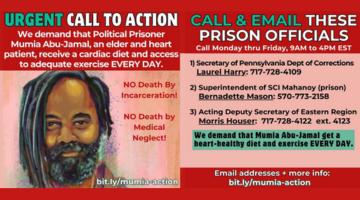 The state uses tactics such as medical neglect, to slowly assassinate political prisoners like Mumia Abu-Jamal.
 It is prudent for Black people to join in coalition with the Arab and Muslim people collectively refusing to support President Biden and connect the struggle for Palestinian liberation to the…
 From the decline of the triangular trade to the rapacious extraction of mineral resources and labor exploitation, Africans have organized and revolted against western domination.
 While revolutionary Black organizations after the Panthers continued to support Palestine vocally, the realities of COINTELPRO and mass incarceration have had a profound impact on the organization…


