In this series, we ask acclaimed authors to answer five questions about their book. This week’s featured author is Foluke Adebisi. Adebisi is Associate Professor at the University of Bristol. Her book is Decolonisation and Legal Knowledge: Reflections on Power and Possibility.
Roberto Sirvent: How can your book help BAR readers understand the current political and social climate?
Foluke Adebisi: Since 2015 and the Rhodes Must Fall movement in Cape Town, South Africa, as well as its counterpart student movement at Oxford, University in the UK, the question of the relevance of decolonisation to higher education has become quite prominent across Global North universities. Prior to this, my scholarship examined, inter alia, the effects of incomplete decolonization of African polities, for example, continued education dependency and humanitarian interventionism. However, with the increased focus on decolonisation in UK higher education, I became increasingly frustrated with what I saw as the inadequacy, misunderstandings, and misuses of decolonization as a practice and logic. In response, in Decolonisation and Legal Knowledge, I want to reposition the conversation, by taking a temporally and spatially wider look at the present state of law, its knowledge structure and its relation to colonisation-decolonisation. In other words, in the book, I link the current political and social climate of the world, especially global inequality and climate change, not only to historical events like colonization and the trade in enslaved Africans, but also to the development of the fundamental concepts that we use to understand the past and present of the world we live in. Essentially, I want us to consider the possibility that this history means that the tools that we have been attempting to use to understand the world and repair current harms are either insufficient to the task and/or even complicit in producing misunderstanding and harm. My proposition is that we need to change the lens through which we understand the present, by looking to the past, so we can craft better futures for us all and the earth upon which we at present just precariously survive. To survive at all, we need new ways of thinking, being and doing in the world.
What do you hope activists and community organizers will take away from reading your book?
So, in the first chapter of the book, I examine how this thing we call “decolonisation,” or put differently, the long-term and continuous refusal of colonial practices and effects, has manifested differently in different parts of the world. In other words, decolonisation is not one thing, but a set of context-dependent strategies, adopted by activists resisting colonisation – strategies specifically relevant to the particular ways in which colonial ideologies manifest themselves in those particular places. What I mean is that decolonisation, in practice, has often involved indigenous peoples, colonised peoples and racialised peoples, taking up the tools that they have, to resist the specific forms of oppression that they experience. This has often meant, however, that activists have been unable to always understand how harm in a far-off place is related to harm at home. And so, the global machine of oppression is able to evolve away from censure in many ways and in many places… specifically adapting to deter the specific resistance to it. Consequently, I focus, in the various chapters in the book, on making a global analysis of the harms we face, both interpersonally and existentially. I argue that without global and collective activist movement and action, bringing an end to collective harms is not really possible. So, I hope that from reading the book, activists and community organizers will continue and begin to seek global connections with activists and community organizers who are not in the places where they are. Rather than always seeking to convince coercive power of its wrong, we need to be mindful of who we are in conversation with. There is also power in imagining together, across the globe, among activists, what new worlds can look like. And what we must do together to build them.
We know readers will learn a lot from your book, but what do you hope readers will un-learn? In other words, is there a particular ideology you’re hoping to dismantle?
There are actually a lot of things! This reflects my own journey into understanding decolonisation. This journey has taught me to question everything. It is unsurprising, therefore, that a large part of the decolonisation movement in the UK has focused on history and facts that are not taught in school and at university. In other words, we are told that the world is one way, but when you put in the missing information, your view of the world, of necessity, changes. Education is not just about hoarding information so as to get good jobs and enable career progression. It should be about cultivating knowledge that is useful for changing the world for the better for everyone.
In this vein, one of the things I talk about in my book is how we erroneously believe that the passage of time is what brings about change. I disrupt this assumption by exploring how colonial practices of time, carried into the present actually produced a singular perception of time that eroded or obscured different ways of thinking of time and temporality. Thus, the passage of time, on its own, is insufficient for change. The way I explain it is that it is our action to change things that brings about the passage of time. Otherwise, we are trapped in repeating and expanding patterns. So, I really want readers to shift from the idea that time inevitably results in progress. I often hear people express shock that some attitude or practice still happens in our current times. But un-learning this idea about the relationship between time and change, places the onus on us to take responsibility for gathering knowledge, building connections, and imagining new ways of being that can change the world.
Which intellectuals and/or intellectual movements most inspire your work?
There are so many of them! But I think I am most influenced by and in awe of activists in indigenous communities around the world. They have, since the inception of colonial ways of knowing and doing, been at the forefront of resisting sovereign dispossession, the overexploitation of nature, and of preserving their ways of knowing, of healing and of repairing. That has been really hard work for them in the face of structures of knowledge that seek to destroy these peoples and the knowledge they carry. This is especially so, as we are often told that those ways of knowing are backward and stand in the way of progress. Yet there are many times when what is called progress involves the dispossession of people from their land, inhuman treatment, and the degradation of the environment. As such, it is additionally sad that mainstream structures and bodies of knowledge have very often disregarded these ways of knowing, being and doing… so I try really hard in the book to pay close attention to how decolonization and legal knowledge can learn from indigenous knowledges. My focus in the book is on thinking through three spheres of knowing: what it means to be human; what the land means, (as well as space and place); and finally, what time means. Indigenous knowledges are very instructive to thinking against the grain in these three spheres.
Which two books published in the last five years would you recommend to BAR readers? How do you envision engaging these titles in your future work?
Again, so many of them to choose from. There are others, but I really love these two:
Tamale, Sylvia. Decolonization and Afro-feminism. Daraja Press, 2020.
Bhandar, Brenna. Colonial Lives of Property: Law, Land, and Racial Regimes of Ownership. Duke University Press, 2018.
I love both of these books because they helped me to rethink some of the presumptions I had about a wide range of things. Brenna Bhandar’s book was helpful to my thinking about what land means in law and how we get to know what we think land means. This has been useful for my thinking around the continuities between indigenous sovereignty, racial justice, and climate change. Considering the urgency of climate change and the effects of climate disaster on a wide range of people, including those who live on small islands, shifting our lens on that nexus will be really important in the next few years.
In her book, Sylvia Tamale argues that the persisting racial and economic hierarchies of colonialism and coloniality are inextricably intertwined with systems of heteropatriarchy. She urges us to think of the work of decolonisation as Afro-feminist work. I think this argument is vital for a number of reasons. Primarily, it is important that when we position ourselves as articulating the undoing of harms, we do not take up the tools – conceptual or otherwise – that created and perpetuates those harms.
Ultimately both these books keep me grounded in my central argument – we need new ways of thinking, being, and doing in the world, if we are to survive.
Roberto Sirvent is editor of the Black Agenda Report Book Forum.

 Erica Caines, Editor of Hood Communist and Coordinating Committee Member for the Black Alliance for Peace, joins the stream to discuss the New McCarthyism and its implications.
 It is disheartening to hear movement leaders say they are inspired by Martin Luther King while also supporting the U.S. proxy war against Russia. Like all wars it endangers the lives of…
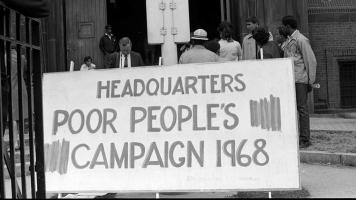 The demands for justice at home and abroad must not be sacrificed on the altar of what is called pragmatism. The false choices presented by liberalism can undermine the movement altogether.
 A May Day 1928 essay by Black communist Williana “Liana” Jones Burroughs – aka Mary Adams – recounts the history of African revolt in the Americas.
 Elon Musk's purchase of the Twitter platform was a hotly debated topic. But neither Musk nor any other individual is the root of the world's problems. Liberalism which pretends to…


