Families and supporters of prisoners on strike rallied outside the Alabama Criminal Justice Center in Montgomery on September 26, 2022. (Photo: Free Alabama Movement, Twitter @FREEALAMOVEMENT)
The 13th amendment allows slavery for incarcerated people. The state of Alabama pays nothing for prison labor, rarely grants parole, and retaliates against those who protest unsanitary and unsafe conditions.
This article was originally published in Labor Notes.
Across the state of Alabama, where the state’s longest-ever strike is currently ongoing at Warrior Met Coal after over 18 months, another historic labor stoppage is in its second week. Thousands of incarcerated people at every major male prison in Alabama have refused to report to their work assignments.
“The message that we are sending is, the courts have shut down on us, the parole board has shut down on us,” a strike organizer who goes by Swift Justice told a reporter for independent news site Unicorn Riot. “This society has long ago shut down on us. So basically, if that’s the case, and you’re not wanting us to return back to society, you can run these facilities yourselves.”
“It makes no sense for us to continue to contribute to our own oppression,” Kinetik Justice, another striking prisoner, told Unicorn Riot. “We finance our own incarceration through our free labor and spending every dime we get in the canteens and so forth. It is our money and our family’s money that is used to keep us incarcerated and oppressed like this.”
The strike has its roots in years of inside organizing. In 2016, the Free Alabama Movement successfully led a 10-day nationwide strike that aimed to spotlight how the 13th Amendment has allowed the institution of slavery to transform itself, in spite of its abolition on paper. (The 13th Amendment banned slavery and involuntary servitude, “except as a punishment for crime whereof the party shall have been duly convicted.”) That strike spanned at least 40 facilities in 24 states.
The deplorable conditions across the state’s prisons also make them particularly dangerous. According to a 2020 lawsuit filed by the Justice Department, the Alabama prison system “fails to provide adequate protection from prisoner-on-prisoner violence and prisoner-on-prisoner sexual abuse, fails to provide safe and sanitary conditions, and subjects prisoners to excessive force at the hands of prison staff.”
Organizers have crafted a list of demands, aimed primarily at Republican Governor Kay Ivey and the Alabama legislature. These demands include:
- Establishing mandatory parole criteria to guarantee parole to all eligible
- Repealing Alabama’s Habitual Felony Offender Act, which requires stricter punishment for those with prior felony convictions among other mandates
- Eliminating life-without-parole sentences
- Ensuring eligible persons receive “good time”—incentive time shaved off a sentence earned through good behavior
- Create a statewide conviction integrity unit to investigate possible wrongful convictions
UNBROKEN LINE TO SLAVERY
Swift and Kinetik argue that there is an unbroken line extending from the institution of slavery as it existed in the antebellum era to the modern prison industrial complex.
“Alabama wishes for its slaves to remain passive and obedient to continue bringing millions of dollars of profit from our backs and blood,” Swift said in an October 1 press release.
If slavery is characterized, as sociologist Orlando Patterson contends, primarily by social death, the thread is clear: a person who becomes an inmate gets a number for a name, loses access to communication channels uncontrolled by the institution, is typically moved far from their family, and exists according to the dictates of guards, at least some of whom have been charged with or convicted of assaulting those in their care. Death, in the literal sense, is also a constant feature of Alabama’s prisons, and the full extent of the violence is hard to measure given ADOC’s tendency to provide no updates.
BRUTAL SYSTEM
Politicians and administrators continue to find new ways to make a system widely condemned for its brutality even more brutal. The parole board, for instance, has drastically reduced grants of conditional release; 46 percent of applications were denied in 2017, but that number skyrocketed to 84 percent in 2021. The average for the decade prior to 2021 was 37 percent, with the drastic increase in part reflecting the fact that the board very often declines to follow their own guidelines, choosing instead to keep more people locked up even as the Department of Justice has found that the prisons are unconstitutionally overcrowded.
While the criminal justice system disproportionately targets communities of color at every point in the process, the racial disparities in parole denials are still increasing; a Montgomery Advertiser article reports “grants for Black applicants dropping at a much faster rate in 2020 and 2021 than for whites.” As officials strip away any remaining hope many have of ever seeing the outside world again, what remains for inmates to focus on is the trauma the carceral system inflicts.
STRIKEBREAKING
Perhaps unsurprisingly, ADOC’s strikebreaking tactics are extreme. For instance, where the hedge funds that own Warrior Met Coal have made clear they intend to metaphorically “starve out” the miners in Brookwood, ADOC is employing actual starvation. In addition to adopting a so-called “holiday meal schedule” of only two meals at facilities all around the state, prisoners say those meals are made up of trays containing no hot food and limited nutrients. Numerous images of items such as two “sandwiches” constructed from only cold slices of bread and cheese have made the rounds on social media.
ADOC claims this is merely because they have lost most of their supply of free, forced labor, although it is questionable how much extra labor it would take to serve up a larger scoop of mush or add more bread slices to a tray.
Even beyond the ongoing starvation, prison officials have forced inmates to provide scab labor. If someone on work release (i.e. those allowed to work outside the prison, returning when their shift is complete) declines to cross the metaphorical picket line, prisoners say they are at risk of immediately losing their release status and being moved to Donaldson, a prison notorious—even by Alabama standards—for its extreme violence.
A person brought in from the North Alabama Work Release Center to take the place of the striking Alabama prisoners at Limestone told his story to Kinetik on video, expressing solidarity with the strikers; not even two hours after the video was posted online, the person who recorded the footage, Kinetik, was beaten by guards and locked in solitary confinement—not for the first time. Even for those who are prepared both to face violence from guards and to lose their hard-won work release status, the tremendous isolation folks on the inside face makes it difficult to find out about the strike in the first place.
Thousands of people have built solidarity in these most unlikely conditions. The labor movement depends on all of us recognizing that there is more that connects us than divides us, and that there are many more of us ready to fight for our rights than there are bosses and oppressors.
“Regardless of where we are,” Swift said on Saturday, “we are humans.”
Haley Czarnek is the national director of Law Students for Climate Accountability and serves as a fellow for United Campus Workers Alabama and the co-chair of the Labor Committee of the Birmingham Democratic Socialists of America.

 Disability studies looks at disability as an identity and culture and not as a deficit to be corrected.
 The author examines literature that looks to sites of struggle to find the seeds of an alternative, more just future.
 Racial liberalism attempts to shape the perspectives of communities of color through narrow ideas of national belonging, Manifest Destiny, and the American Dream.
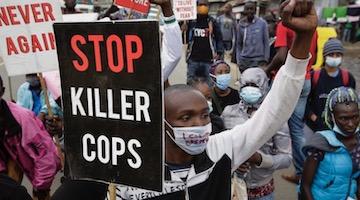 The Black judge listed the injustices of “qualified immunity,” which allows police and other government officials to escape liability for their law breaking.
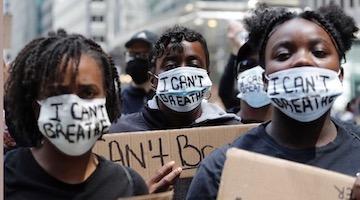 Some coronavirus deaths, especially early on, were mistakenly attributed to other causes.



