Francia Marquez is a Black Colombian woman, an environmentalist, and presidential candidate. Her campaign represents "the nobodies, those who have not had a choice."
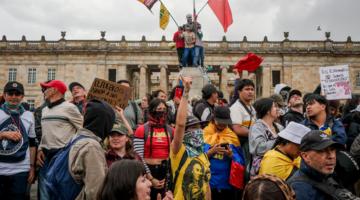
The political debate ahead of the presidential election continues to stir in Colombia. On March 13, the country will elect its representatives to Congress (2022- 2026). At the same time, the opposition’s political alliances, the Coalición Centro Esperanza [Hope Center Coalition], Equipo por Colombia [Team for Colombia] and the Pacto Histórico [Historical Pact], will have consultations to elect their presidential candidate. In the latter, the winner of the 2018 Goldman Prize, Francia Márquez, participates. The environmentalist's candidacy has been strongly criticised by a sector of the public opinion that considers her political commitment as ‘subordinate’ to the presidential aspirations of the politician Gustavo Petro. However, Francia has aroused the curiosity and creativity of Twitter users, local singers and audiovisual designers after stating: "I come from there, I represent those people, I represent the nobodies, those who have not had a voice."
Francia Márquez describes herself as ‘a nobody’. The lawyer of the local community of La Toma (Cauca) self-defines herself as a black-African descent woman who has survived the consequences of the Colombian civil conflict, segregation and death (social, economic and symbolic). In an interview with the national journal Semana, Márquez stated:
“(...) The nobodies are the people who have been treated as such (ninguneado) in this country. People who have not been allowed to have civil rights. People whom nobody pays attention to them. Nobody looks at(for) them. Nobody listens to them. Nobody (politicians) is willing to guarantee their civil rights. I come from there. I represent them. (I represent) those people with callous hands because they get up every day despite being in the midst of the armed civil conflict and the economic and social difficulties. They build with joy (...) and stand up for themselves to dream of a better country. They have hope for a change” (own translation).
A political proposal that interrogates ‘the self’
The term ‘the nobodies’ would seem to redefine an expression with pejorative charges resulting from historical events. Also, the narrative that the presidential candidate proposes around this expression directly challenges those who currently, according to Ms Marquez, find calluses on their hands, walk, take buses, ride a motorcycle and bicycle, or have wounds on their bodies and souls. However, what we find more interesting about this proposal, is its intention to evoke a particular countrywide project where personal and collective dreams can come true and, therefore, a yearning for the future.
Francia Márquez proposes a political strategy contrary to trying to get 'people out to vote ‘angrily’ or to appeal to a polarising reading of Colombian politics to (re)create an idea of the centre. Discursively, the idea of 'the nobodies' invites Colombians to (self) recognise what they were, what they are and decide on what they want to be, what the environmentalist calls, their dreams or hope for change.
The dreams
The relationship between the nobodies and dreams has been an indissoluble matter in Latin America. In the middle of the 20th century, one of the greatest writers and thinkers of the continent published the poem titled “Los Nadie” [The nobodies]. Eduardo Galeano, a Uruguayan, describes the nobodies as:
The nobodies: nobody's children, owners of nothing. The nobodies: the no ones, the nobodies, running like rabbits,
dying through life, screwed every which way.
Who don't speak languages but dialects.
Who don't have religions but superstitions.
Who don't create art but handicrafts.
Who don't have culture but folklore.
Who are not human beings but human resources.
Galeano's last lines of the poem are the story of poverty, sadness and the war. Like Francia Márquez's nobodies, these people share a common history of multiple and systematic violence that translates into experiences of marginalisation, exclusion, poverty and a long etcetera that intersects identities based on ethnicity-race, social class, and sex-affective orientations. The Nobodies are the face of inequalities and social injustices. However, according to Galeano, "fleas dream of buying a dog and the nobodies dream of leaving the poor." Similarly, Francia Marquéz states that the nobodies rise "in the midst of armed Colombian civil conflict and their economic and social difficulties, to build with joy."
Solidarity in check
The political proposal of #SomosLosNadie [#WeAreNodody] supposedly proposes a time journey of personal biographies, family genealogies, and ideas on the countrywide project that can only be possible in the future. One of the artistic expressions of those who begin to recognise themselves as part of the nobodies in these electoral contests sings, in the format of popular Hip Hop music:
I am the worker that moves on their foot or bicycles
I'm the defender of water, of the sowing
I'm the grandmother who comes plowing the land
I am the fighter in a wheelchair.
The victim of the conflict
We are the nobodies
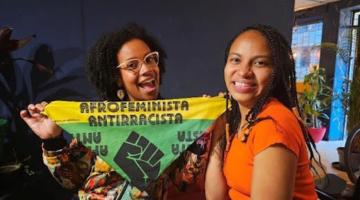
These lines are particularly illustrative about the answer of those who mobilise and respond to the call of the nobodies proposed by Francia Márquez. No doubts! We are facing an ambitious bet. In Galeano’s words, Ms. Marquez's candidacy is utopia and, according to the author, "utopia is on the horizon (...) it serves to walk". The narrative around the nobodies appeals to an illusion of collective social change and questions the possibility of a coalition of excluded and marginalised sectors. Furthermore, this call seems to interpellate those who share, militate or sympathize with social, racial, economic, ecological and gender justice... So, will the nobodies in Colombia manage to elect a presidential candidacy of a black-African descendant woman, environmentalist and defender of Human Rights? Will solidarity be a possible scenario for those who believe in equity when the nobodies themselves lead?
+ The authors want to express their solidarity for those civilians in Ukraine who, like Colombians, suffer the consequences of the war, the ultimate expression of human degradation.
Lina Lucumi Mosquera is a PhD Researcher at De Montfort University in Leicester UK. Lizeth Sinisterra Ossa is a Researcher at Centro de Estudios Afrodiaspóricos – CEAF in Cali, Colombia.



 by Norman Solomon Et tu, Barbara Lee? The only member of Congress to vote against the invasion of Afghanistan appears to have gone over to the dark side with a tweet expressing outrage at President…
 by Jeffery Robinson After an obscenely long wait, three Chicago cops now face charges of lying to cover up an extrajudicial execution of a Black teenager by one of their own. However, this is no time…
 by Puneet Chadha and Jamile Araújo More than half of Brazil’s population is of African descent, yet concerted action among Afro-Brazilians has often been elusive. Black organizations from across the…
 by Motsoko Pheko If South Africa is an independent, decolonized, democratic country under the control of its Black majority, then why is 93% of the land still owned by whites? The author maintains…
 by Jeff Sparrow Paul Robeson, the great artist and activist, began his journey to becoming a global “people’s singer” through his contact with Welsh mining communities. “Throughout the 1930s, the…



