BAR Book Forum: Kyle T. Mays’ “An Afro-Indigenous History of the United States”
In this series, we ask acclaimed authors to answer five questions about their book. This week’s featured author is Kyle T. Mays. Mays is an Assistant Professor of African American Studies, American Indian Studies, and History at the University of California, Los Angeles. His book is An Afro-Indigenous History of the United States.
Roberto Sirvent: How can your book help BAR readers understand the current political and social climate?
Kyle Mays: Let’s start with Reparations. In June 2019, Representative Sheila Jackson Lee, a democrat from Texas, sponsored the H.R. 40 Bill, or the “Commission to Study and Develop Reparation Proposals for African-Americans Act.” It was sponsored by Representative John Conyers before her for over 20 years. I know reparations discourse has existed in the US for over two centuries. And scholars William Darity and Kirsten Mullen argue in their wonderful book, From Here to Equality: Reparations for Black Americans in the Twenty-First Century, that the total bill of reparations would be between 15-20 trillion dollars. My fundamental question is, “what about Indigenous peoples? Where do they fit in?” It might seem counterintuitive for some, but they lost millions of acres of land under duress, often forced (or coerced) to sign treaties handing over land. Do they not also deserve some forms of reparations? And with graves of children being found at Indian boarding schools (called residential schools in Canada), and the attempts at genocide against Indigenous peoples, they deserve something, too. Second, do Black folks even want reparations under capitalism? If capitalism is fundamentally about exploitation and the expropriation of Black labor and Indigenous land, then why would we want any compensation under that system? As history has shown, capitalism, and the capitalists who help reproduce, are remarkable in their ability to transform quickly. Thus, An Afro-Indigenous History of the United State asks us to think about more fundamental questions, that many have before, about whether or not we can get justice in this system.
What do you hope activists and community organizers will take away from reading your book?
I hope that Black folks in particular, will remember that no matter what land we are on, it belonged to or will, in the future, belong to Indigenous peoples. Black people are not settlers like the descendants of white immigrants, but they can perpetuate settler colonial ideas by excluding Black folks. It’s pretty amazing how activist groups can still use phrases like, “we built this country.” Okay, but upon whose land did your ancestors build it on? Two of the key parts of US development were dispossession and enslavement, which happened at the same time. Therefore, we have to address both simultaneously. I know solidarity is not difficult, but I hope that activists and others can take from the example of Angela Davis and Stokely Carmichael (who would change his name to Kwame Ture). They understood that we create change through an intersectional (and I mean understanding the confluence of power dynamics and the different social locations that oppressed people experience) approach. For instance, in St. Paul, Minnesota in 1974, Ture gave a talk titled, “The Red and the Black” where he emphatically stated this was not Black people’s land; it belongs to Indigenous peoples. And as an act of solidarity, it was important that Black people did not seek 40 acres and a mule, but actually work with Native people and help them get their land back. Can you imagine what centering a return of Indigenous land within Black liberation could look like? We need to imagine Indigenous people in the future, not us living side-by-side with US empire. The Black and Indigenous led, “Gathering Roots Wellness” collective in Washington State, led by Omitosin King and Tracy Stewart, are putting this work into practice.
We know readers will learn a lot from your book, but what do you hope readers will un-learn? In other words, is there a particular ideology you’re hoping to dismantle?
This is the perfect question! First, I want people to rethink our relationship to US liberal democracy. For Black and Indigenous radicals (and other radicals!), it’s not a profound point. But I think they would agree with me that many of our people believe that it is the only game in town! As a political ideology, what is it based upon? African enslavement and Indigenous dispossession. How can we trust a political ideology based on that?! I want Black and Indigenous folks to stop being anti-Black or anti-Indigenous. Here are a few examples. I want Black folks to stop claiming being Indigenous (i.e., Blackfoot, Cherokee) when you haven’t verified that with actual Cherokee people. I know there is anti-Blackness within many tribal nations, but they are one of the most documented tribal nations! You should be able to trace someone. The other thing is thinking that all “Indians owned slaves and therefore they owe us Black folks reparations.” Not all tribal nations enslaved Africans. That was the Five Tribes. The other thing is Native people acting surprised when Black folks (and vice versa) perpetuate anti-Indigenous sentiments like wearing racist mascots on their clothing. Solidarity is not natural. It takes hard work. Black queer feminist Audre Lorde told us in her essay, “Learning from the 60’s,” that anything worth doing will require intense labor. We can’t forget that. And we must do it with a radical love that requires accountability and patience.
Who are the intellectual heroes that inspire your work?
There are so many intellectuals who I consider heroes and sheroes, all of whom have inspired me to do the work that I do. I first have to begin with my aunt, Judy Mays (Saginaw Chippewa). Aunt Judy founded the third-ever public school—Medicine Bear American Indian Academy—with a Native American curriculum in Detroit, serving as its principal. Her vision was a product of her mother, my great-grandmother, Esther Shawboose Mays, who wanted a place where urban Indigenous youth could learn about culture and have an education for the future. Their examples inspired me to always continue learning and make sure I create work that will educate Black and Indigenous youth. My third shero is Geneva Smitherman, the ‘Queen of Black Language’ and author of one of the most profound books, Talkin and Testifyin: The Language of Black America. She’s been an academic mother to me since I was a senior in university. She always told me to make work for the people, and always to be about your work. I have to give a shout out to Robin D.G. Kelley. Currently my colleague at UCLA, his work and commitment to justice has always been inspiring. His work on Black culture, the Black working class and many other things has informed my thinking in profound ways. Pero Dagbovie is another historian who got me thinking about the importance of history not only in the past but how it reverberates well into the present. I could go on but these people have profoundly shaped my intellectual approach to my work.
In what way does your book help us imagine new worlds?
An Afro-Indigenous History of the United States helps us imagine new worlds in a few ways. First, I want Black and Indigenous peoples (and others committed to ending all forms of subjugation) to dream about what our lives can be in the aftermath of settler colonialism and white supremacy. Too often, we are so focused on dealing with the everyday forms of violence that impact us that we also forget to conceive of our lives when US empire falls. Who knows when that will happen, but we have to begin that process. Our ancestors fought to return to their worlds free from colonial domination; our job is to create radical resurgent freedom dreams (shout out to Leanne Betasamosake Simpson and Robin Kelley). The second thing this book does is to remind people that those African peoples kidnapped from the continent were Indigenous. We tend to transform them into enslaved peoples and ignore the fact that they brought with them their own cosmologies, cultures, and spiritual practices that didn’t just go away. I want Black and Native peoples to think about this, and what that could mean in creating new relationships, agreements, with one another.
Roberto Sirvent is editor of the Black Agenda Report Book Forum.

 Erica Caines, Editor of Hood Communist and Coordinating Committee Member for the Black Alliance for Peace, joins the stream to discuss the New McCarthyism and its implications.
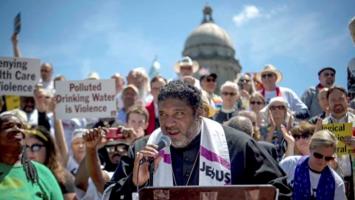 It is disheartening to hear movement leaders say they are inspired by Martin Luther King while also supporting the U.S. proxy war against Russia. Like all wars it endangers the lives of…
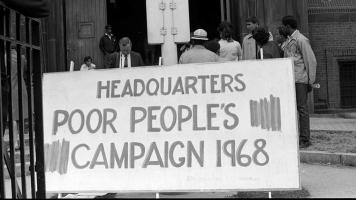 The demands for justice at home and abroad must not be sacrificed on the altar of what is called pragmatism. The false choices presented by liberalism can undermine the movement altogether.
 A May Day 1928 essay by Black communist Williana “Liana” Jones Burroughs – aka Mary Adams – recounts the history of African revolt in the Americas.
 Elon Musk's purchase of the Twitter platform was a hotly debated topic. But neither Musk nor any other individual is the root of the world's problems. Liberalism which pretends to…


