Grim predictions about the U.S. military occupation of Africa are realized.
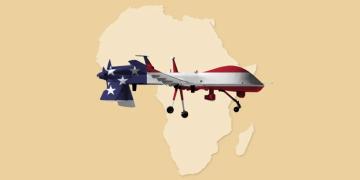
African Lion. Exercise Cutlass Express. Exercise Phoenix Express. Obangame Express. Justified Accord. Flintlock. These are the names of but a few of the military exercises carried out by the U.S. Africa Command forces (AFRICOM) on the African continent in recent years. The exercises have occurred across the expanse of the continent - east, west, north, and south - as well as on the surrounding seas and oceans. And the exercises have included participation from Europe, and from almost every African country. The ramping up of US militarism on the African continent - and the ensuing destabilization of communities and countries - should concern us all. Since AFRICOM’s formation in 2008, there have been a number of coups and coup attempts by U.S.-trained African military officers, the latest occurring this past week in Guinea.
What is at stake here? Almost a decade ago, the late Glen Ford wrote a short, incisive essay marking the beginning of what he described as the United States’ “wholesale military occupation of Africa.” Ford recognized that, while the US was using the excuses of internal conflict and Islamist expansion as a ruse, the real goal is control over African resources and its peoples. Disturbingly, the US military occupiers are now welcomed as “guests” by neocolonial African governments - willingly handing over the continent to fleecing and thievery. With the humiliating withdrawal from Afghanistan appearing as yet another sign of the US’s ineptitude and weakness, and with China’s inevitable consolidation as the globe’s economic superpower, Africa will be the theatre for US empire’s last stand. Ford saw it coming.
The US Military Swarms Over Africa
Glen Ford
2013 is the year the U.S. kicks off its wholesale military occupation of Africa. The escalation should come as no surprise, since the Army Times newspaper reported, back in June, that a U.S. brigade of at least 3,000 troops would become a permanent presence on the continent in the new year. On Christmas Eve, the Pentagon announced that 3,500 soldiers of the 1st Infantry Division’s 2nd Brigade, in Fort Riley, Kansas, will be sent to Africa, supposedly to confront a threat from al-Qaida in Mali, where Islamists have seized the northern part of the country. But the 2nd Brigade is scheduled to hold more than 100 military exercises in 35 countries, most of which have no al-Qaida presence. So, although there is no doubt that the U.S. will be deeply involved in the impending military operation in Mali, the 2nd Brigade’s deployment is a much larger assignment, aimed at making all of Africa a theater of U.S. military operations. The situation in Mali is simply a convenient, after-the-fact rationale for a long-planned expansion of the U.S. military footprint in Africa.
The Pentagon’s larger purpose in placing an army brigade on roving duty all across the continent is to acclimate African commanders to hosting a permanent, large scale U.S. presence. This is a very different kind of invasion – more like an infiltration-in-force. The Pentagon’s strategy is designed to reinforce relationships that the U.S. Africa Command has been cultivating with African militaries since the establishment of AFRICOM during George Bush’s last year in office. As an infiltrating force, AFRICOM has been a phenomenal success.
Militarily speaking, the African Union has become an annex of the Pentagon. The AU’s biggest operation, in Somalia, is armed, financed and directed by the U.S. military and CIA. The 17,000 African troops on so-called peace-keeping duty in Somalia are, for all practical purposes, mercenaries for the Americans – although poorly paid ones. Ethiopian and Kenyan forces act as extensions of U.S. power in East Africa. U.S. Special Forces roam the Democratic Republic of Congo, Uganda, South Sudan, and the Central African Republic – ostensibly looking for the fugitive warlord Joseph Kony but, in reality, establishing a web of U.S. military infrastructures throughout the center of the continent. Uganda and Rwanda keep the eastern Congo’s mineral riches safe for U.S. and European corporations – at the cost of 6 million Congolese lives. Their militaries are on the Pentagon’s payroll.
In northwest Africa, the 16 nations of the region’s economic community await the intervention of the United Nations – which really means the United States and France – to expel the Islamist forces from Mali. Militarily, the West Africans are totally dependent. But, more importantly, they show no political will to escape this dependency – especially after the demise of Libya’s Muammar Gaddafi.
The creeping, continental U.S. expeditionary force, soon to be spearheaded by the 1st Infantry Division’s 2nd Brigade, will bunk down in African military bases throughout the continent, not as invaders, but as guests. Guests who pay the bills and provide the weapons for African armies whose mission has nothing to do with national independence and self-determination. Three generations after the beginnings of decolonization, the African soldier is once again bowing to the foreign master.
Glen Ford, “ The US Military Swarms Over Africa,” Black Agenda Report (3 January, 2013).


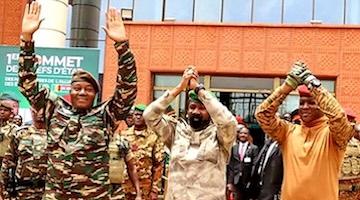
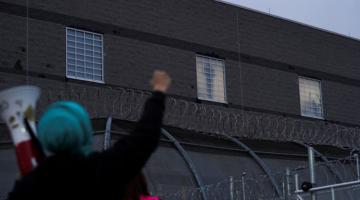 The immigrants who revolted inside the Delaney Hall immigration jail are not criminals but prisoners of war, and their actions are those of resistance against a fascist detention system.
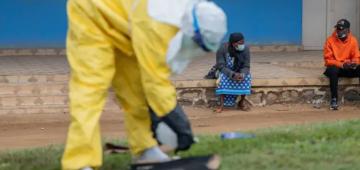 Since early May, the World Health Organization and the African Centers for Disease Control and Prevention have been working to contain the spread of a rare and virulent strain of Ebola virus disease.
 A critical analysis of the U.S. backed social media "influencer" war propaganda campaign against Cuba as it struggles against a criminal siege.
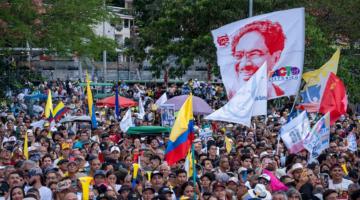 Colombia's presidential election will be held on June 21st as Historic Pact candidate Ivan Cepeda runs against the Trump endorsed right wing candidate Abelardo de la Espriella. This analysis written…
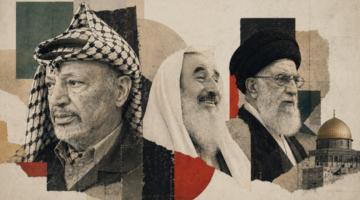 From Gaza to Tehran, from the politics of resistance to the limits of regional diplomacy, a pressing question has resurfaced amid the 2026 war: why was Palestine not explicitly placed at the center…


