We must realize what we’ve lost in the demolition and sale of public housing units.
“I hope we start to see the reclamation of housing as a human right as a key component to Black liberation.”
In this series, we ask acclaimed authors to answer five questions about their book. This week’s featured author is Akira Drake Rodriguez. Rodriguez is an Assistant Professor at the University of Pennsylvania's Weitzman School of Design and of Social Policy and Practice. Her book is Diverging Space for Deviants: The Politics of Atlanta's Public Housing.
Roberto Sirvent: How can your book help BAR readers understand the current political and social climate?
Akira Drake Rodriguez: Diverging Space for Deviants: The Politics of Atlanta’s Public Housing will hopefully illustrate some of the contributions of tenant activists towards working-class politics over the 20th century. As COVID has laid bare the necessity of governments to provide safe and sanitary housing to have safe and healthy populations, I hope this work will provide readers with renewed inspiration for supporting and mobilizing housing justice movements in the US. For the Black diaspora in particular, housing has been a critical component of citizenship, and the ongoing dispossession of Black communities, households, and individuals from this asset has been both the focus of many civil rights actions, social movements, and everyday infrapolitics. I hope that after reading this, we start to see the reclamation of housing as a human right as a key component to Black liberation.
I also hope people take away how much we have to learn about Black politics and the different ways we can identify and account for activism and political participation in the city. I hope that by understanding how those who have been actively disenfranchised from traditional modes of political participation assemble, determine their self-interests, and mobilize around strategies and goals to protect and advance their way of life, as evidenced by their lived experiences.
What do you hope activists and community organizers will take away from reading your book?
So many of the demands of tenant activists remain unchanged over the twentieth century because of the failure to center the most vulnerable. Housing justice is racial justice is gender justice is disability justice is environmental justice. We have to take a more intersectional approach to our demands and strategies. But we must also realize what we’ve lost in the demolition and disposition (sale) of public housing units. By transferring the provision of public housing – housing intended to serve the most vulnerable – from the public sector to the private sector, we have lost the accountability and transparency that comes when the former is the landlord. The private housing market has been financialized to the point where homes are being built so that they can be rented – I cannot explain to you what it means to transform a human right into a financial instrument, a stream of income. But homes that have been transferred from public to private hands are often no better off – tenants are still not getting reliable maintenance, are not getting improved community infrastructure, are not seeing additional private investment that could attract jobs, people, and transform communities by enhancing the social mobility of that place. The privatization of public housing has been overwhelmingly a way to off-load the costs of poverty onto the “private” sector. But of course, taxpayers are still footing the bills of that private management. So understanding how the privatization of public housing has fractured the targets of housing justice activism.
We know readers will learn a lot from your book, but what do you hope readers will un-learn? In other words, is there a particular ideology you’re hoping to dismantle?
Unlearning classism is unlearning racism is unlearning sexism is unlearning ableism is unlearning homophobia. The fear of the other, the fear of what allowing “less deserving groups” access to what “more deserving groups” get is driven by a fear of becoming the other, or becoming too closely associated with the other. So welfare decreases when it becomes more accessible, public schools and public housing are defunded just as they are integrated, you see what has happened to voting throughout the entirety of Black enfranchisement. I just hope people stop treating poverty as an individual condition and more of a societal outcome. I’m really not sure how that works after so many decades of anti-poor policies.
It’s also really important to move away from descriptive representation as a mobilizing force, and really dig into the universal policies that are necessary to advance the needs and interests of our most vulnerable groups. This recent presidential administration has made it quite clear how it still essentializes the Black vote and Black leadership, with some appointments of visible Black leaders in positions that are essentially the ‘outreach’ and ‘field directors’ of the Democratic Party. So it would be great to see more support for more diverse Black politicians and political organizing in the future.
Who are the intellectual heroes that inspire your work?
So many people. Of course Black geographers like Katherine McKittrick, Ruth Wilson Gilmore, Clyde Woods, Janae Davis, Alex Moulton, LaToya Eaves, Danielle Purifoy, Aretina Hamilton, Willie Wright, Adam Bledsoe. But also Black political scientists like Cathy Cohen, Michael Dawson, Nadia Brown, Michael Leo Owens, Jamila Michener, Domingo Morel, Cedric Robinson, Cedric Johnson. And Black sociologists like Brandi Summers, Mary Pattillo, Eve Ewing, Carla Shedd, Zandria Robinson, Tressie McMillan Cottom. Literary and cultural scholars such as Ashon Crawley, Fred Moten, and Terrion Williamson. There is like an overwhelming Black radical tradition in all of these different disciplines and I am just super grateful to live in this particular moment of it. It is unreal the work that is being produced by my peers in this period, and I am just really happy to get to think alongside these people. I left so many people off the list!
Also, the women that organized in this book, the women who continue to organize in Atlanta around grave injustices in housing and education and healthcare – they are also critical intellectual heroes whose intellectual history and contributions should not be ignored. It’s been terribly difficult to document and theorize the Black feminist intellectual tradition, and I am just also grateful to live in the moment where not only is that work being done, but shared and acknowledged in the academy.
In what way does your book help us imagine new worlds?
This is a big question! Perhaps the book does less in helping to imagine new worlds and maybe just helping to think about new practices? I talk a bit about this idea of expanding black participatory geographies – what I am hoping comes out of this project is that people understand the need to make space for those who are not physically present, who are not able to gain access, who cannot/will not articulate their interests by making explicit claims on the state. So it means both being aware of the structural forces that limit accessibility to the state (mass incarceration, property dispossession, undocumented citizenship) and creating sustainable ways for those without this access to still maintain control and dignity over their lives. That no differential citizenship will happen because of a failed policy or de-activated program – that there are still ways for people to voice their concerns and receive the same public goods and services as anyone else, outside of traditional means of political participation. That there are no exceptional cases, that this is the norm.
I know there are many out there who think the State is a failed experiment and should be abolished. It is not serving our needs and interests, and in fact, is actively harming us when we attempt to engage with it, or make claims on it. I agree here, but I also agree in reparations where the state has to make good on its promise of citizenship. And there are many talking about this, in abolitionist circles, in conversations with people focused on politics of care. That in order to dismantle, we must provide these alternatives. I am hoping we get more focused on the alternatives.
Roberto Sirvent is a teacher living in California.
COMMENTS?
Please join the conversation on Black Agenda Report's Facebook page at http://facebook.com/blackagendareport
Or, you can comment by emailing us at comments@blackagendareport.com


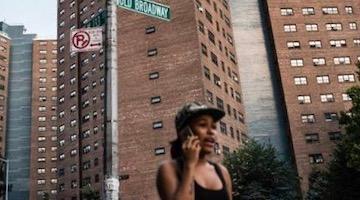
 Taru Taylor is a freelance journalist based in Cleveland, where he focuses on the issue of police reform. He recently wrote an op-ed in the Cleveland Plain Dealer about that city’s mayor,…
 Margaret Kimberley appeared on the November 30, 2022 edition of Sputnik's The Critical Hour with co-hosts Garland Nixon and Dr. Wilmer Leon. They discussed her latest Black Agenda Report column,…
 Margaret Kimberley and Garland Nixon join Danny Haiphong on The Left Lens discussing social media censorship, Ukraine, China, and the contradictions of US imperialism
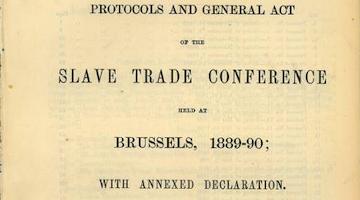 The 1890 Brussels Act provided Europeans with the legal and humanitarian justification for the colonization of Africa. Why have so few heard of it?
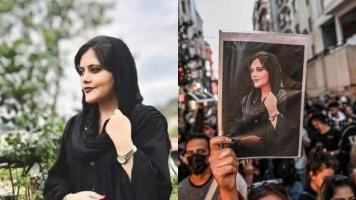 Protesters in some nations are celebrated. Others are ignored. Protest is a human right to be respected but instead can be used as a pretext for nefarious motives such as regime change.


