Black Agenda Report
Black Agenda Report
News, commentary and analysis from the black left.

  • Home
  • Africa
  • African America
  • Education
  • Environment
  • International
  • Media and Culture
  • Political Economy
  • Radio
  • US Politics
  • War and Empire

In Langston’s Home
BAR Poet-in-Residence Raymond Nat Turner
06 Nov 2019
🖨️ Print Article
In Langston’s Home
In Langston’s Home

In Langston’s home
Harlem
You do as Langston
Did
Love the Jazz, the Blues,
Words, acts, pages and stages
In Langston’s home
Harlem
You do as Langston
Did
Love the People, their 
Problems, pains and triumphs

In Langston’s home
Harlem
You do as Langston
Did
You wake asking, “What 
has Harlem become
This morning?”
Each day is different!
This Manhattan morning
Your favorite coffee shop’s
a bank; and by noon
the other bank will be
another phone store—
the former phone store
a dog grooming salon
and so forth and so on…

In Langston’s home
Harlem
You do as Langston
Did
You wake asking, “What 
has Harlem become
This morning?”
And you find the cute
couple with the quiet
kids are gone—disappeared—
Deported to Haiti, though they
are Jamaican and Mexican;
You find the bodega brothers
are headed back to Yemen
to be bombed by backwards
Butchers of fossil fuel infamy…

In Langston’s home
Harlem
You do as Langston
Did
You wake one morning
Smiling. You speak. You say,
“Good morning, Revolution….

© 2019. Raymond Nat Turner, The Town Crier. All Rights Reserved.

Raymond Nat Turner is an accomplished poet and performing artist, and an official of the National Writers Union. Find more of his work at http://upsurgejazz.com

COMMENTS?

Please join the conversation on Black Agenda Report's Facebook page at http://facebook.com/blackagendareport

Or, you can comment by emailing us at comments@blackagendareport.com


Black communists

Do you need and appreciate Black Agenda Report articles? Please click on the DONATE icon, and help us out, if you can.


Related Stories

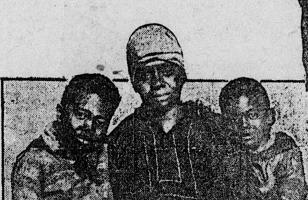
ESSAY: I Go to Jail for the Scottsboro Boys, Ada Wright, 1932
Editors, The Black Agenda Review
ESSAY: I Go to Jail for the Scottsboro Boys, Ada Wright, 1932
21 June 2023
Mrs. Ada Wright, mother of two of the “Scottsboro Boys,” traveled the world to advocate on their behalf.
ESSAY: The Struggle for the Leninist Position on the Negro Question in the United States, Harry Haywood, 1933
Editors, The Black Agenda Review
ESSAY: The Struggle for the Leninist Position on the Negro Question in the United States, Harry Haywood, 1933
26 April 2023
On the 153th anniversary of the birth of Vladimir Lenin, we present Harry Haywood’s theoretical work on imperialism, capitalism, and Black self
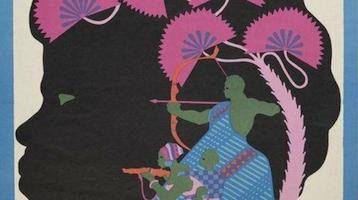
INTERVIEW: A Voice from the Monster: Charlene Mitchell in Tricontinental, 1971
Editors, The Black Agenda Review
INTERVIEW: A Voice from the Monster: Charlene Mitchell in Tricontinental, 1971
15 February 2023
A 1971 interview with the late Charlene Mitchell reminds us of both the need for Black radical struggle against capitalism, militarism, and rac
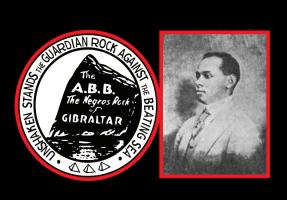
Social Democracy Will Not Save Us
Benjamin Woods
Social Democracy Will Not Save Us
16 November 2022
The author makes the case that liberalism is a dead end and that socialism is the only tool for Black liberation.
Three Revolutionary Black Women
Dr. Gerald Horne
Three Revolutionary Black Women
31 August 2022
Dr.
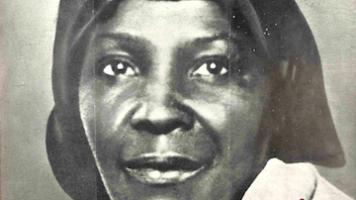
Essay: Record of Revolts in Negro Workers’ Past: Mary Adams, May 1, 1928
Editors, The Black Agenda Review
Essay: Record of Revolts in Negro Workers’ Past: Mary Adams, May 1, 1928
04 May 2022
A May Day 1928 essay by Black communist Williana “Liana” Jones Burroughs – aka Mary Adams – recounts the history of African revolt in the Ameri
Claudia Passport
Lola Olufemi
Claudia Jones: A Life in Search of the Communist Horizon
26 September 2021
This is the foreword to the new edition of Marika Sherwood’s Claudia Jones: A Life
Silencing Black Radicalism Since the Cold War 
Denise Lynn
Silencing Black Radicalism Since the Cold War 
10 December 2020
Anti-communists used the full powers of the state to silence, imprison, or deport radical Black activists.
A Southern Vanguard, The Lost History of Communism Below the Mason-Dixon Line
Robert Greene II 
A Southern Vanguard, The Lost History of Communism Below the Mason-Dixon Line
01 July 2020
Alabama Communists helped lay the foundation for the organized civil rights movement that emerged in the late 1940s and early ’50s.
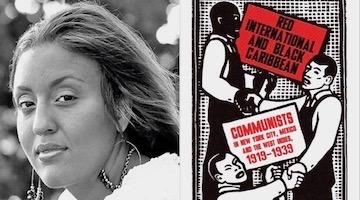
BAR Book Forum: Margaret Stevens’s “Red International and Black Caribbean”
Roberto Sirvent, BAR Book Forum Editor
BAR Book Forum: Margaret Stevens’s “Red International and Black Caribbean”
27 March 2019
Some of the best leaders of black working class people were communist or worked alongside communists.

More Stories


  • Digital apartheid: Palestinians Being Silenced On Social Media
    Omar Zahzah
    Digital apartheid: Palestinians Being Silenced On Social Media
    19 May 2021
    Social media companies, from Zoom to Facebook and Twitter, are reinforcing Israel’s erasure of Palestinians.

  •  Afro-Pessimism and the (Un)Logic of Anti-Blackness
    Annie Olaloku-Teriba
    Afro-Pessimism and the (Un)Logic of Anti-Blackness
    19 May 2021
    Entrenched in anti-racist theory and practice today is the belief that all racial and ethnic domination is structured around a global hierarchy, with “white” people at the top and “black” people at

  • BAR Book Forum: Katrinell M. Davis’ “Tainted Tap”
    Roberto Sirvent, BAR Book Forum Editor
    BAR Book Forum: Katrinell M. Davis’ “Tainted Tap”
    19 May 2021
    Activists and community organizers should be inspired by the work of elders engaged in social change.

  • Forum: Rosemarie Freeney Harding and Rachel Elizabeth Harding’s “Remnants”
    Roberto Sirvent, BAR Book Forum Editor
    BAR Book Forum: Rosemarie Freeney Harding and Rachel Elizabeth Harding’s “Remnants”
    19 May 2021
    There is a need and desire among folks in activist communities for resources of ritual and spiritual grounding.
  • Saying Her Name
    Heather Ann Thompson
    Saying Her Name
    19 May 2021
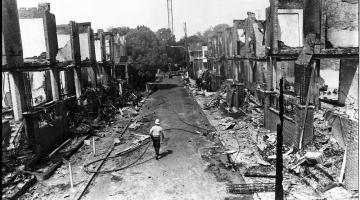
    Remains that were found to be those of a Black MOVE teen-ager who was killed by Philadelphia police in 1985 were treated as an anthropological specimen.

  • Load More
Subscribe
connect with us
about us
contact us