Political Theology Network Seeks Radical Anti-Imperial Perspectives on Religion and Politics
The upcoming conference aims to bring together scholars, activists, and artists motivated by a concern for justice.
“We are looking for projects that challenge and transform conversations about political theology.”
The Political Theology Network invites BARreaders to submit proposals of 200-300 words for projects exploring political theology, broadly understood as an interdisciplinary conversation about intersections of religious and political ideas and practices. The conference is scheduled for October 17-19, 2019, and will be held at Union Theological Seminary and Columbia University, New York. Plenary speakers include: Michelle Alexander,Gil Anidjar,Lap Yan Kung, and Najeeba Syeed.
Under the sign of “political theology” political theorists have reflected on analogies between political and theological sovereignty, theologians have reflected on the role of memory and hope in political engagement, and cultural theorists have performed ideology critique. We are looking for projects that may draw on but also challenge and transform such classic conversations about political theology.
We embrace the vibrant scholarly and activist work being done under the sign of political theology around the world, particularly in contexts of domination. African, Arab, Asian, and Latinx political theological traditions interrogate discourses around “sacred” and “profane” bodies. Indigenous activists organize to dismantle the anthropocentricism and “civilizing mission” of settler states. Scholars of secularism explore the relationship between caste, political culture, and everyday life in India. Black Muslim intellectuals theorize the power of popular protest and the religious nature of #BlackLivesMatter. Anti-colonial theologians from across the globe discuss abolition, anarchy, statelessness, and “higher laws.” Still others invite us to imagine “the end of the world.”
We aim to bring together scholars, activists, and artists working with ethnographic, theoretical, theological, legal, historical, literary, and cultural studies methods motivated by a concern for justice. We are particularly interested in proposals that speak to the following themes:
*economies
*ecologies
*legalities
*embodiment*
*gender and sexualities
*racializations
*citizenship, migration, place and displacement
*colonialisms (including settler colonialism and relations between settlers and Indigenous peoples)
*critical disability studies
*technologies and artificial intelligence
*fictions and poetics
*public scholarship and creative pedagogies
*religious nationalisms and religious pluralities
Proposals that address these themes from diverse global and religious perspectives are especially welcome. We invite five different presentation formats:
1. Paper presentation or pre-arranged papers panel (we anticipate allotting 90 minutes for each panel)
2. Poster
3. Dialogue or roundtable around a single theme (roundtables that include a combination of academics,
activists, and representatives of the community are strongly encouraged)
4. Activist workshop (e.g. teach-in, facilitated conversation, skills-building session, etc.)
5. Performative piece (e.g. poem, spoken word, music, drama, dance, film, digital media, creative fiction readings, etc.) (Please submit either a general description of the piece or the performative work itself. Please also indicate any preferences for room and A/V setup.
This conference, hosted by Union Theological Seminary and Columbia University, is also funded by grants from the Henry Luce Foundation and Emory University’s Center for the Study of Law and Religion. It hosts a professional network connecting scholars of political theology across varying fields and traditions, and we are eager for proposals to advance conversations about what political theology could look like both in and outside the academy.
Submit proposals to Winfield Goodwin, PTN Conference Coordinator at ptn19.proposals@gmail.com
Proposals Due June 1, 2019.
COMMENTS?
Please join the conversation on Black Agenda Report's Facebook page at http://facebook.com/blackagendareport
Or, you can comment by emailing us at comments@blackagendareport.com

 In light of the pandemic, we have seen an extraordinary emergence of mutual aid strategies around the world.
 Rep. Omar recently commended the US war machine for increasing the “transparency” and “accountability” of its bombing of her native country.
 The no-bail movement was on a roll from Vermont and New Jersey to Alaska and Georgia – and then the lock ‘em up mob struck back.
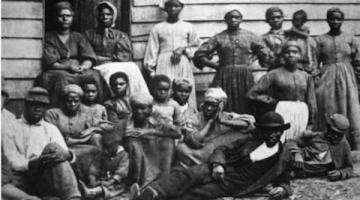 The COVID-19 crisis only heightens the urgency of black reparations, which is now more essential than ever.
 Both see the United States as the Empire, and they agree that it must be opposed.



