The Panther Movie: Why is It Dangerous? Why Do We Fall for It?
“Our situation is so dire that we will reach out for this Hollywood fantasy as if it can be helpful, healing, and a lens through which to view history.”
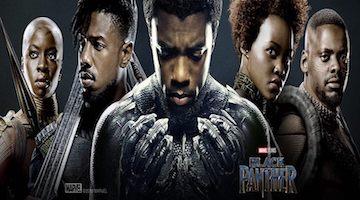
The Panther movie is out and people are going in droves to check it out. Both Black and white. This requires clear hard-headed thinking. It’s not about the actors in the film and their careers. Can’t blame a brother or a sister for needing a payday and a chance to make it inside the system, in this case Hollywood. It’s certainly not about the capitalists promoting it on all media, as they have the dual interest of making money and controlling our consciousness to prevent our movement from making sure they stop making all this money. It has to be about our clear understanding of history, and how we can get free from this system.
The first thing is that they know how to go fishing. Beautiful Black people celebrating culture and positive relations. A view of traditional Africa that defies all logic and historical experience but gives Black people a view of the past that can be imagined as the technological future. This fits the imaginative rethinking of ancient Egypt as an answer for our future. Our situation is so dire that we will reach out for this Hollywood fantasy as if it can be helpful, healing, and a lens through which to view history. There is dialogue about freedom, but in no way reflects the past or gives positive advice for us.
“The King of Wakanda is a friendly associate with the CIA.”
Lies can’t get us where we need to go. Let’s take a quick look at this film. It is a replay of the conflict of the 1960s between cultural nationalism and revolutionary nationalism, the US organization of Karenga and the Panthers of Huey Newton and Bobby Seale. The story is about who is going to control the Kingdom of Wakanda. The point of conflict is the Panther as a metaphor for a Black liberation change agent. The cultural nationalist is the King of Wakanda, who uses their special natural resource plants to become the Black Panther. He is a friendly associate with the CIA. The reference to the actual Black Panthers, meaning the child of Wakanda who grew up in Oakland, is a sort of gangster living a Fanonian fantasy that violence will change the world. He too is the son of a member of the royal family. This guy was trained by the CIA and begins the film in alliance with a white South African fascist. The big lie is that to be a Panther one has to be of “royal blood,” and not simply a victim of the system who stands up to fight back. Another big lie is that the CIA is an ally in the fight for a better world.
The film is a commercial hodgepodge of references to other popular films:
- A young women plays the part of the tech-savvy Q of James Bond movies
- The space ships are a nod to Star Wars
- The CIA agent is the star from the Hobbit movies
- The car chases refer to the Fast and Furious films
- Moving into Wakanda makes you think of Stargate
In 2018 we live in a moment of spontaneous movement and there is the possibility that another version of the real Panthers will likely emerge. Some original Panthers are still incarcerated and being brutalized by the system they dared to oppose. A movie like this has the bait to pull us in like fish about to be hooked by the system. People see the film and feel good, but isn’t that what people say about first getting high on drugs. We know how drug addiction turns out.
This film is dangerous and we must be vigilant against culture used to control and oppress.
Abdul Alkalimat is a native of Chicago, Illinois and received his PhD in sociology from the University of Chicago. He is currently a Professor in African American Studies and the Graduate School of Library and Information Science at the University of Illinois at Urbana-Champaign. Go to his website to find out more about his lifelong history of activism, with a focus on


 The government of Mali has accused France of numerous violations of its airspace and has requested that the United Nations Security Council investigate. French forces may have left Mali, but the…
 This article was written on the occasion of the sixth summit between the European Union and the African Union which was held in Brussels on 17 and 18 of February 2022. These meetings are…
 The history and significance of Black August, presidential elections and politics in Kenya, and reflections on the anniversary of the Sandinista Revolution.
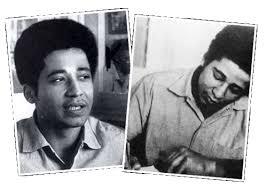 Kalonji Changa is co-founder of Black Power Media and founder of FTP Movement. He joins us from Atlanta to talk about Black August, which has been a fixture of the liberation movement for 43 years.
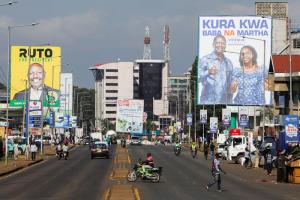 Irene Asuwa joins us from Nairobi, Kenya. She is co-convener of Ecological Justice and supports outreach at Ukombozi Library. We discuss the recent presidential election in that country.



