“Good journalism died in this country with 9/11.”
The US corporate media’s non-stop cacophony of “Russian interference” in the 2016 US elections has come with significant consequences for left political thought and action. While corporate media mergers have left ninety percent of the US media landscape owned by just six corporations, spooks and spies in Washington have been busy conducting a campaign of repression against independent media outlets. Russia Today (RT) and Sputnik International have been deemed “foreign agents.” Facebook and Google have changed their algorithms so fewer readers can find left-wing outlets like Black Agenda Report, World Socialist Website, and CounterPunch. In this series of online interviews, the works, accomplishments, and thoughts of independent journalists struggling in the morass of state repression and corporate politics in the age of US decline will be highlighted.
I spoke with radical Black journalist Jon Jeter, who is a published book author and two-time Pulitzer Prize finalist with more than 20 years of journalistic experience. He is a former Washington Post bureau chief and award-winning foreign correspondent on two continents, as well as a former radio and television producer for Chicago Public Media’s “This American Life.”
Could you give readers a background of who you are and what influenced you to take the path of independent journalism?
I grew up in a Midwestern African-American family, the son of an autoworker and a one-time domestic. My parents attended high school with Oscar Robertson at Indianapolis Crispus Attucks and while they never spent a day in a college classroom, they were both avid readers, and among my earliest memories is of the family fights for the evening newspaper in Indianapolis.
I went on to graduate from the Journalism Program at Florida A&M University and began my journalism career as a night police reporter at the Minneapolis Star Tribune in 1987. I think it worth noting that the Star Tribune was a closed union shop, and the biggest stories in my first few days in the business were the Hormel strike and the 1987 stock market crash.
From there I worked at the Detroit Free Press where I covered Detroit's first black Mayor, Coleman A. Young, and then on the Washington Post, arriving the same month as Bill Clinton. I was able to distinguish myself covering his administration's welfare reform efforts in Maryland and was assigned first to the Post's Midwestern Bureau in Chicago, and then to bureaus in southern Africa and South America. I quit the Post in 2005 because news coverage changed sharply in the days after 9/11, worked at the documentary radio program, “This American Life,” for a year and at TeleSur English in Ecuador for 4 months. In between, I've written two books and had an assortment of jobs in the NGO world.
In the years I’ve followed your media work, you have covered such topics as the rise of Barack Obama, the splintering of the US left, and the lessons from the Harold Washington era in Chicago. Could you tell us more about why you center these topics and are they related at all?
I think virtually all of my reportage in the last decade centers on the fall of the most industrialized state in world history. We've not seen this before in world affairs and yet some themes are historical: Empires rise and fall, fascism begins to encroach on democratic institutions, and the political class reverts to the most primitive forms of accumulation. I am mostly interested in how the U.S. got to this point, and shining a light on the path forward for working-class Americans, and African-Americans most of all.
In your bio, I've noticed that you have worked for prominent outlets such as the Washington Post and shows such as "This American Life." How did your experiences in mainstream media shape your current path, both ideologically and in your career more specifically?
Journalism has never been good in the U.S., let alone perfect, but it has, at times, been a cornerstone of social movements and progress. There was some good journalism being done in the late 80s when I first started and into the mid-1990s, but gradually, and then suddenly, good journalism died in this country with 9/11. Other than some alternative outlets like Black Agenda Report, it is neither honest nor useful and tends to be injurious more often than not.
It has become in the last 15 years increasingly authoritarian, no longer practiced from the bottom-up, as I was taught, but it is the elites dictating to the grassroots what to believe. Again, that has always been the case, but there used to be some space to do real, on-the-ground reporting, and that no longer exists in the mainstream (and, truth-be-told in much of the alternative press).
So, as I've written before, the media today represents a kind of Orientalism, to use the term coined by the late, great Edward Said, or the colonial masters telling the stories of the subalterns. Specifically, the Washington Post stopped me from writing about Argentina being forced to pay its onerous debts to Wall Street, and “This American Life” simply had no interest in me documenting the story of an American Indian girl in a wealthy Colorado community who was the best basketball player in the state and plied her trade at an alternative school that was located in a juvenile courthouse.
That is a recipe for disaster, not to mention rebellion.
How has the media landscape in the US changed since you became a journalist and how have these changes affected broader efforts for social and political change?
Well, similar to education, there has been a purge of African-American journalists, and this has resulted in a top-down driven approach in which the elites are telling ordinary people what to think. The story of Putin's meddling in the U.S. election would NEVER have passed muster at the Detroit Free Press in 1992.
Since late 2016, the US and Western corporate press and political establishment has been obsessed with the notion that Russia has infiltrated US and Western democracy, influencing elections through the promotion of “fake news.” This accusation has produced grave consequences for alternative media outlets and journalists, as publications such as RT and Black Agenda Report have been labeled dupes of the Russians and subsequently censored. How has social media censorship affected your work and the work of independent media generally?
Personally, it means that the space for me in mainstream journalism has been reduced from about 5 percent to zero. Ten years ago, I could conceivably get published by Mother Jones or the Nation. That is no longer the case.
But more broadly, we're likely approaching an unprecedented political and economic catastrophe that will be made worse by the complete absence of real narratives. Bill and Hillary Clinton's antagonism of the Democratic Party's base–African Americans–for 30 years has everything to do with Hillary's loss to Trump. The irony is that technology has disconnected us, rather than connected us as Americans.
Maybe the most difficult question: in your opinion, which way forward should alternative and independent media go in the current political climate?
Well, I can tell you where we need to get to but not exactly how to get there. What we need in the US is community media, or citizens journalism that is very much like the Do-It-Yourself media outlets that fueled the Bolivarian Revolution. This kind of journalism is as close to the ground as you can get and is the sine qua non of revolution. When the military kidnapped Chavez and told Venezuelans that he had fled to Cuba, blacks and mestizos and poor whites got on their radios and discussed, decided that was bullshit, found out where Chavez was being kept and went to go get him, armed with nothing but pots-and-pans.
In the short-term, I am not sure how we can replicate that but in the long-term, I think citizens' media should be as high up on the people's agenda as a single-payer health care system. This is consistent with my larger idea that African-Americans should seek reparations in the form of empowerment zones, kind of a cross between Bantustans and Tax-Increment Financing Districts, which are wholly self-governed.
What are some projects and organizations, if any, that you are working on right now and where can we find your work?
In the last few months, I’ve been writing up a storm for MintPress, and Lord willing and the creek don't rise, I intend to keep doing so. They are fantastic, and while their resources are thing, they truly have a feel for what's needed to fill the democratic vacuum in the U.S.
Longer term, I am working on my third book, which I hope to publish next year (the 100th anniversary of the Red Summer) on the history of America's class war, dating back to the end of the Civil War. I think Americans, both black and white, will be SHOCKED to discover who we really are.
Danny Haiphong is an activist and journalist in the New York City area. He can be reached at wakeupriseup1990@gmail.co



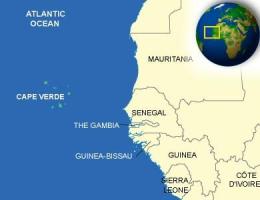 The Trump and Biden administrations violated the Vienna Convention on Diplomatic Relations by arresting and kidnapping Venezuelan diplomat Alex Saab. Cape Verde was under U.S. pressure to participate…
 $100 billion was pledged to assist the Global South amidst the climate change crisis but world wide defense spending now exceeds $2 trillion. War making trumps saving humanity from…
 The U.S. and Australia have fiercely opposed the new security agreement between China and the Solomon Islands. They are attempting to construct a Monroe Doctrine in the Pacific, imposing US hegemony…
 The U.S. has not invited Cuba, Venezuela, or Nicaragua to attend the upcoming Summit of the Americas in Los Angeles, California. Other nations threaten to boycott if every…
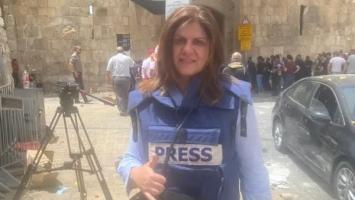 Apartheid Israel continues its shameful tradition of targeting journalists. Al Jazeera's Shireen Abu Akleh is the latest person clearly identified as a journalist who was shot and killed by the IDF.



