by Norman (Otis) Richmond aka Jalali
Darcus Howe, the Trinidad-born nephew of C.L.R. James, touched many lives. A member of the British Black Panthers and an organizer of street protests in London, Howe became a noted broadcaster and writer. The author first met Howe in New York in that crucial year, 1968.
I Feel Blessed to Have Encountered Darcus Howe
by Norman (Otis) Richmond aka Jalali
“ Kwesi Johnson immortalized Howe with the poem "Man Free (for Darcus Howe)" on his 1978 album, >Dread Beat an' Blood.”
Darcus Howe joined the ancestors on April 1, 2017. When I heard and read the news on Limers.com I was shocked and saddened. He was an African born in Trinidad who made his contribution as a broadcaster, writer and human rights activist in Britain. He came to the “Mother Land” (the United Kingdom) as a youth intending to study law. There he joined the British Black Panthers. He was an editor of Race Today, and chairman of the Notting Hill Carnival. Another Trinidadian, Claudia Jones, founded Carnival in Britain.
Howe was best known as a television broadcaster in the UK for his Black on Black series on Channel 4, his current affairs program.
The last time I had the honor of his company was in 2006, when Toronto musician and educator Ian Jones brought Howe into our studio when I was producing and hosting Saturday Morning Live on CKLN-FM, 88.1. It was a huge surprise. I had not seen Howe since 1968 when I met him in Mount Morris Park in Harlem -- “the Capital of Colonized Afro-America,” as the Huey P. Newton and Bobby Seale’s branch of the Black Panther Party once called it. I was “Slippin’ Into Darkness (living underground) because I refused to fight against the heroic Vietnamese people. I was not allowed to become a landed immigrant in Canada at that time because I failed the test, which had a point system. To be honest, it meant I wasn’t intelligent enough live in the Great White North. I was a Louisiana-born dummy.
“I was “Slippin’ Into Darkness (living underground) because I refused to fight against the heroic Vietnamese people.”
Years later I won the Toronto Arts Award and had my face in living color in the Toronto Star.
Idiot and genius; I was called both. Eldridge Cleaver, the Minister of Information of the BPP, was the keynote speaker at a New York rally. Cleaver was holding court. One of the other speakers was Mae Mallory (June 9, 1927 – 2007), a legendary figure in the Black radical tradition. She was a Black Power advocate in the 1950s and 1960s who was best known as an advocate of school desegregation and of black armed self-defense. Mallory supported Robert F. Williams, the Monroe, North Carolina NAACP chapter leader and author of Negroes with Guns.
During the Freedom Rides in August, 1961, Mallory worked with Williams in protecting Student Nonviolent Coordinating Committee (SNCC) activists who were demonstrating in Monroe. This led to armed confrontations with white supremacists and allegations of kidnapping a white couple.
Williams spent time in Toronto, Canada, before escaping to Cuba and later the People’s Republic of China. Howe and I hit it off and we agreed to meet again and headed to Brooklyn to a BPP meeting. When we arrived we were blessed to see and hear Zayd Malik Shakur (born James F. Coston).
Shakur was killed on a New Jersey Turnpike, on May 2, 1973. He was underground with Assata Shakur, ultimately fled to revolutionary Cuba. She was a former BPP and black liberation army (BLA) member, who was convicted of murder in 1977. She escaped from prison in 1979 and fled to Cuba in 1984, gaining political asylum. Zaid Malik Shakur was holding court about the state of Africans in America, the Caribbean and oppressed people around the world.
The battle of ideas was in full effect at that moment in history. Organizations were attempting to recruit members to their fold. Stokely Carmichael, who later became Kwame Ture, had a hot and cold relationship with the Newton and Seale faction of the BPP. Ture had a closer relationship with “Papa Rage” Cleaver. In fact, Cleaver has a chapter in his book, Post-Prison Writings and Speeches, called, “My Father and Stokely Carmichael.”
“Zaid Malik Shakur was holding court about the state of Africans in America, the Caribbean and oppressed people around the world.”
Shakur’s speech was critical of Ture. Darucs Howe lost it and began to shout about how he disagreed with the analysis being put forth. However, he was in Panther land and the crowd couldn’t even hear him because the audience was shouting their approval of Shakur’s thought’s on the question.
That was the last time I saw Howe until our encounter at CKLN-FM. According to Ian Jones, Howe met Ture in Montreal at the Black Writers Congress in 1968. His great uncle C.L.R. James was at this conference. During this period he was working quietly with H. Rap Brown, who later became Imam Jamil Abdullah in Ocean Hill- Brownsville. I found out years later that Howe stayed under the radar because of the immigration issue.
As a nephew of C.L.R. James, Howe was influenced by Marxism. Said Howe about James: “His mother and my grandmother we sisters. When I left Trinidad to come here to study law, I went to see my grandmother to say goodbye… She said to me, ‘When you go to England find CLR. Do whatever you have to do to find him and you will never ever regret it.’”
Howe’s life has been captured in a new volume, Darcus Howe: A Political Biography, by Robin Bunce and Paul Field. Linton Kwesi Johnson immortalized Howe with the poem "Man Free (for Darcus Howe)" on his 1978 album, Dread Beat an' Blood.
The international rebel’s last battle was with prostate cancer. He vowed to help African men from the Caribbean and elsewhere to take this matter seriously. He follows Trinidadian Ture and others that have been hit by this dreaded disease.
I feel blessed to have encountered Leighton Rhett Radford "Darcus" Howe.
Norman (Otis) Richmond, aka Jalali, was born in Arcadia, Louisiana, and grew up in Los Angeles. He left Los Angles after refusing to fight in Vietnam because he felt that, like the Vietnamese, Africans in the United States were colonial subjects. After leaving Los Angeles in the 1960s Richmond moved to Toronto, where he co-founded the Afro American Progressive Association, one of the first Black Power organizations in that part of the world. Before moving to Toronto permanently, Richmond worked with the Detroit-based League of Revolutionary Black Workers. He was the youngest member of the central staff. When the League split he joined the African People’s Party. In 1992, Richmond received the Toronto Arts Award. In front of an audience that included the mayor of Toronto, Richmond dedicated his award to Mumia Abu-Jamal, Assata Shakur, Geronimo Pratt, the African National Congress of South Africa, and Fidel Castro and the people of Cuba. In 1984 he co-founded the Toronto Chapter of the Black Music Association with Milton Blake.Richmond began his career in journalism at the African Canadian weekly Contrast. He went on to be published in the Toronto Star, the Toronto Globe & Mail, the National Post, the Jackson Advocate, Share, the Islander, the Black American, Pan African News Wire, and Black Agenda Report. Internationally he has written for the United Nations, the Jamaican Gleaner, the Nation (Barbados), the Nation Sri Lanka, and Pambazuka News.Currently, he produces Diasporic Music a radio show for Uhuru Radio and writes a column, Diasporic Music for the Burning Spear Newspaper. For more information:norman.o.richmond@gmail.com

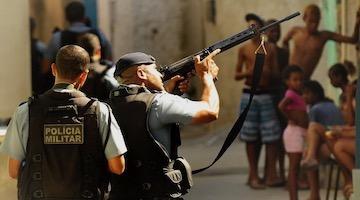 Anti-Blackness is the common denominator underlying Black people’s high rates of death from poverty, disease and police violence on both continents of the western hemisphere, said Jame
 For the 12th consecutive year, the Black Is Back Coalition for Social Justice, Peace and Reparations will march on the White House, November 7, this time under the themes “Black Power Matters,
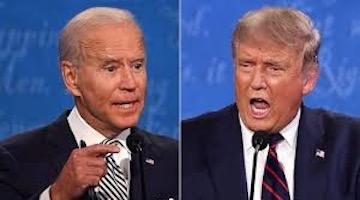 The incoherence of the Biden-Trump debate will be repeated every election cycle until Blacks and progressives break with the corporate duopoly.
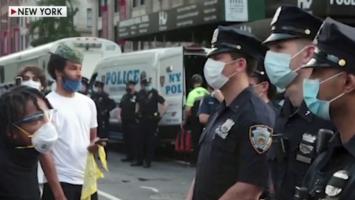 A majority of New York City cops are non-white, but their union endorsed the re-election of Donald Trump, with no loud protest from the darker ranks.
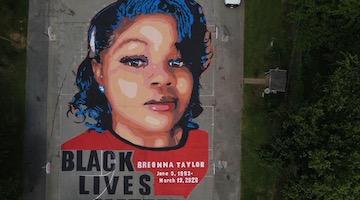 Reactions to the Breonna Taylor murder, settlement and verdict all have one thing in common: Black people’s inability to protect our lives.



