by Didas Gasana
There is no doubt that the U.S.-led unipolar global order is facing stiff competition from the East. The BRICS block, especially Russian and China, so far presents to the U.S. the most difficult challenge since the U.S. rise to global supremacy. “Deep down in the center of sub-Saharan Africa, Burundi is Africa’s Syria.”
Like Syria, Burundi is a War Theater: The China-Russia Axis vs. the US-EU Axis
by Didas Gasana
This article previously appeared in the San Francisco Bay View, the national Black newspaper.
“Syria and Burundi are two international hotspots where two global blocks are tussling it out for global superiority.”
China and Russia’s competition for political and economic power on an international political scene has in fact led to a marriage of convenience between U.S. and some traditional nemeses like France. After Ukraine, where Russia’s Putin emerged as a force not to ignore, now we have Syria.
There is no doubt that Russia is setting a geopolitical agenda in the Middle East, and the U.S. is undecided on how to respond to him.
Syria is not alone. Deep down in the center of sub-Saharan Africa, Burundi is Africa’s Syria. Burundi’s pre- and post-election political maneuvers, violence and attempted coups are a result of this bipolar fight for global supremacy.
Nowhere can it be better illustrated than in the U.N. Security Council, where Russia and China protected President Nkurunziza against the wrath of the U.S. and E.U. allies. What lies at the center is not only the resource war – control of Burundi’s nickel and the mineral wealth of the Eastern Democratic Republic of Congo – but political leverage.
Since day one, through Rwanda, U.S. and her allies have allegedly committed acts aimed to bring Nkurunziza’s government to its knees. It didn’t come as a surprise when Luc Michel accused the U.S. and Belgium of fueling the Burundian conflict. [Michel is a far-right Belgian political activist. – ed.]
“Russia and China protected President Nkurunziza against the wrath of the U.S. and E.U. allies.”
Burundi is not taking things lightly, having so far expelled Rwanda’s diplomat and asked for the replacement of Belgian Ambassador to Bujumbura Marc Gedopt, whom the Belgian foreign minister described as “unacceptable.”
To date, Syria and Burundi are two international hotspots where two global blocks are tussling it out for global superiority. To understand how political events are likely to play out in Burundi, keep a close watch on the Middle East.
Russia and China are increasingly becoming global players the U.S. can’t simply wish away, yet the U.S. is hell-bent on maintaining her global hegemony. None can tell with exact precision whether some political compromise may be reached or an all-out war in Syria – and by proxies in Burundi – will follow.
None can tell with exact precision if the U.S. will back off on both hotspots. My bet is that the U.S. has more to lose in the Middle East than in the Great Lakes Region.
How the USA reacts to Russia in Syria and how Russia reacts will have a bearing on Burundi. That is how global politics and economics can be as complex as a cobweb.
Didas Gasana is a Rwandan journalist who has taken political refuge in Sweden because his opposition to Paul Kagame’s Rwandan government put his life in danger in the African Great Lakes Region. In Rwanda, he was the editor and publisher of Umuseso. After taking refuge in Uganda, he became the editor and publisher of The Newsline, but after little more than a year in Uganda, he felt compelled to apply for refugee status outside Africa. He can be reached at diga_mbi@yahoo.fr.

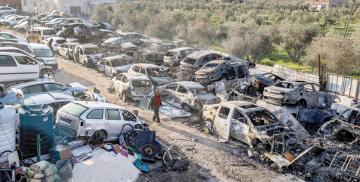 The attack by Israeli settlers on the town of Hawwara was no aberration. It was just one example of the violence inherent in an apartheid state.
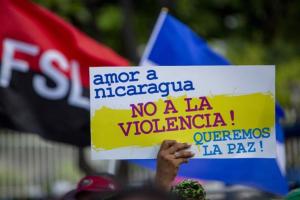 It is important to understand the truth about the 222 people recently released to the US who were convicted of treason in Nicaragua for savage acts of violence against their people.
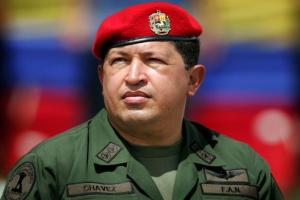 The tenth anniversary of the death of Venezuelan president Hugo Chavez reminds us of his commitment to serve the people of his country, and to fighting for sovereignty for his nation and all the…
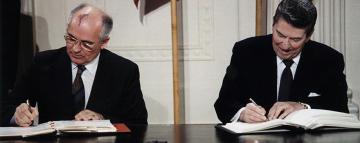 Having used arms control to gain unilateral advantage over Russia, the cost to the U.S. and NATO in getting Moscow back to the negotiating table will be high.
 The North Atlantic Treaty Organization is not the regional defensive organization that it claims to be. As far as NATO is concerned, the entire world is in its sphere of influence, and the Americas…



