by BAR executive editor Glen Ford
The U.S. pounced on the island nation of Grenada like an “elephant on a flea,” 30 years ago, to wipe out the remnants of a revolution. Adding insult to injury (and violation of international law), the U.S. pretended that Grenadians didn’t fight back. Instead, “for weeks, the Americans claimed to be chasing an elusive force of Cuban super-soldiers around island.”
Remember the Grenada Invasion
by BAR executive editor Glen Ford
“Grenada’s real threat was ideological.”
Thirty years ago, on October 25, 1983, the United States sent 6,000 elite troops to overwhelm the Caribbean nation of Grenada, an island of less than 100,000 inhabitants that had been governed by the revolutionary New Jewel Movement since 1979. Although the announced pretext for the invasion was a nonexistent threat to American medical students on the island, Operation Urgent Fury had been rehearsed two years earlier, in a 1981 war game against the island nation of “Amber and the Amberdines,” a fictional stand-in for Grenada and the Grenadines.
Washington’s larger, strategic rationale for marshalling overwhelming force against an unoffending, 133 square mile pinpoint of a country off the coast of Venezuela, whose biggest export was nutmeg and whose security forces probably numbered no more than 1,200, was that Cuba and/or the Soviets were poised to turn Grenada into a military and/or “terrorist” base. A new and desperately needed airport was under construction, paid for by Britain, the former colonial master, Cuba, Libya, and Algeria, with Cuba supplying the bulk of construction workers. The runway, just south of the gorgeous arc of Grand Anse beach and the tiny capital city, St. George’s, would finally allow tourists to enter Grenada by commercial jet, replacing the perilous propeller drop into a narrow strip between a mountain and the ocean on the island’s northern shore.
Objectively, the old airport was the most dangerous thing about Grenada, where the mostly white medical school students constituted the largest foreign presence and life was laid-back, even by Caribbean standards. Grenada’s real threat was ideological. Its youthful, Marxist-oriented government, Washington feared, might serve as a model for others in the hemisphere – “another Cuba,” or Nicaragua, whose Sandinista revolutionaries had also come to power in 1979.
Although conquest of Grenada presented no real military challenge for the superpower, the island’s very minuteness made U.S. invasion politically problematical. The Reagan administration found itself oscillating between characterizing the aggression as a rescue mission to save American students, to an urgent strategic counter-move in the global fight against communism (“US Delegate in UN Calls Invasion an Act of Defense,” read the October 28 New York Times headline), or some combination of the two, as in the Washington Post’s October 26 headline, “Strategic Airport, Hostage Fear Led to Move.”
“Its youthful, Marxist-oriented government, Washington feared, might serve as a model for others in the hemisphere.”
Operation Urgent Fury was most urgently opportunistic. A long-simmering political crisis within the New Jewel Movement led, disastrously, to the house arrest of popular Prime Minister Maurice Bishop by other members of the ruling party, on October 12. Bishop and a crowd of supporters later marched on army headquarters, at Fort Rupert, on October 19, in a bid to take back power. Many were killed in the fighting, Bishop and other officials were executed, and the country was placed under marshal law. U.S. forces, which appeared to have been made ready early in the Grenadian political crisis, hit the beaches and parachuted onto the unfinished airport runway on October 25.
The Grenadian armed forces put up what resistance they could, given the overwhelming firepower and numbers of the enemy and the fratricidal trauma the Grenadian nation had just undergone. However, the superpower could not allow itself to be seen as an elephant stomping on a flea. Therefore, all dead bodies recovered on the island were initially designated as “Cuban,” except for the 21 patients and staff killed in the U.S. bombing of the mental hospital, at St. George’s, in the first day of the invasion. The official line, dutifully parroted by the press, was that only Cuban soldiers – 1,100 of them – had resisted the American assault. In fact, Cuban nationals on the island numbered only about 700, most of them unarmed, pot-bellied construction workers. Cuban military personnel defended only their embassy. Twenty-four Cubans died in the early days of the invasion, along with probably several hundred Grenadian military. But, for weeks, the Americans claimed to be chasing an elusive force of Cuban super-soldiers around island. The New York Times relayed a U.S. military estimate that 500 Cubans had “fled into the hills.” These phantom Cubans live on in the 1986 Clint Eastwood movie Heartbreak Ridge, in which Eastwood and his platoon do battle with Castro’s men in the hills of the island. (For Fidel Castro’s remarks at the funeral of Cuba’s real-life casualties in Grenada, click HERE.)
“All dead bodies recovered on the island were initially designated as ‘Cuban’”
By November 13, three weeks into the invasion, the New York Times was still reporting that Grenadians have been passive in the invasion of their own country. “Grenadians Toll Put by U.S. at 21: Americans Appear to Believe that All Combatants Killed in Battle Were Cubans.” The bombing of the mental hospital, where the only acknowledged Grenadian fatalities occurred, was an “accident,” said the Reagan administration. Indeed, the U.S. action was not an “invasion” at all, but an “intervention.” The New York Times loyally purged “invasion” from its vocabulary until the last phantom Cuban disappeared from the Grenadian hills.
The Grenada invasion was, in a sense, simply a continuation of U.S. “gunboat diplomacy” in the Western Hemisphere, as was practiced as late as 1965, in the invasion-intervention of the Dominican Republic, which was also undertaken under the hybrid rationales of “not another Cuba” and “rescue of American nationals.” However, Grenada may have been the first U.S. occupation in which members of the native government and armed forces that had evaded death or capture were immediately dubbed “fugitives” – outlaws in their own land, where they had been the lawful and recognized authority, only days before.
Today, the airport at Point Salines that represented such an imminent threat to U.S. national security is named for martyred Prime Minister Maurice Bishop, the revolutionary who was the villain of Ronald Reagan’s mock attack on “Amber and the Amberdines,” but whose death provided the opportunity for the actual invasion of his homeland.
BAR executive editor Glen Ford can be contacted at Glen.Ford@BlackAgendaReport.com. He authored the book, The Big Lie: Analysis of U.S. Press Coverage of the Grenada Invasion (IOJ, Prague), now out of print.

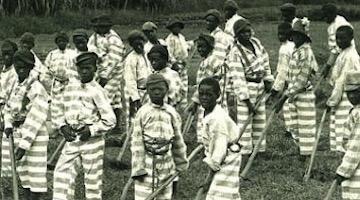 The ‘slavery clause’ made the passage of restrictions targeting Black people like the Black Codes possible as well as convict leasing of the late 19th century.
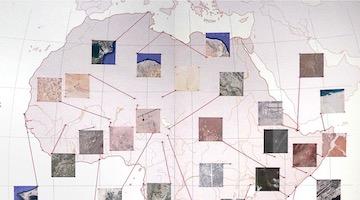 Neither the Organization of African Unity nor the African Union have been able to realize the two most important principles of pan-Africanism: political unity and territorial sovereignty.
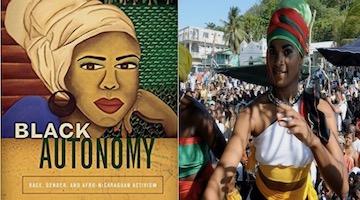 The author examines postwar violence through the activism of Afro-Nicaraguan women and men from the Caribbean coast of the country.
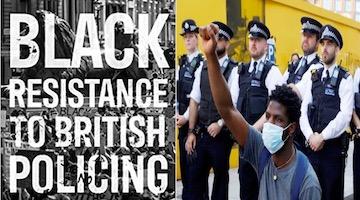 Historically, most of Britain’s policing hasn’t taken place on the British mainland – it has taken place in its colonies.
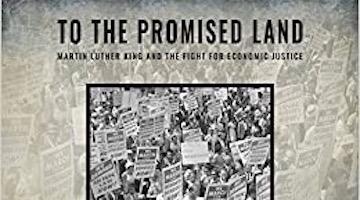 King said the best anti-poverty program is a union, where you can fight for your own agenda — somebody doesn’t have to hand it to you.



