by BAR managing editor Bruce A. Dixon
When you criticize black leadership, and especially the president from the left, the establishment has no answer, they call you “a hater.” But has our current black leadership outlived its usefulness? And if so, what's a “hater” to do?
Hatership VS Black Leadership in the Age of Obama
by BAR managing editor Bruce A. Dixon
“Hater” is what you critics whom you really cannot answer. Thus when it comes to today's black leadership, we at BAR are pretty much certifiable haters. We've got plenty of questions, but our black political class, along with their hangers-on, have few or no answers.
Our black leadership, our black political class, whom we also sometimes call the black misleadership class, has no compelling vision of a better society and a better world to strive for. Its horizons are limited to prolonging their careers in politics, pulpits and positions that somehow “represent” the oppressed by virtue of their pretty black faces in various high places. But the “representation” is empty.
A generation of black real estate crooks with intimate connections to the last three administrations has profited mightily from the destruction of public housing communities across the country and the privatization of the land under what used to be those neighborhoods. Our black political class has had fifty years --- two generations --- to come up with answers to urban gentrification that might stabilize the communities which made their own careers possible. Their answer has been to turn away from those communities, and to get paid.
Black preachers and politicians helped round up and recruit black families for sub-prime mortgages right up until the bubble burst, and after a decent interval organizations like the NAACP have resumed their relationship with financial predators like Wells Fargo. In the face of rising homelessness, where are those same black preachers and politicians? Are they organizing communities to call for moratoriums on foreclosures and evictions the way they organized meetings to sign people up for bad loans? Of course they aren't.
With more unemployed African Americans than any time in seventy years, often due to vicious discrimination against former felons, who are the black leaders calling meetings, marches, boycotts and civil disobedience demanding a massive inner-city jobs program building transit, creation of new housing, repairing infrastructure, and employing green technologies to weatherproof the existing housing stock? The answer of course is nowhere. Congressman Al Green nailed it when he said that if black unemployment was this high under a white Republican president there would be marches and protests every day.
The prison state and its associated police and social apparatus continues to intrude on the lives of millions of black families. The Malcolm X Grassroots Movement has amply documented that one African American is put to death every 36 hours by police, private security forces or vigilantes in the US, and prosecutions are exceedingly rare. Black leadership here as elsewhere is not interested in questioning the expansion of the prison state, and only sporadically interested in reforms that might ease the lives of the current and formerly incarcerated, like limiting the costs of long-distance prison calls or repealing mandatory sentencing.
Most of the current crop of black politicians, from big city mayors up to the president are fierce advocates of educational privatization and a suite of so-called reforms introduced by corporations and their deep pockets. Here as elsewhere, most black political leaders are silent, while many of their constituents wait and wonder why nobody speaks out to defend their public schools. They'll be waiting, in many cases, a while longer.
And most recently, when Susan Rice, a corrupt lobbyist, stockholder in the Keystone Oil Pipeline and functionary in the Clinton administration who facilitated massacres in Rwanda and covered up genocide in Congo was rumored under consideration as Secretary of State, black leaders in pulpits, womens organizations, and political office everywhere seized upon the opposition of white racists as their reason for defending this criminal “diplomat.” So much of what used to be called black nationalism has been hijacked by this “representationalist” impulse that we've long maintained black politics as a progressive force on the US political landscape, is probably over. The active defense of Susan Rice is a striking case of how black nationalism, black solidarity has been thoroughly hijacked by the establishment.
Black people daring to question Susan Rice for the right reasons cannot be directly answered --- they can only be accused of being closet Hillary supporters or “haters” in general.
It's time to face facts. Today's black leaders will never hold anybody “accountable” in the interest of most African Americans. That's why the best title for the putative movement to hold President Obama's feet to the fire on black unemployment, on militarism, or nuclear power or the environment or the prison state or anything else is the February 30th Movement. Cause that's about when our current black leadership will be ready for it.
The horizons of our black leadership are limited to the next funding cycle, the next election, to defending the president against the next racist assault, to being the black wall that surrounds Barack Obama, and their own privileges as well. It takes a little something, under these conditions, to be what they call a hater. Hatership is not always the greatest career move; it comes with costs. You won't be invited to speak at most Black History month gatherings, where as Adolph Reed points out, black elites want to hear validating success stories, not challenging assessments. But hatership frees you from having to bow to gentrifiers, from needing to agree with corporate school reformers, or having to pretend that the prison state is just one of those things nobody can do anything about, or having to support what you hope is a lesser evil every year or two.
Hatership is freedom, and real freedom is always a mixed bag. But simply being a hater is far from enough. Leaders are leaders because they lead, or because people imagine they do, and try to follow. The current crop of leaders will continue to discredit themselves, but they won't leave the stage unless forced to.
It's time for more of the haters, for those with the criticisms that won't be answered, for those who still believe social justice and peace are possible and worth fighting for, to become organizers, and bring something new into existence. It's either that, or join the Obamites in their February 30th Movement.
Bruce A. Dixon is managing editor at Black Agenda Report, and a member of the state committee of the Georgia Green Party. Contact him via this site's contact page or at bruce.dixon(at)blackagendareport.com.

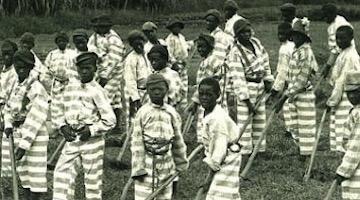 The ‘slavery clause’ made the passage of restrictions targeting Black people like the Black Codes possible as well as convict leasing of the late 19th century.
 Neither the Organization of African Unity nor the African Union have been able to realize the two most important principles of pan-Africanism: political unity and territorial sovereignty.
 The author examines postwar violence through the activism of Afro-Nicaraguan women and men from the Caribbean coast of the country.
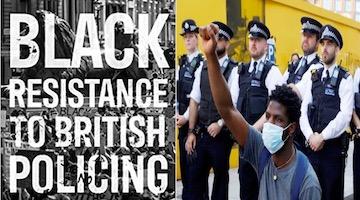 Historically, most of Britain’s policing hasn’t taken place on the British mainland – it has taken place in its colonies.
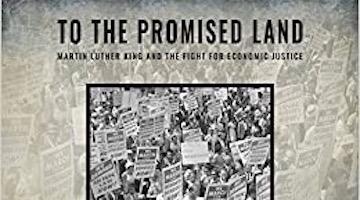 King said the best anti-poverty program is a union, where you can fight for your own agenda — somebody doesn’t have to hand it to you.



