Protests in Dixie Against Trump’s “White Supremacist Government”
Hundreds gathered in Columbia, South Carolina, to protest President Trump’s ban on refugees and visitors from seven mostly Muslim countries. “We’ve got to put pressure on Republican legislators who support Trump, and the business people that support this rightward movement that’s happening in this country,” said author and activist Kevin Alexander Gray. “The whole idea of having a white supremacist government -- which, in South Carolina, we now a lot about, because this is the ideological home of white supremacy in America.”
One Out of 9 U.S. Inmates Serving Life
Despite “modest” reductions of about 5 percent in the overall U.S. prison population since 2009, the number and proportion of inmates serving life sentences continues to increase. A new study by The Sentencing Project, titled “Delaying a Second Chance: The Declining Prospects for Parole on Life Sentences,” puts much of the blame on politicians and parole boards. “Legislatures have increased minimum sentence requirements that people have to serve before a parole board can even review someone for parole eligibility,” said study author Dr. Nazgol Ghandnoosh. Back in the 1980s, a person sentenced to life for murder could expect to get out in about 11 and a half years, but someone similarly sentenced in the 21st century would be likely to spend more than 23 years -- twice as long -- behind bars. “Parole boards are granting fewer paroles or refusing to increase them, even though they’re seeing people so much later in their sentence,” said Ghandnoosh. Longer actual terms for lifers results in longer sentences for everyone else, she said. More than 160,000 U.S. prison inmates are serving life sentences, 50,000 of them with no possibility of parole.
“Collective Punishment” of Prisoners
Kerry “Shakaboona” Marshall is one of the thousands of lifers sentenced for crimes committed when they were juveniles. Marshall has already spent a quarter century behind bars. He edits a prison magazine and is a correspondent for Prison Radio, but could not reach his editors on the outside because of a lockdown following a fight among a few inmates at Rockview prison, in Pennsylvania. Such “collective punishment,” he told Prison Radio’s Noelle Hanrahan, cuts prisoners off from their support structures. “Without family bonds, it’s hard to return to society, and it’s hard for prisoners to maintain connection with their lawyers to present a proper defense for their legal appeals,” he said.
Mumia Interviews Eddie Africa, of Move
The nation’s best known political prisoner, Mumia Abu Jamal, introduced his worldwide audience to fellow inmate Eddie Africa, sentenced, along with eight other members of the Move organization, to 30 to 100 years in the 1978 death of a Philadelphia police officer. Nearing 70, Eddie Africa urges young fathers in prison to maintain close contact with their children. “Use this time to talk to them, write to them, so they don’t go the path their parents went,” running with gangs.
A Plan for Community Control of NYC Police
The Campaign for Community Control Over the Police, a coalition of 26 anti-police terror organizations, will hold the first of several “Open House Conferences” on February 18, at Manhattan’s All Souls Unitarian Church. The coalition has developed a four-tier proposal to rein in the cops, beginning with mandatory residency in the precinct in which they work. “That way, they have a vested interest in the community, their children go to the same schools, they shop in the same stores, and they will actually care about the community, rather than act as an occupying army,” said Campaign outreach chairperson, Bro. Shep Olugbala, in an interview with Black Agenda Radio producer Kyle Fraser. Precinct commanders would be elected by the neighborhood, just as “you have sheriffs who are elected by the community” in smaller towns. An elected Community Police Control Board would have subpoena powers and the right to hire and fire police, and an elected special prosecutor, “totally independent of the district attorney’s office,” would “investigate and prosecute allegations of serious criminal conduct by police officers,” said Olugbala.
Black Agenda Radio on the Progressive Radio Network is hosted by Glen Ford and Nellie Bailey. A new edition of the program airs every Monday at 11:00am ET on PRN. Length: one hour.

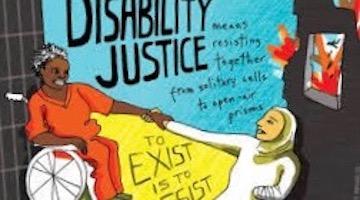 Prison abolition and reform are compatible “when reform is done in service of abolition." “State violence and intimate violence are deeply connected.”
 Our authors contemplate the “antiblack horizon” in Asian American imaginaries, and orangutans’ relationship to colonialism and white supremacy.
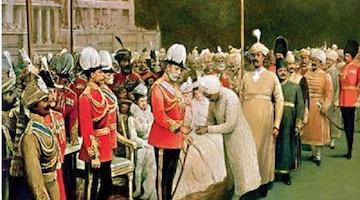 British colonizers turned a scam for defrauding peasants into a parasitical relationship that made England rich and impoverished a subcontinent.
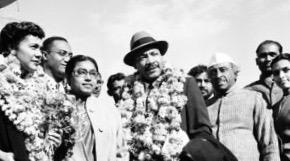 Two great icons of 20th century Black struggle found a valuable resource in Gandhi and his movement for national liberation.
 A universal income program can help correct the debt bubble problem without fear of “overheating” the economy.



