A Black Agenda Radio commentary by executive editor Glen Ford “The NAACP and the Movement for Black Lives are both on the same page when it comes to charter schools.” Both organizations called for a halt to the spread of charter schools, with the NAACP charging that charters are “as destructive to poor communities as predatory lending practices by banks.” The Movement for Black Lives demands an end to President Obama’s Race to the Top program, which coerces states to allow more charters.
NAACP and Movement for Black Lives Call for Moratorium on Charter Schools A Black Agenda Radio commentary by executive editor Glen Ford “School privatization ‘strips Black people of the right to selfdetermine the kind of education their children receive,’ said the coalition.”
As the Obama administration heads into the sunset, its devastating policy of public school privatization through charters has met fierce resistance from two distinct political currents in Black America. The NAACP, at its annual convention last month, adopted a resolution calling for a halt to the spread of privately-owned charter schools. The NAACP has long been critical of charters, but the language of this year’s resolution was the strongest, yet , charging that charters contribute to an increase in school segregation and are as destructive to poor communities as predatory lending practices by banks. The civil rights group demanded an end to tax breaks and other advantages for charters and reaffirmed its support for high quality, free public education for all children. The privately appointed boards of charter schools, said the NAACP, “do not represent the public yet make decisions about how public funds are spent.”
About a week later, the Movement for Black Lives , representing more than 50 organizations, unveiled its platform on a broad range of issues, including a demand for community control of schools and for a cut-off of federal aid to school districts that are not run by elected school boards. School privatization “strips Black people of the right to selfdetermine the kind of education their children receive,” said the coalition, charging “this systematic attack” is “bankrolled by billionaire philanthropists such as Bill and Melinda Gates, the Walton Family, and Eli and Edythe Broad, and aided by the departments of Education at the federal, state, and local level.”
Cops Out of Schools
The Movement for Black Lives called for and end to Teach for America, President Obama’s favorite tool for displacing veteran educators; a moratorium on all suspensions of students; a shutdown of all juvenile detention centers; and removal of police from the schools. The coalition vowed to “build an international movement of people of African descent to force nations to ratify and recognize education as a human right, and to end privatization.” The coalition specifically called for an end to President Obama’s signature program, Race to the Top, which coerces states to increase charter schools or lose billions in federal education funding.
The NAACP, which most often acts as a virtual annex of the Democratic Party, and the Movement for Black Lives, which has righteously refused to endorse any party or political candidate, are both on the same page when it comes to charter schools. Indeed, the NAACP resolution cites the work of the grassroots organization Journey for Justice , an alliance of community, youth, and parent-led organizations in 21 cities across the country, which also worked on the Movement for Black Lives platform on charter schools. The convergence on this issue between two very different Black political tendencies shows that there is a growing, principled consensus in Black America on the need for democracy in public education, through community control of schools. The struggle for Black self-determination is inseparable from defense of public education.
For Black Agenda Radio, I’m Glen Ford. On the web, go to BlackAgendaReport.com.

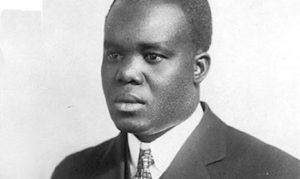 Hubert Henry Harrison was one of the foremost Black socialist and nationalist thinkers of the early 20th century. He was known as "the father of Harlem radicalism." This is the first of a three-part…
 A single call from an anonymous tipster is all it takes for the government to take children from their families.
 The effort to end qualified immunity in New York, rezoning and housing in Harlem, and the National Day Laborers Organinizing Network at the People's Summit.
 Qualified immunity is the legal doctrine that shields public officials accused of civil rights violations. Police and corrections officers face limited repercussions for acts of brutality, even for…
 Leah Goodridge is a member of New York City Planning Commission. She opposed the One45 project, which was to have been located on West 145th Street and Lenox Avenue. The project was opposed by the…


