A Black Agenda Radio commentary by executive editor Glen Ford
The Black Radical Tradition must still be alive and kicking, having drawn hundreds of activists and scholars to a conference, this weekend, in Philadelphia. The gathering was adamantly anti-capitalist and “infused with the spirit of accountability.” Dream Defender Umi Saleh described social media as “an asylum for neoliberalism” and veteran organizer Jamala Rogers noted: “You can’t have a principled debate in 140 characters.”
Moving Left, to the Radical Root
A Black Agenda Radio commentary by executive editor Glen Ford
“We cannot wage an assault on white supremacy without fighting against capitalism.”
If the incipient “movement” – or “awakening” – in Black America is to sustain itself, we will need more gatherings like this past weekend’s conference on the Black Radical Tradition, at Temple University, in Philadelphia. The conference drew hundreds of activists, organizers and academics of all ages from around the country for the purpose of getting to the root of the crises that afflict Black America and humanity at large. Getting to the root of things is what radicalism is all about. Noted author and UCLA professor of history Robin D.G. Kelly expressed the consensus of the conference when he said, “We cannot wage an assault on white supremacy without fighting against capitalism.”
Angela Davis, the scholar, former political prisoner and icon from the last great Black mass movement, more than 40 years ago, told her fellow activists: “If we are true to the Black Radical Tradition we cannot simply call for ‘reform’ of the police or of prison. The entire history of prison is one of ‘reform’.... We want justice that does not reproduce violence.”
The conference was put together by Philadelphia’s Black Radical Organizing Collective, many of whose members were mentored by Anthony Monteiro. Dr. Monteiro was fired from the faculty of Temple University’s African American Studies Department for his activism in the fight against gentrification and police lawlessness.
Patrice Armstead, a young organizer and scholar, told one a conference panel that “capital is the driving force behind gentrification,” which aims to “produce a neoliberal city for the white elite.” She said, “We can’t allow stadiums to be built in urban spaces” – as Temple is attempting to do in North Philadelphia – “instead of affordable housing.”
“So-called “leaders” are ‘crowned’ based on the size of their Twitter followings.”
Most promisingly, the conference was infused with the spirit of accountability – to the people, to one’s comrades, and to the truth – an awareness that all activists and organizations must be subject to rigorous critique. Veteran organizer and author Jamala Rogers brought “greetings from Ferguson,” and said: “We hold white supremacists accountable, but we don’t hold ourselves accountable.” As for those activists who seem to live in the Land of Twitter, Rogers noted that “You can’t have a principled debate in 140 characters.”
Umi Saleh, who was previously known as Phillip Agnew, of the Florida-based Dream Defenders, provided a magnificent example of principled criticism and self-criticism. He said social media has become ““an asylum for neoliberal values” where people who call themselves activists compete “for virtual validation.” So-called “leaders” are “crowned” based on the size of their Twitter followings – folks like DeRay McKesson, of Campaign Zero, whose group met twice with Hillary Clinton but made no substantive demands of the presidential candidate. Umi Saleh said McKesson agitates against building grassroots organizations and practices a politics that is “counter-revolutionary and anti-movement,” devoid of social responsibility.
Saleh was telling the truth, just as the African revolutionary Amilcar Cabral intended when he admonished his comrades to “tell no lies, and claim no easy victories.” Cabral was the most quoted person at the Philadelphia conference, which shows the Black Radical Tradition still lives.
For Black Agenda Radio, I’m Glen Ford. On the web, go to BlackAgendaReport.com
BAR executive editor Glen Ford can be contacted at Glen.Ford@BlackAgendaReport.com.

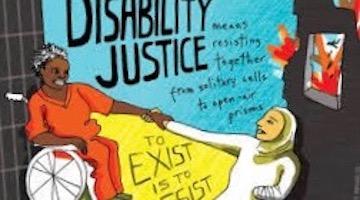 Prison abolition and reform are compatible “when reform is done in service of abolition." “State violence and intimate violence are deeply connected.”
 Our authors contemplate the “antiblack horizon” in Asian American imaginaries, and orangutans’ relationship to colonialism and white supremacy.
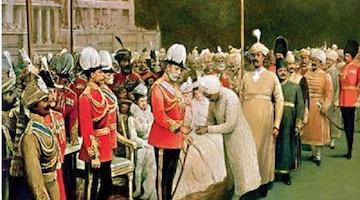 British colonizers turned a scam for defrauding peasants into a parasitical relationship that made England rich and impoverished a subcontinent.
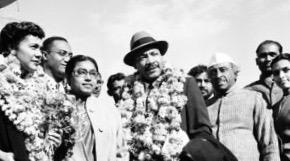 Two great icons of 20th century Black struggle found a valuable resource in Gandhi and his movement for national liberation.
 A universal income program can help correct the debt bubble problem without fear of “overheating” the economy.



