A Black Agenda Radio commentary by executive editor Glen Ford Every socio-economic fact conspires against successful Black family life, beginning with the dwindling pool of available husbands and partners. Mass incarceration and inner city violence have circumscribed Black women’s mating prospects. “Among black male high school dropouts, 60 percent will be dead or incarcerated before the age of 35.”
Black Families Crushed By Prison and Death A Black Agenda Radio commentary by executive editor Glen Ford “ Not only are Black mothers much less likely to be married; but they are also much less likely to live with the fathers of their children.”
The Brookings Institution, an establishment think tank in Washington, DC, commissioned a team of researchers to answer the question: Is there a shortage of marriageable men in the United States? Black women have long claimed that there is a shortage of potential Black husbands. The Brookings study shows that they were right. It is, indeed more difficult for Black women to find a Black mate of roughly of the same age, income and education level. No such shortage exists among white Americans except, ironically, among the most highly educated. Women of all races are better educated than their mothers, and earn more money. However, male earnings on average have been stagnant or falling, especially for less skilled workers. For highly educated white women, finding a husband of comparable status has, indeed, become more difficult, according to the Brookings researchers.
The masses of Black women face a mating problem of a whole different order. Black mass incarceration and inner city violence have taken a devastating toll on the pool of potential husbands. According to the Brookings report, “Among black male high school dropouts, 60 percent will be dead or incarcerated before the age of 35.” These Black men won’t be marrying or moving in with anybody, or paying child support, or acting as role models or protectors for their girlfriends’ children.
“ Black mass incarceration and inner city violence have taken a devastating toll on the pool of potential husbands.”
Seventy-two percent of Black births occur outside of marriage, compared to 29 percent of white births. But, lots of couples form meaningful partnerships without getting married. In a majority of out-of-marriage births, the two parents nevertheless live in the same home. Sixty-eight percent of white and Hispanic mothers who give birth out of wedlock are cohabiting with the fathers of their babies. However, only about 35 percent of the Black women who give birth outside of marriage are cohabiting with the baby’s father. The lesson of statistics is unmistakable: Not only are Black mothers much less likely to be married; but they are also much less likely to live with the fathers of their children.
A 2011 Pew Research study showed that Black fathers who don’t live with their children nevertheless spend more time with the kids than their white counterparts do, which demolishes the myth that Black men don’t care about their children. But the stark fact remains that Black men and women have been less successful than whites and Hispanics at living in the same household, whether married or not. The cause lies in the economic chaos and insecurity that this racist system has imposed on Black people since Emancipation, an historical crime that gets worse by the day under a capitalist system that no longer needs Black labor.
Black people are not supermen and women. They cannot create economically viable households with only one-twentieth of the wealth that white households possess. And they can’t build families when they are dead or in prison.
This is not about morality; it’s about power, and up-ending a power structure that has created a hostile environment for Black life and Black families.
For Black Agenda Radio, I’m Glen Ford. On the web, go to BlackAgendaReport.com.

 Ngũgĩ wa Thiong'o reminds us that the primary contradiction in Africa is imperialism and its meek comprador bourgeoisie enforcers.
 Over a year in advance, the Black Misleadership Class has kicked their efforts to corral Black people into the Democratic party, despite the Dems’ apathy toward Black politics or the concerns of…
 The US empire is continuing its psychological warfare campaign by conducting a mass mobilization of resources and waging a propaganda offensive to protect its interests in the Middle East.
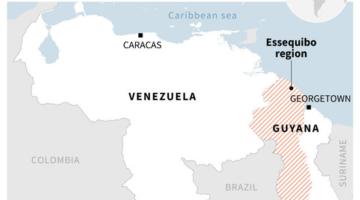 Despite the reality of US intervention causing inhumane conditions in the region, Venezuela’s push for the annexation of Guyana’s Essequibo region prioritizes its own political objectives,…
 Survivors open up about struggles with lingering post-traumatic stress disorder 18 years after the storm


